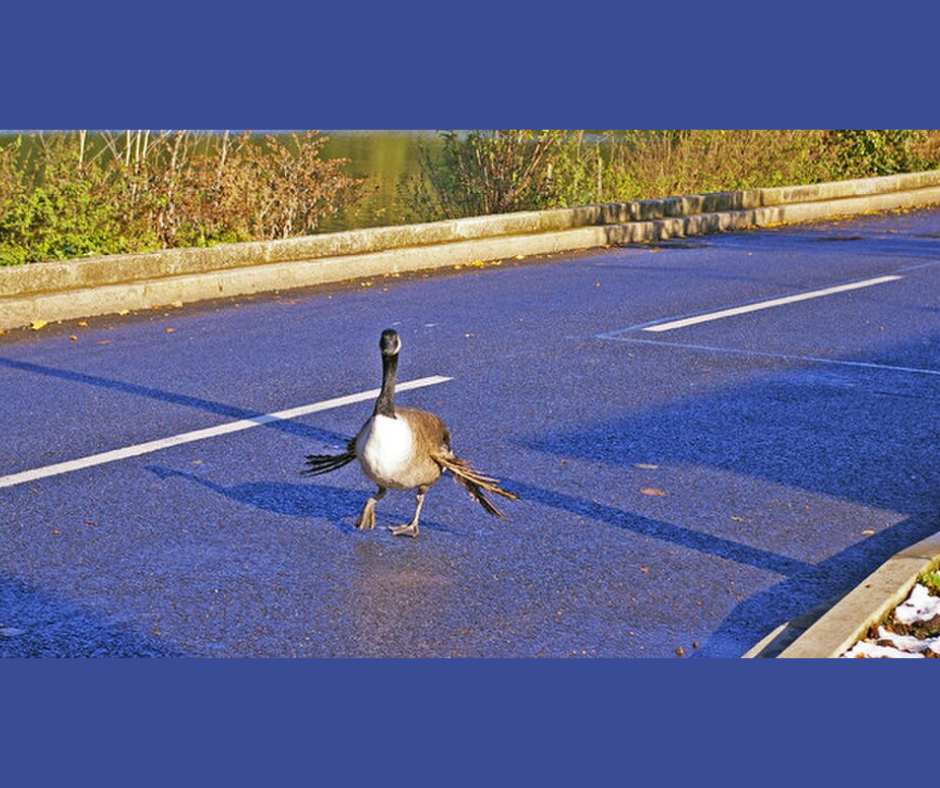
Angel wing aka airplane wing is a deformity that affects the carpal or wrist joint of growing waterfowl like ducks and geese, causing the wing feathers to stick out sideways instead of lying flat against the body. This can also affect domestic fowl but this article focuses more on wild species.
The main cause is human feeding of foods that lack needed nutrients. Feeding waterbirds processed human food, like white bread and crackers is the leading trigger. Let's face it white bread is just not good for anybody!
The reason is that those processed carbs do not contain nutrients critical to their development. Adult birds with angel wing syndrome are unable to fly and are less capable of avoiding predators, forage for food, and cannot migrate. Almost every bird that develops angel wing syndrome will die from the disorder.
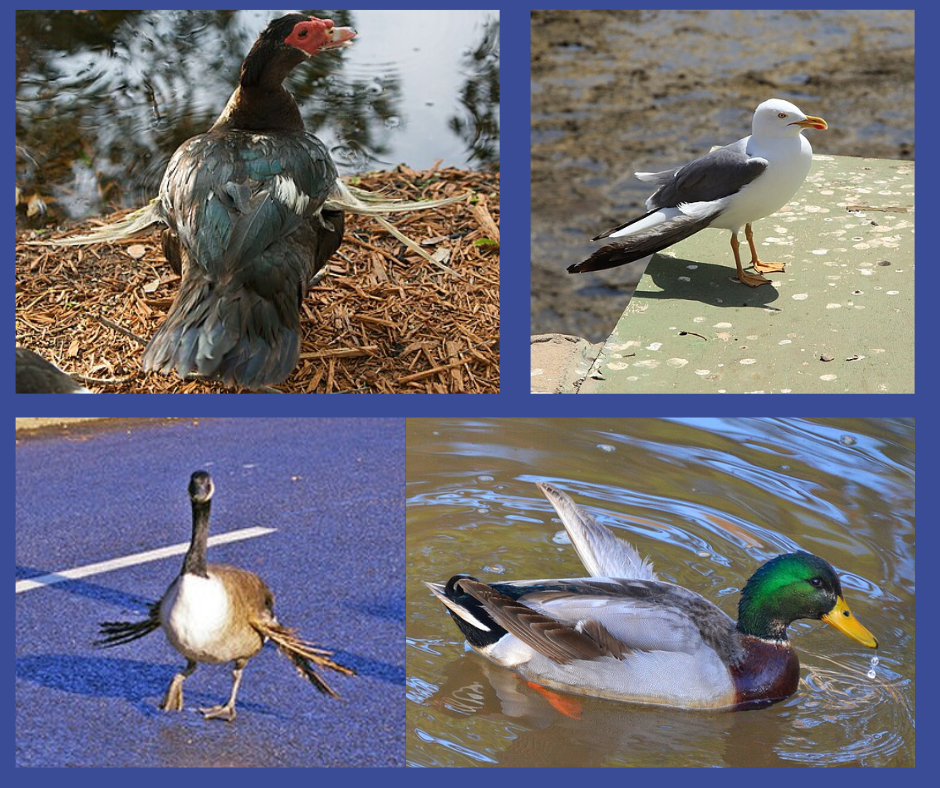
You are most likely to see it in species that are common around humans. Mallard ducks, Canada Geese, seagulls and pigeons. But it has also been found in herons, pelicans, cormorants, and boobies.
Wild birds in natural ecosystems rarely contract angel wing because they consume a balanced diet. Wild ducks and geese feed on a variety of grains and grasses, aquatic plants, small fish, and invertebrates, all naturally found in the wild.
What Causes Angel Wing?
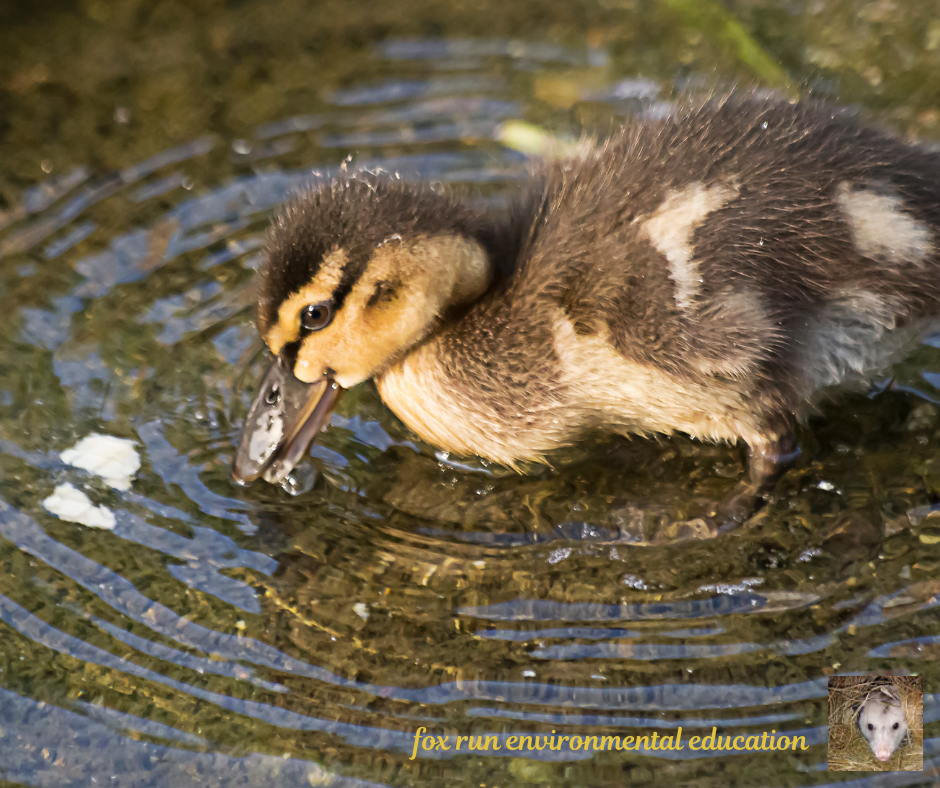
Angel wing does not just appear. It starts with chicks and is a lack of nutrient at stages of development. And there maybe some genetic predisposition. But basically its not enough vitamin E, D3, calcium and manganese. Ducks are most at risk for angel wing deformity when they are 8 to 12 weeks of age.
In addition, bread products expand in the stomach when they soak up other fluids. This gives ducks and geese an artificial feeling that they are full. As a result, these birds may not feel motivated to forage on natural healthy foods.
I did read an interesting study with swans in a public park who were fed a mix of bread (from the public) and commercial pellets (from the park rangers) where 6 developed angel wing. I think this may be similar to when domestic fowl gets angel wing where the chicks have unhealthy-high protein and/or carbohydrate-based diets. One study showed a 32% protein ration made birds susceptible. Another study stated that feeding ‘high-protein diets (32% protein) to greater sandhill cranes (Grus Canadensis tabida) has been shown to lead to a wing deformity rate of 25% during the period of rapid growth (7 to 28 days after hatching).”
So if you have chickens or ducks make sure they get quality food and time to scratch around outside. I have always used chicken tractors so I could move my chickens around while keeping them safe.
Exercise
I've seen lack of exercise cited as a contributing factor which would make sense for birds that live in city ponds and are not actively foraging because the nice humans bring their food.
Disease
Feeding the ducks bread also causes water quality issues in urban parks and can spread diseases. Urban ponds have outbreaks of botulism, avian cholera, duck plague (duck enteritis virus), and aspergillosis (fungal infection) because the population of animals is high and the nutrition level is low. Stressed bodies get sick easier.
Treating Angel Wing
When the bird is young it is treatable. A wildlife rehabilitator or veterinarian can wrap the wing in the correct position for a week or so to encourage normal growth. young birds have soften bones which respond to adjustment. Adult bird whose bones have finished growing and hardened are not treatable and are not able to fly so that is a serious problem.
Children and Feeding Ducks
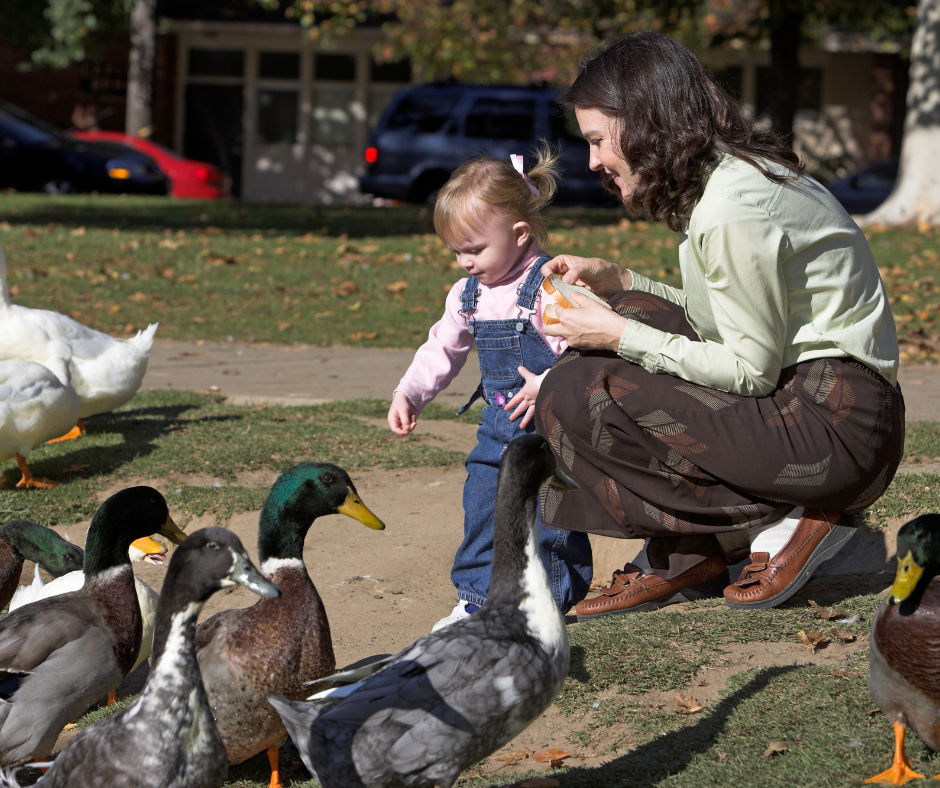
So the question is what to do. We do want our children to experience and enjoy nature. I personally feel that wildlife conservation is dependent on humans feeling connected to and caring about wildlife species.
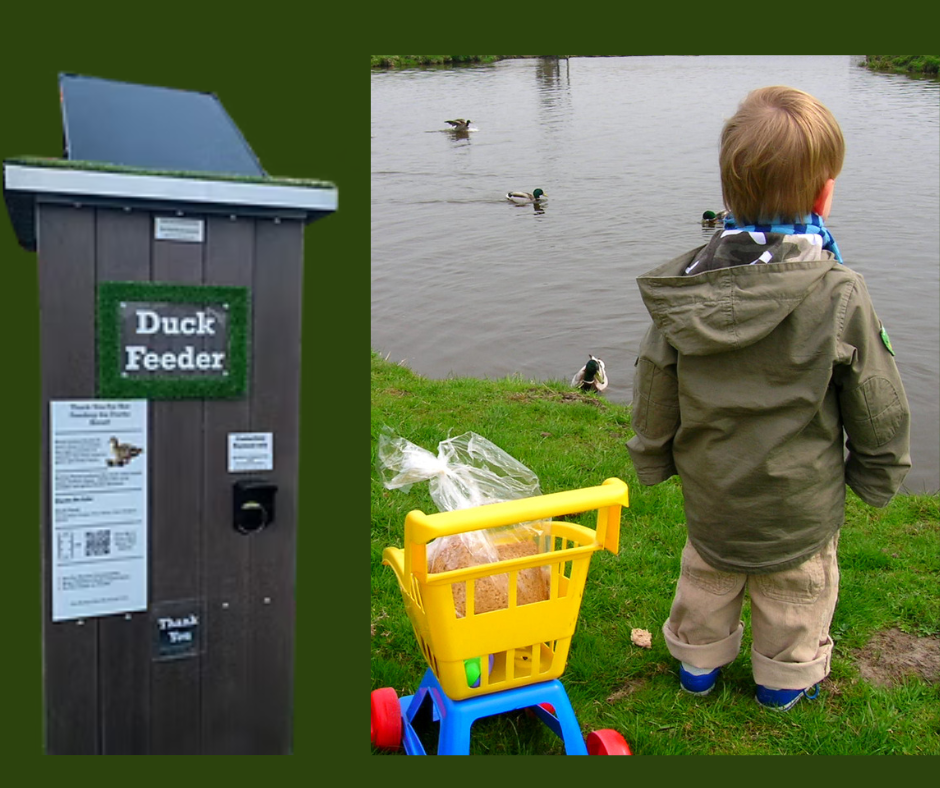
So one thing that many parks are doing is putting in vending style machines that are filled with appropriate foods.
If your park doesnt have vending machines and you feel strongly about feeding local wild ducks or geese some good options are thawed frozen peas, leaf lettuce, sliced grapes and dried mealworms. Feed small amounts so food does not go bad on the ground. Don't throw food in the water.
Buy yourself, your kids or grandchildren an inexpensive pair of binoculars. Or a pirate style spyglass. Take some time to observe birds in nature. Typically water birds are pretty easy to watch and don't fly away since they feel safe on the water.
tips For Helping urban ducks and geese:
Organize a trash pick-up at your local park.
Collect stray fishing hooks, lines, and sinkers.
Learn more about native ducks and geese and their natural history. (I have several videos and articles on ducks and geese!)
Leave nests alone. Ducks and geese often choose strange urban spots like parking medians or mulched flower beds to nest.
Spread the word! Encourage friends and family to leave the bread at home.
Birding is one of the easiest ways for families to spend time outside and learn about wildlife. You do not need expensive gear or special training. Birds live in cities, suburbs, and rural areas, so most families can start right in their own backyard or neighborhood.