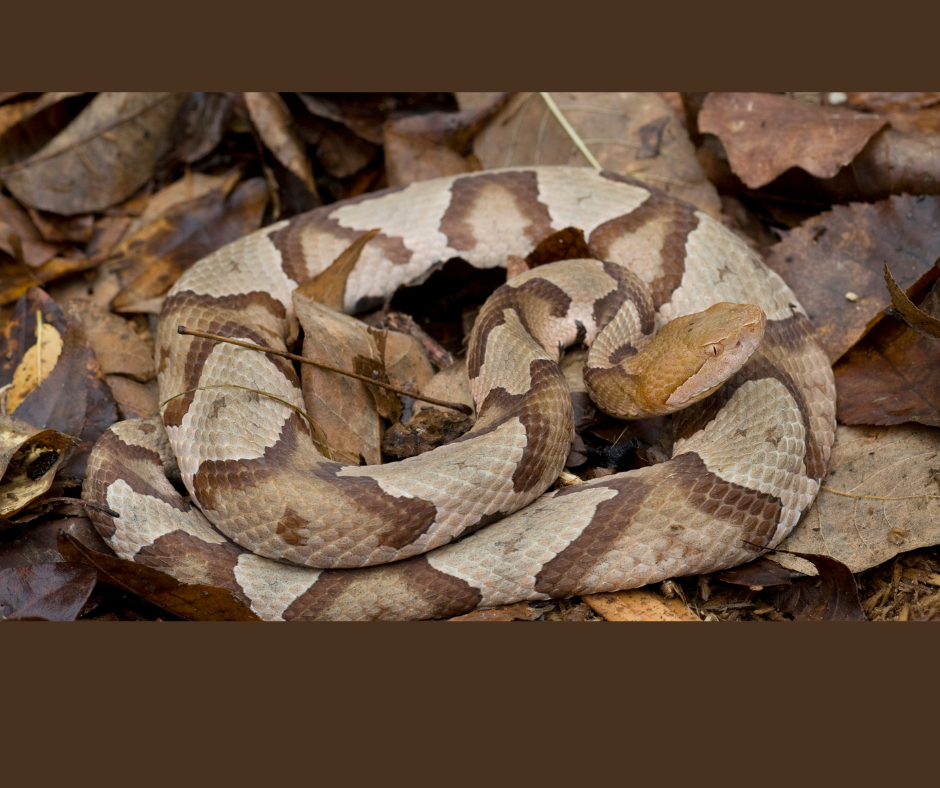
Easter Copperheads (Agkistrodon contortrix) are one of the more common venomous snakes in America and are responsible for the most snakebites from any venomous snake in the country. The beautiful although a bit menacing-looking copperhead has a distinctive hourglass pattern.
Copperheads are common in the eastern and central US. They are state-endangered in Iowa and Massachusetts. While they typically live in deciduous forests they have adapted to more urban suburbs and developed areas. One reason they have the highest bite averages - they live more commonly among people.
What Do Copperheads Look Like?
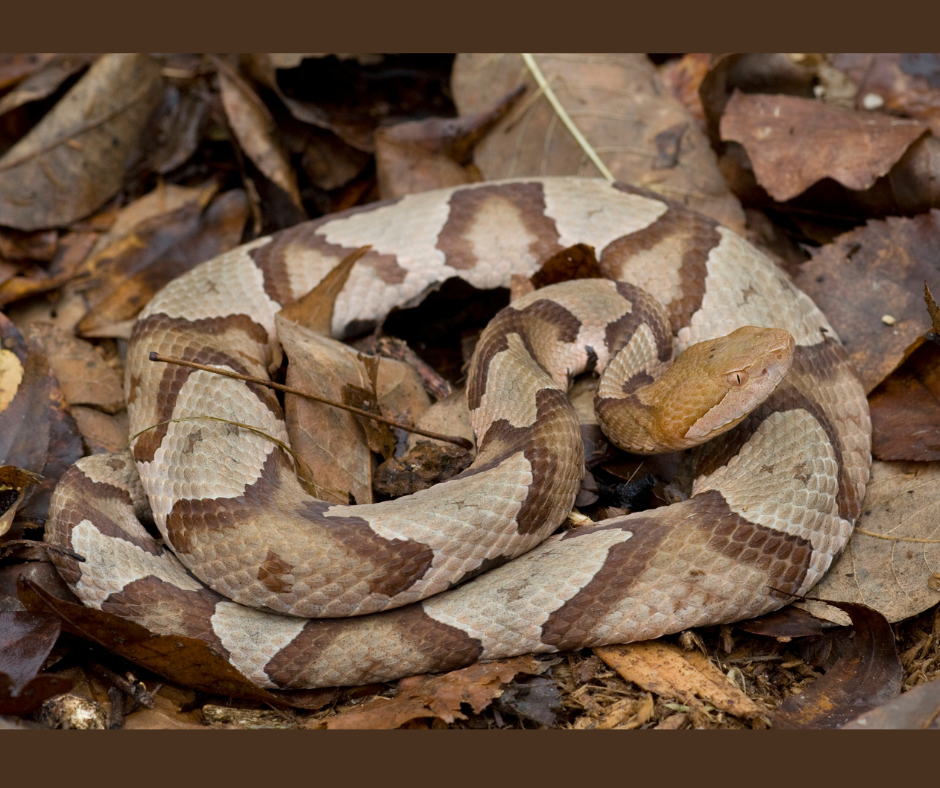
Copperheads are pit vipers and can be identified by the triangular head and vertical pupils. As pit vipers, they have facial pits that sense heat. They use these to locate prey as well as predators.
They have distinctive, dark brown, hourglass-shaped markings, overlaid on a light reddish brown or brown/gray background. Male copperheads are larger than females and average three feet long. They are often described as stout. Adults grow to a typical length of 20–37 in or 50–95 cm.
In the winter, they brumate in dens or crevices. They often den with timber rattlesnakes and black rat snakes. In cold regions brumating in large numbers helps snakes conserve heat during freezing months.
Read my article Nighty Night, Sleep Tight! Hibernation, Brumation and Torpor Explained
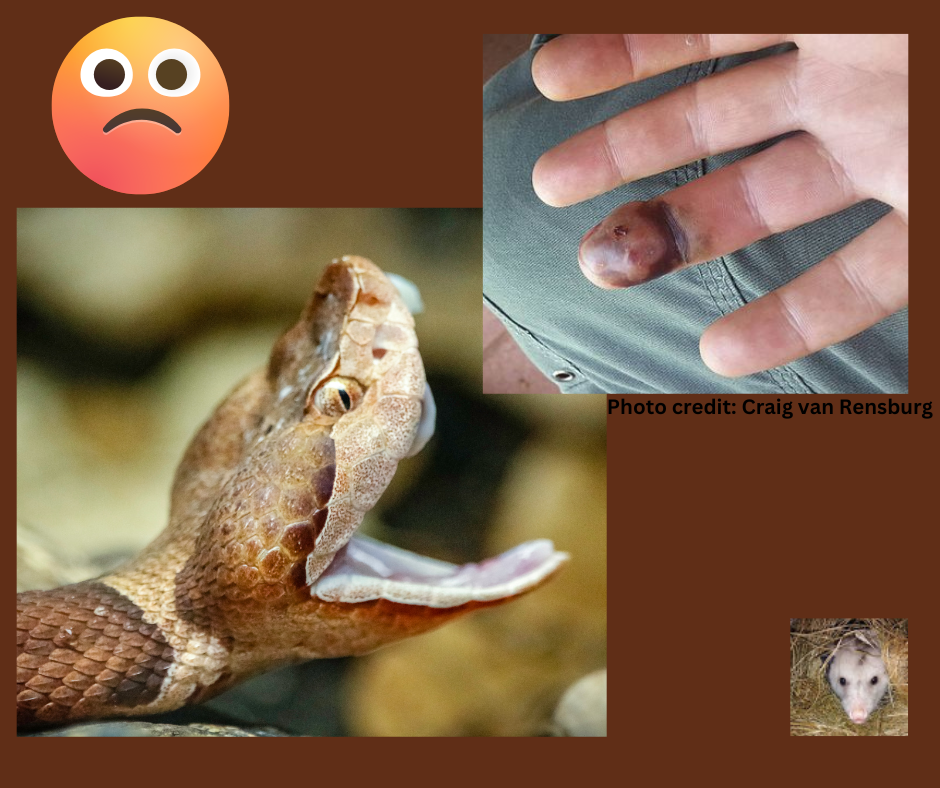
Here is the result of a young copperhead bite. Swelling and some nasty bruising. You can see the puncture marks. Obviously, any snake bite needs medical care.
Copperhead venom
Copperhead venom is not that potent and rarely causes fatalities. The venom is hemolytic, which means it breaks down blood cells. Which results in swelling and some nasty bruising. You can see the puncture marks. Obviously, any snake bite needs medical care.
Here's a fun fact - copperheads can have a dry bite which is a bite without using their fangs or venom. They would do this as a warning bite and to conserve venom.
Copperheads may go through several sets of fangs in their lifetime. Each snake has a series of five to seven replacement fangs. These are located in their gums right behind their current fangs. Once the copperhead injects their venom they need one to two weeks to replace it.
Diet
Copperheads are opportunistic and ambush predators. They eat a variety of amphibians, lizards, other snakes, small mammals, and birds. In a minute we'll talk about how they swallow their prey whole. They are good swimmers and will catch fish.

Check out my Resources page!
Copperhead Reproduction
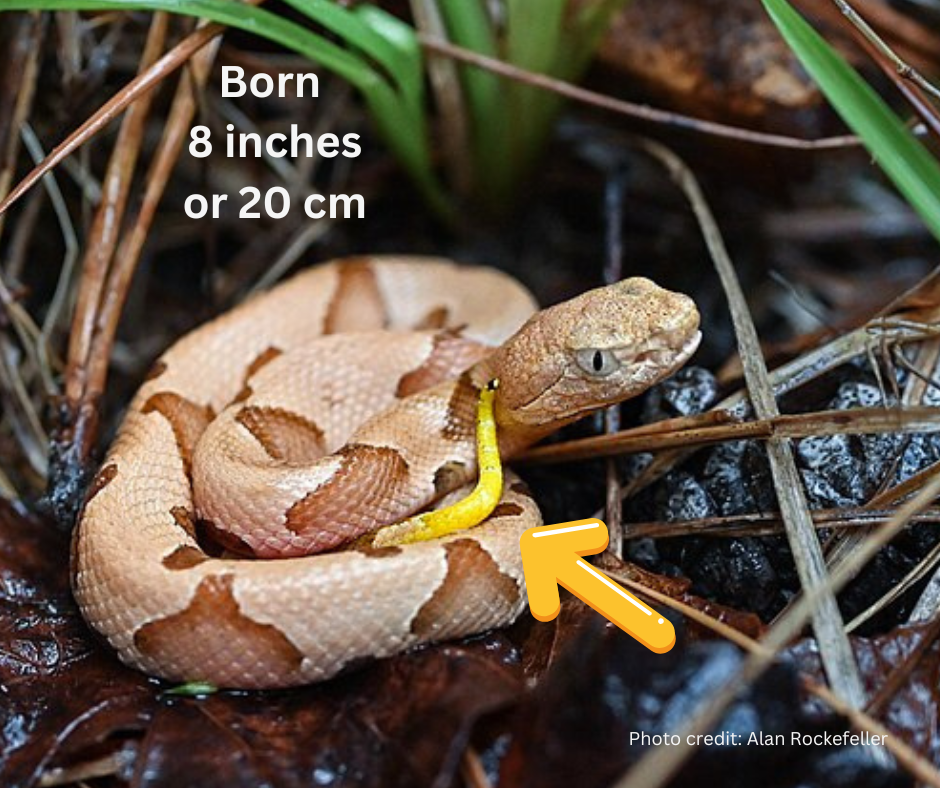
They mate in spring and females give live birth in late summer and early fall. About 5-9 babies are born each within its own membrane. The young are born with fangs that have venom. Juveniles look just like adults except for the tail.
The best way to identify a young copperhead is by its yellow tail. They keep this yellow tail for the first two or three years of their life. It serves an important purpose in that it helps to lure prey close to their body.
Babies are born about 8 inches long and about the thickness of a marker. They eat mostly insects in the first year.
Opossums have a natural immunity to snake venom and will hunt and eat copperheads. Other predators are hawks, owls, and bigger snakes.
I would never tell anyone to not go hiking. The chances of you seeing a copperhead are slim. Keep your eyes open and pay attention.
Stay on the trails. Supervise children. Keep dogs on a leash. Don't approach a snake and give them wide room if they are sunning themselves on the trail. A tip I have is to wear sturdy hiking boots. That way you have some protection if you accidentally step on a snake.
Copperheads are not aggressive and typically only strike if touched or harassed. They rely on their superb camouflage to keep themselves safe. They may vibrate their tail in excess of 40 times per second as a warning.
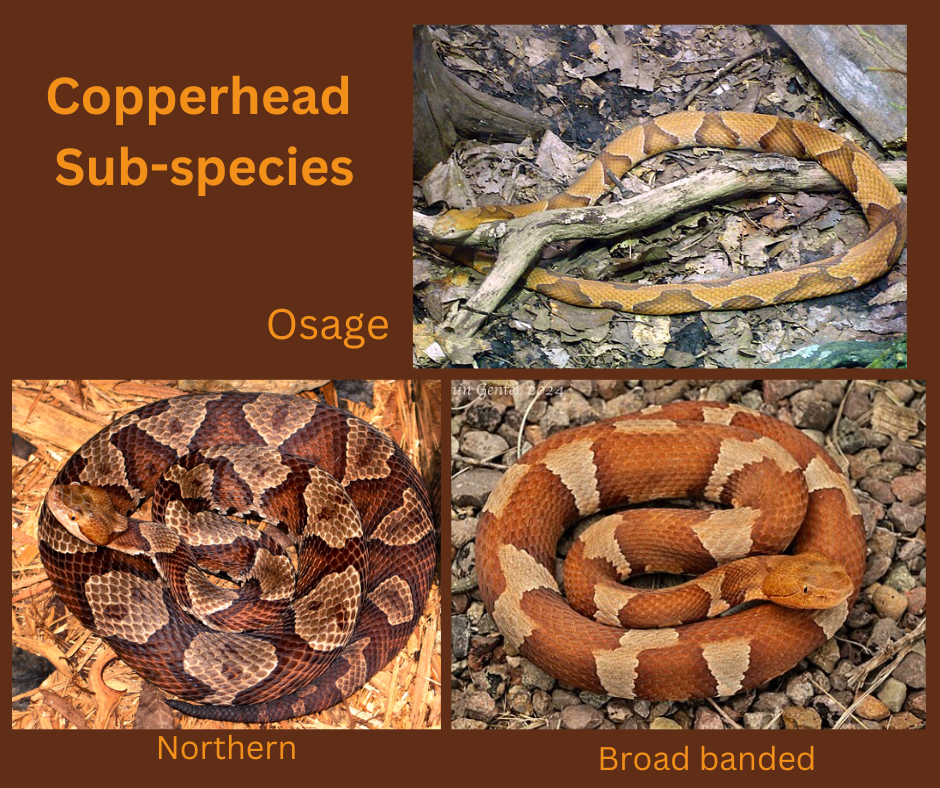
There are 5 subspecies although scientists are thinking maybe more with ongoing testing. Broad-banded, Eastern, Northern, Osage, and Southern typically named for the region they live in.
Other non-venomous snake species are often mistaken and sometimes killed because people think they are a copperhead. First, there is no reason to kill a snake. All snakes have value to the ecosystem. Second, learn to identify the snakes in your area.
You may find a snake skin while hiking. Their skin does not grow with them so they shed it to keep growing. Also shedding helps them to get rid of bacteria and parasites.
Check out my videos on snakes and other wildlife.
Author, Ame Vanorio, is the founder of Fox Run EEC, science teacher. I write books on wildlife rehabilitation and science activity books for kids.

Kentucky has 33 native snakes of which only four are venomous. Snakes are very beneficial to the environment. They eat rodents and help to lower disease spread by these animals.
This article will talk about snakes’ physical features, introduce you to a few of the cool Kentucky species, discuss snake rehabilitation, and what to do if you are bitten by a snake.