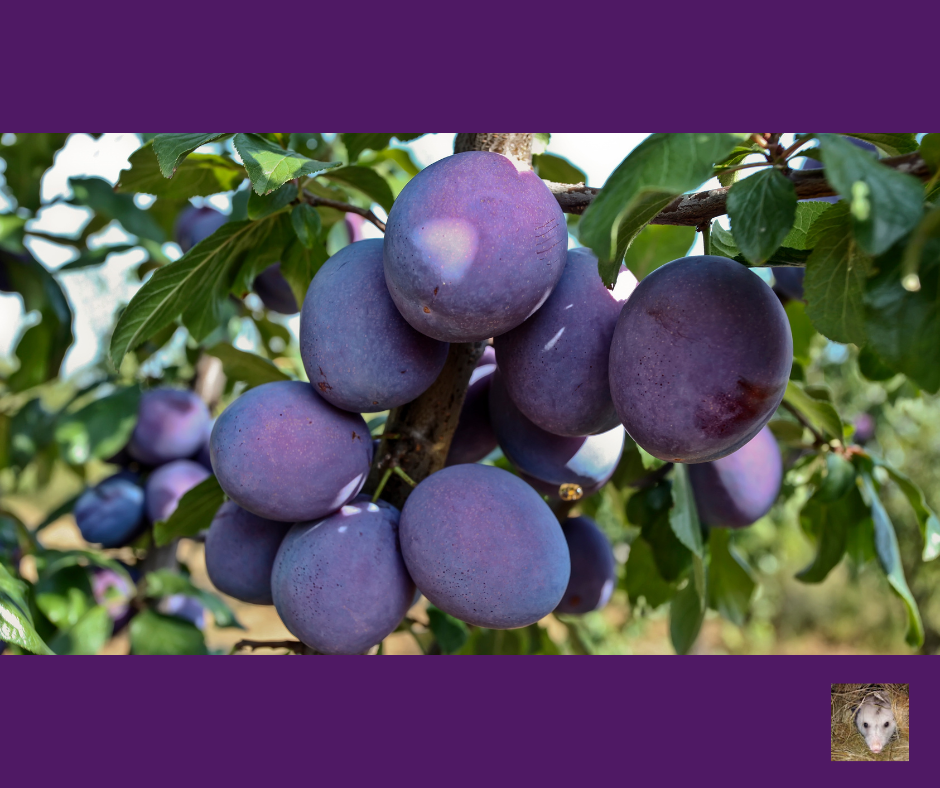
If you grow apples, peaches, or plums in the eastern United States, you will likely deal with plum curculio at some point. The plum curculio (Conotrachelus nenuphar) is a native snout beetle that attacks tree fruit. It is small, but it can ruin a crop quickly if ignored.
As organic growers, we do not panic. We learn the life cycle and interrupt it at the right time. That is the key.
What Is Plum Curculio?
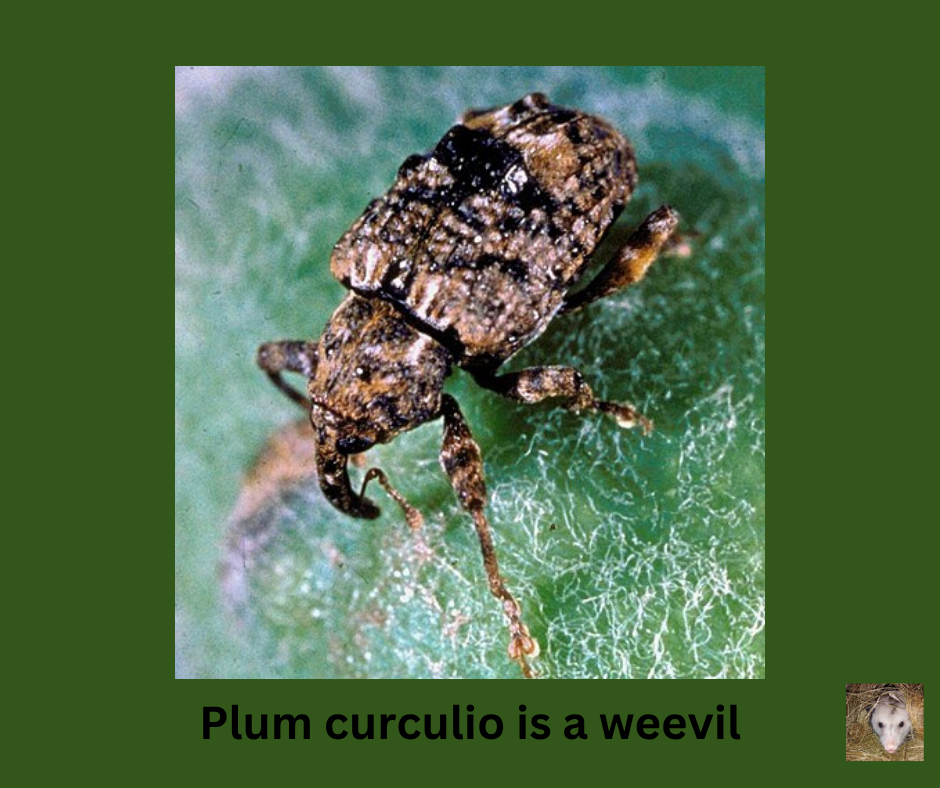
Plum curculio is a weevil. Adults are about ¼ inch long. They are mottled brown with a long curved snout. That snout is not just for show. The female uses it to cut fruit and lay eggs.
This insect is native to North America. It is most serious east of the Rocky Mountains, however populations are showing up in the Pacific northwest. According to Cornell Cooperative Extension and university IPM programs, it is one of the most destructive early-season pests of apple and stone fruit in the eastern U.S.
Hosts include:
Apple
Pear
Peach
Plum
Cherry
Apricot
Wild hosts such as wild plum and crabapple can also support populations.
Life Cycle of Plum Curculio
Understanding the life cycle helps you time control methods correctly.
Overwintering Adults
Adults overwinter in leaf litter, hedgerows, brush piles, and wooded edges near orchards. They do not stay in the tree. They shelter in protected areas on the ground.
In spring, when temperatures consistently reach about 60–65°F, adults become active. This usually happens around bloom or just after petal fall in apples.
2. Adult Feeding and Egg Laying
After petal fall, females begin laying eggs in small, developing fruit. She chews a hole in the fruit, lays one egg, and then cuts a crescent-shaped slit just below the egg site. That crescent scar is a classic sign of plum curculio.
The crescent cut keeps the growing fruit from crushing the egg. It is a simple but effective strategy. Each female can lay over 100 eggs in a season.
Check out my STORE for pdf books and free downloads
3. Larval Stage
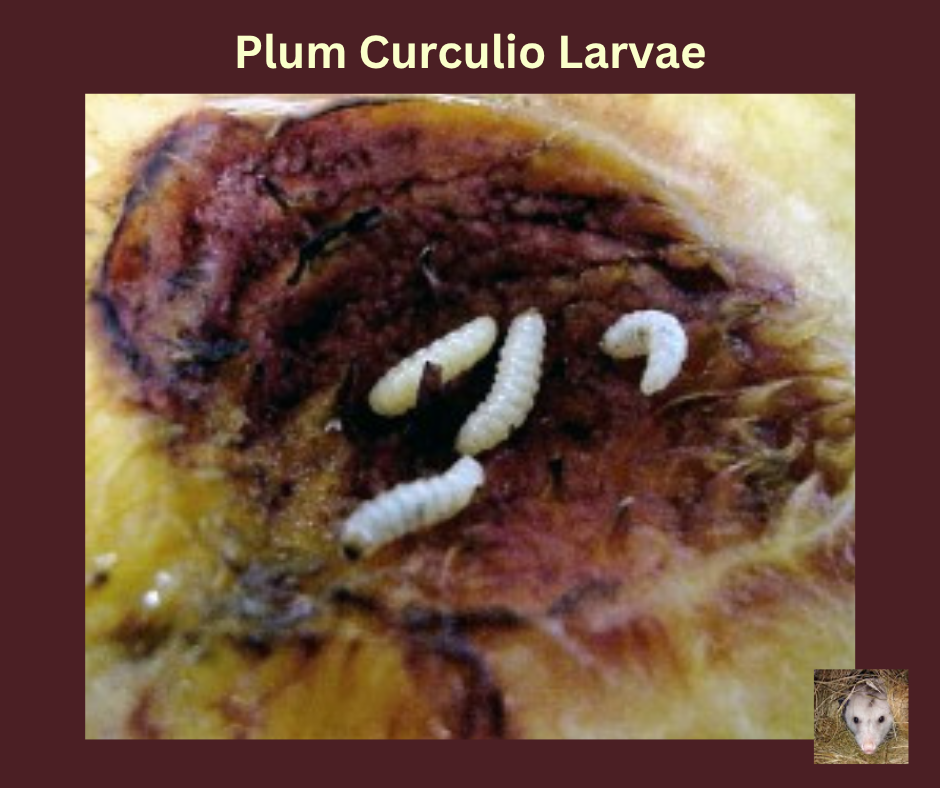
Eggs hatch in about 3–7 days, depending on temperature. The larvae are small, white, legless grubs. They feed inside the fruit.
In apples, infested fruit often drop to the ground in June. In peaches and plums, fruit may remain on the tree but become misshapen or rot.
Larvae feed for about 2–3 weeks inside the fruit.
4. Pupation in the Soil
When fully grown, larvae exit the fallen fruit and burrow into the soil. They pupate underground. New adults emerge later in summer.
In most northern areas, there is one generation per year. In warmer southern regions, there may be a partial second generation. New adults feed for a short time, then move to overwintering sites.
This native snout beetle is small, but it can ruin a crop quickly if ignored. This video talks about their life cycle and organic solutions to prevent and control them.
How Plum Curculio Damage Fruit Trees
Plum curculio damages fruit in three main ways.
1. Egg-Laying Scars
The crescent-shaped scar reduces market quality. In home orchards, you can cut around the damaged area. In commercial orchards, that fruit is often unmarketable.
2. Internal Feeding
Larvae feeding inside fruit causes:
Premature fruit drop (especially in apples)
Soft spots and mushy interior
3. Secondary Rot
The wound created by the female can allow fungi and bacteria to enter. Brown rot and other fruit rots become more likely in damaged fruit.
Heavy infestations can destroy most of a crop, especially in small backyard orchards surrounded by woods.
Organic Prevention and Control
Organic management focuses on timing, sanitation, and disrupting the life cycle.
1. Orchard Sanitation
Remove and destroy fallen fruit at least twice a week during the early drop period. When you remove dropped fruit before larvae exit, you prevent them from reaching the soil and completing development. For a small backyard orchard, this one step can greatly reduce populations over time.
Compost
Compost infested fruit if your compost pile reaches high temperatures. Your compost pile needs to reach and maintain a temperature of 131°F to 140°F (55°C to 60°C) for several days to kill the larvae.
If you are like me, you often gather up fall leaves for compost or mulch. However in late fall your pile might not be heating up as much. Add some fresh livestock manure to help heat up the pile.
2. Cultivation Under Trees
Light cultivation under trees after fruit drop can expose pupae to predators and weather. Chickens in the orchard can also help. They scratch and eat larvae and pupae in fallen fruit and soil.
This fits well with a homestead system where animals and orchard work together.
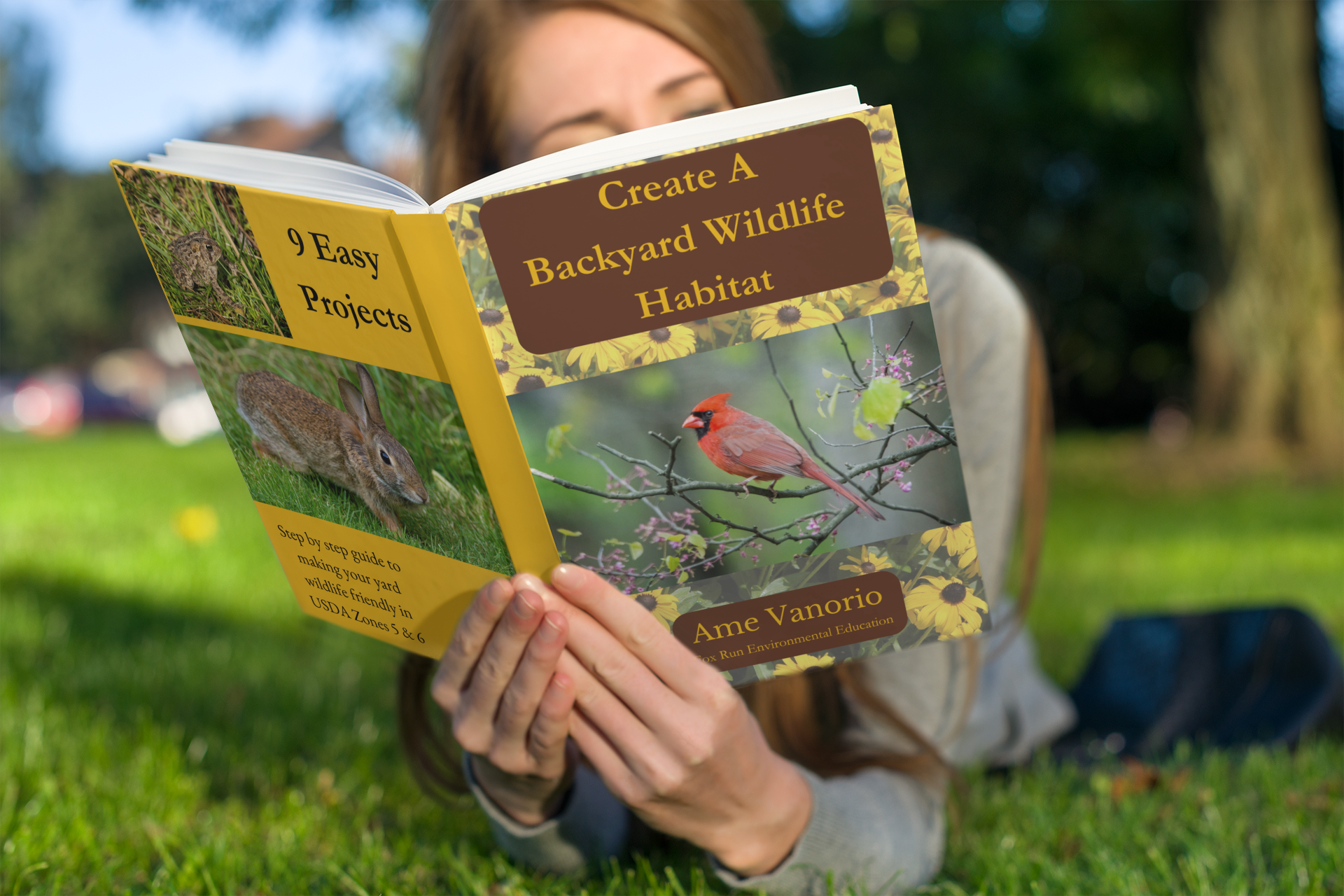
My new book Create A Backyard Wildlife Habitat offers many tips for attracting beneficial birds and pollinators who are ready and willing to help you in your orchard.
3. Support A Wildlife Friendly Backyard
In spring, when temperatures consistently reach about 60–65°F, adults become active. This usually happens around bloom or just after petal fall in apples.
The good news is that coincides with many of our native birds raising baby chicks. Robins, Chickadees, Bluebirds and Nuthatches are great insect hunters. Baby birds need a lot of protein.
4. Kaolin Clay (Surround®)
Kaolin clay is a common organic tool. It forms a white film over fruit and leaves. This film confuses and deters adult beetles.
Apply after petal fall, before egg laying begins. Reapply after heavy rain. Coverage must be thorough. The goal is to make the fruit unattractive and difficult for females to grip and lay eggs.
Keep in mind that Kaolin clay does not kill the insect. It reduces feeding and egg laying.
5. Timing Organic Insecticides
If pressure is high, use spinosad (this is my preferred brand). Timing is critical. Sprays should target adults shortly after petal fall, when fruit are small and before significant egg laying has occurred.
Spraying during bloom is not recommended because of pollinators. Always wait until petals have fallen and bees are no longer actively foraging in the trees. Follow all label directions carefully. Even organic products must be used responsibly.
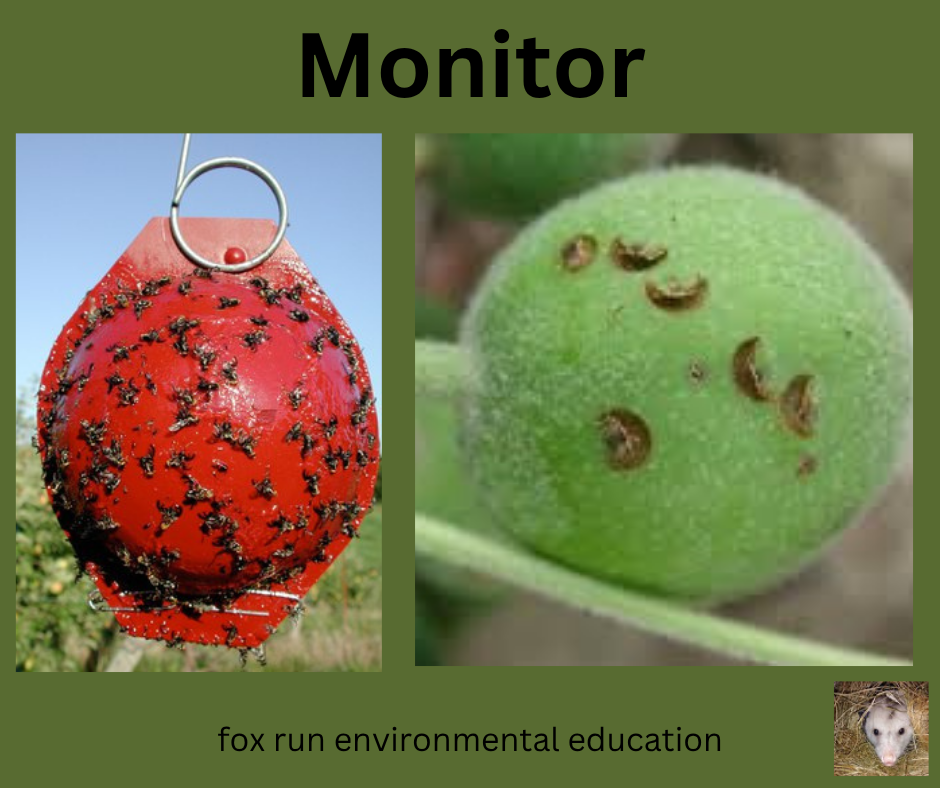
I have occasionally caught weevils in apple maggot traps. The plum curculio can fly but is not a strong flier. Best to monitor fruit.
6. Trapping and Monitoring
Monitoring helps you avoid unnecessary spraying. Some growers use pyramid traps or sticky traps baited with plum essence lures. These traps help detect when adults are active.
I have occasionally caught weevils in apple maggot traps. The plum curculio can fly but is not a strong flier. Mostly they crawl.
You can also monitor by inspecting small fruit for fresh crescent scars. Once you see active egg laying, you know adults are present.
Plums are hardy and easy to grow. They just need you to pay attention and give them what they need.
Read my article - Grow Plums in Zone 6
Author, Ame Vanorio, is the founder of Fox Run EEC, a Master Gardener and Environmental Educator. Check out her books on Amazon.
A simple maintenance schedule for your organic fruit tree orchard. Know when the best time to spray and fertilize your orchard will make your fruit trees more productive. Organic pest control and Fertilizer.