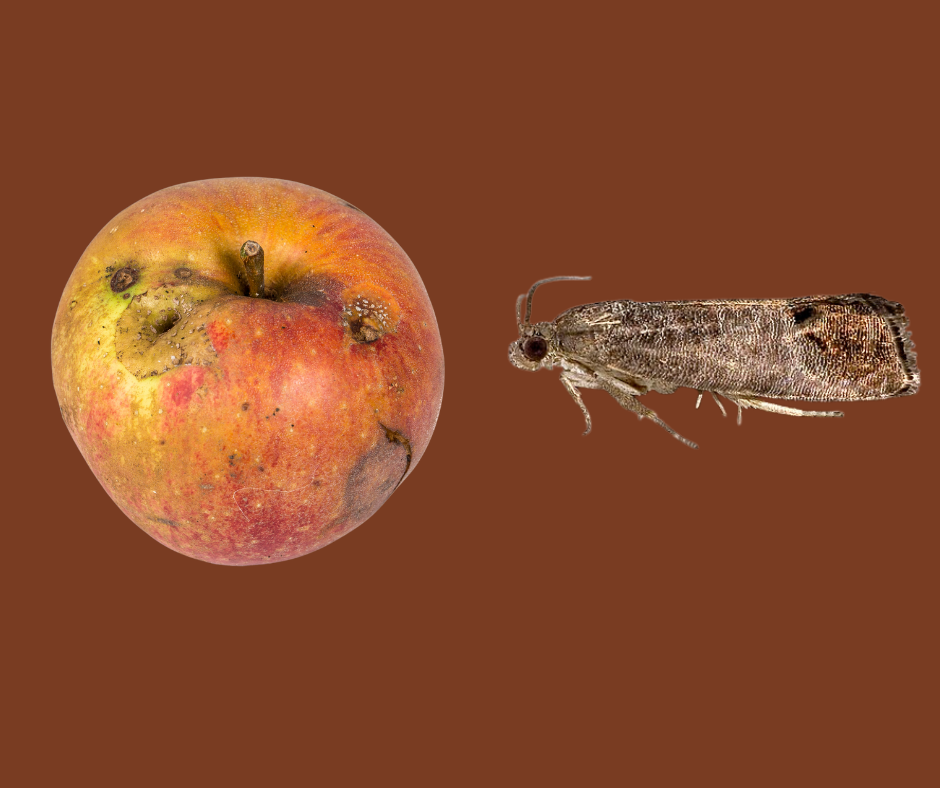
Apple trees are one of the most rewarding fruit trees to grow in a home garden. They also attract a wide range of pests and diseases. Knowing what to watch for, and how to respond early, makes a big difference.
I have been told by many farmers and that you cant raise apples organically. That is simply not true. In this article I am teaching about three apple pests, codling moth, apple maggot, and gypsy moth, and two fungal diseases, powdery mildew and apple scab. And how to prevent and control them.
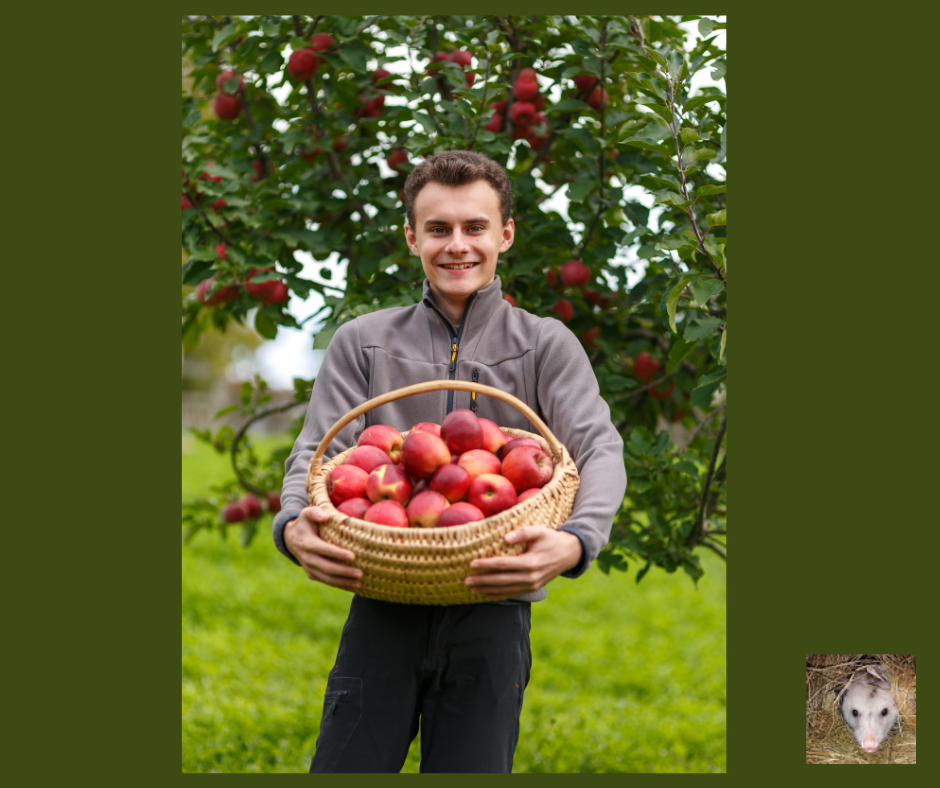
Home grown apples are the best! Make sure you prevent and manage any problems so you have a plentiful harvest.
Codling Moth
Got worms in your apples. This is the pest. One of the worst pests to apples, the codling moth. The larvae are considered a serious orchard threat and cause your apples to fall off the tree. Unfortunately coddling moths are widespread in North America as well as Europe and Asia.
The adult codling moth lays her egg at the top of an apple. The eggs hatch and the larvae burrow down into the fruit for food. The caterpillar goes to the center of the fruit and bites into the seeds which halts the growth of the fruit. They ripen prematurely as a result. Codling larvae don't feed on leaves just the fruit. Mature larvae overwinter in a silken cocoon under loose bark, in soil or in debris around the base of the tree.
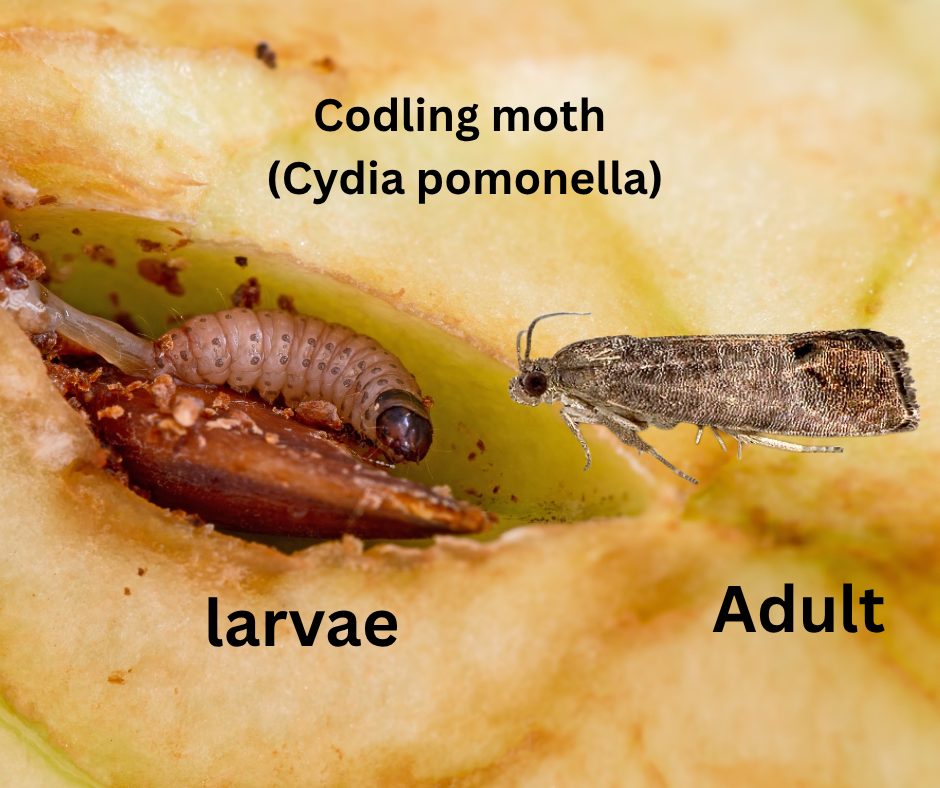
Size not accurate. Adult moths are 1/2 to 3/4 inch (10–20 mm) in length. They have mottled gray, tent-shaped wings with distinctive coppery-brown, spots at the tips. Larvae grow up to 3/4 inch long.
Apple Maggot
So a similar pest is the apple maggot. Adult flies lay eggs under the skin of the fruit. The larvae tunnel through the apple, creating brown, winding trails. Once eggs hatch, larvae feed for three to four weeks. Apple maggots mostly affect fruit trees in the east and midwestern regions but there are growing numbers in the pacific north west states.
When apples drop to the ground, the larvae transform into pupae in the soil. Apple maggot flies begin appearing in mid-June to early July when they emerge from the soil.
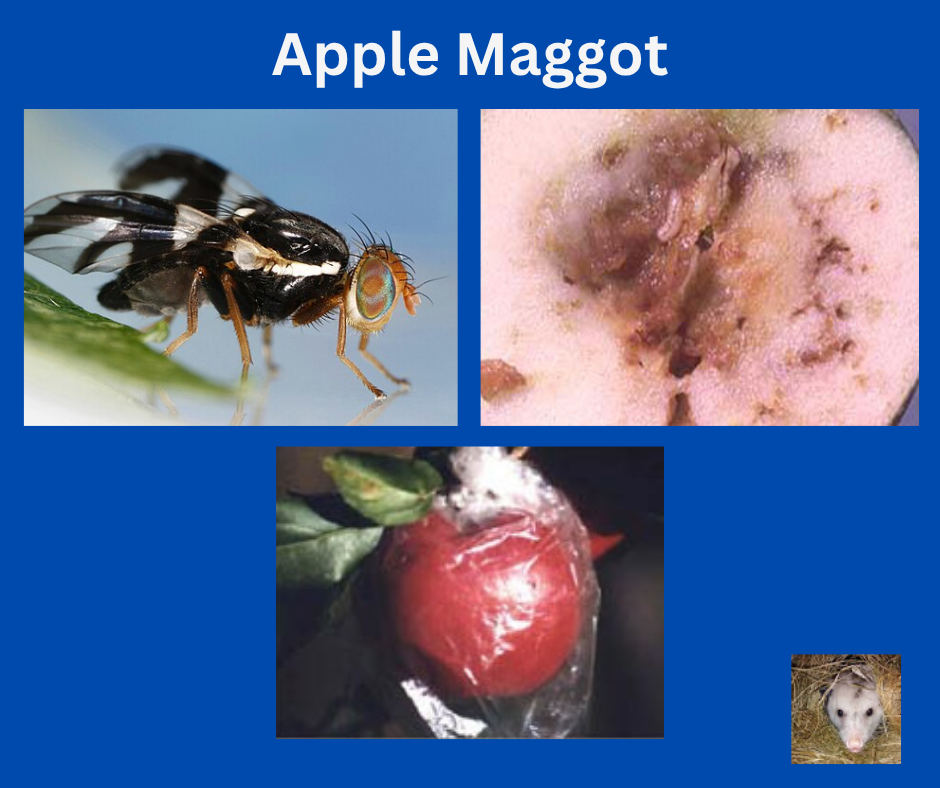
You can bag apples but I think this is too much work and I don't like using all that plastic. You can enclose each apple in a plastic sandwich bag after thinning in June. , either a zipper closure bag or a plain bag closed with staples.
Snip the bottom corners off each bag with a pair of scissors to leave a small opening for water to run out.
Plum Curculio
Plum curculio also affects apples. It is a weevil. that looks kinda look like a mini ant eater. Same deal, the adult female lays eggs on the fruit which grow by feeding on the inside for 2-3 weeks.
Read my article: Plum Curculio: Prevention & Control
Difference Between Codling Moth and Apple Maggot
The primary way to spot the difference between apple maggots and codling moths is their damage pattern. Cut open an apple. Codling moth larvae create large, frass-filled tunnels straight to the core, while apple maggots create numerous brown, winding, trails. Codling moths are brown moths, whereas apple maggots are flies. ok lets talk prevention.
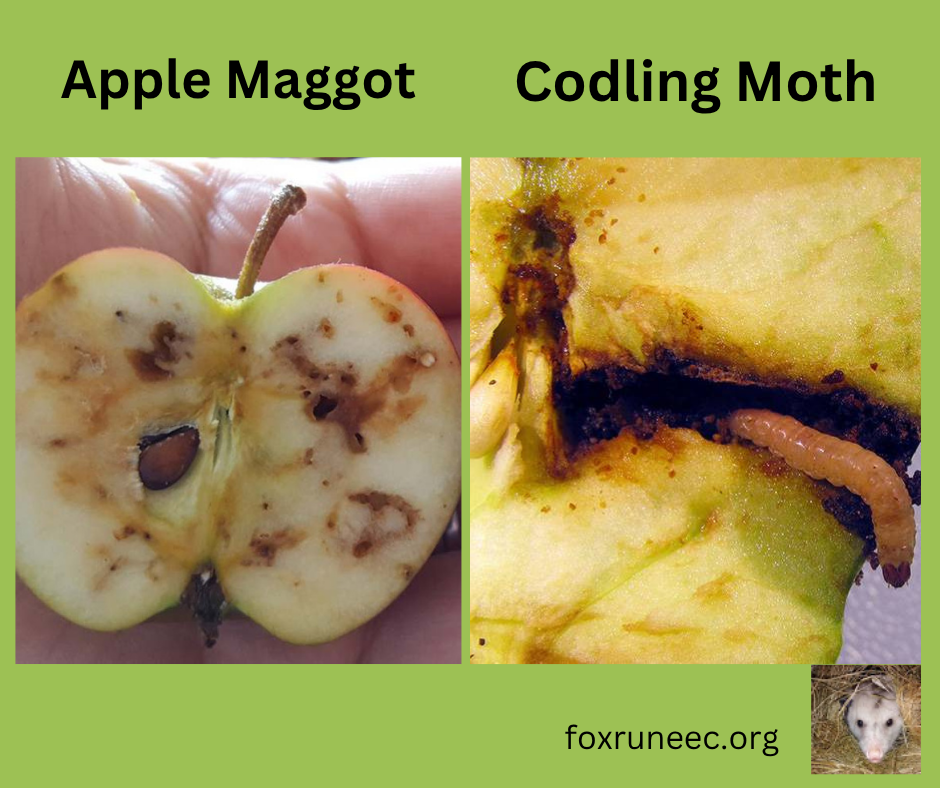
The primary way to spot the difference between apple maggots and codling moths is their damage pattern.
Monitor
Monitor and control with sticky traps. Apple maggot flies are attracted to a red sphere. You can either purchase them or go to the store and buy a bright red apple and cover with tangle foot. Hang traps in the trees by the end of June, to catch the apple maggot flies as they first attempt to lay eggs.
Moths are attracted to the yellow traps so you may need to put out both. Moths are also attracted to the tent shaped traps. For codling moths start hanging out in May.
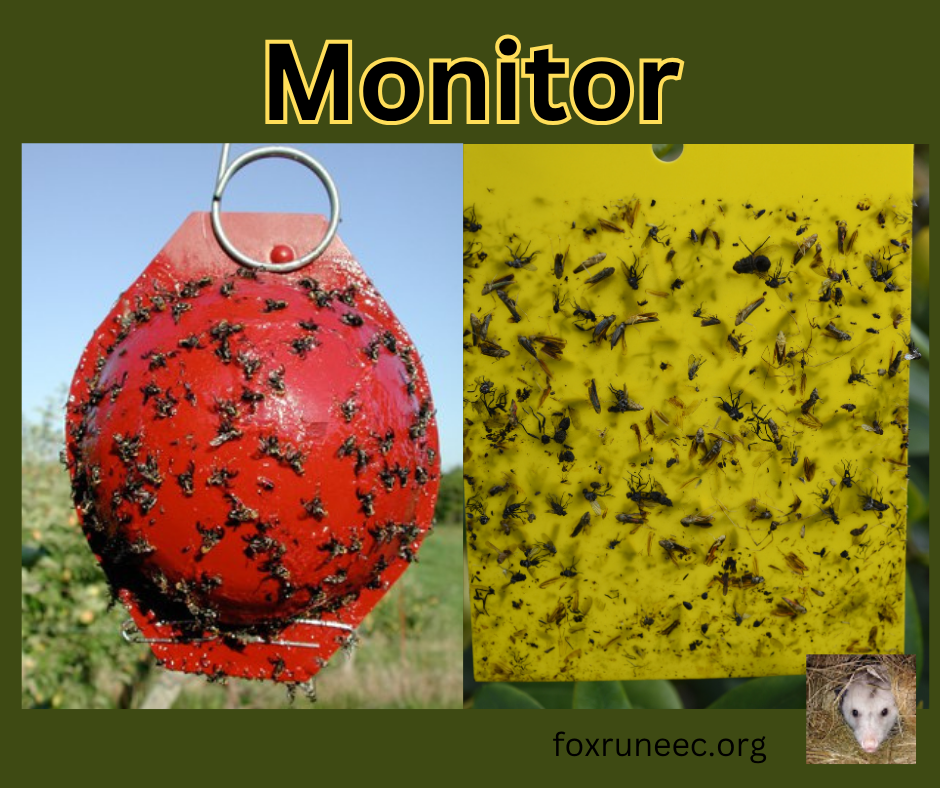
Monitor and control with sticky traps.
Dealing With Apple Fall
When apples drop to the ground, the larvae transforms into pupae in the soil where they will spend the winter, emerging as adults the following summer. You can break that cycle with a friendly flock of chickens.
Chickens like to scratch and dig for bugs. This is a win win because the bugs are a great source of protein for your birds. I keep chickens in tractors and then I just pull them around to where I want them while keeping them safe from predators.
Compost Fallen Apples
Pick up and remove any apples that fall during the growing season and after harvest. Home composting piles don't always kill the larvae because the pile needs to hit 145F consistently. A compost thermometer is a great way to see how hot your pile gets. Send them to a municipal composting site or if you have a woodlot feed some to wildlife.
Organic Pesticides
Use organic controls such as Monterey Insect Spray which contains Spinosad. Spinosad is a natural substance derived from a soil bacterium. It is great for organic broad-spectrum control of caterpillars, moths, and other insects by targeting their nervous systems.
Kaolin Clay
Another organic prevention is Kaolin clay. You mix it with water to make a slush and spray your trees. Apply the clay in a visible layer to all surfaces of the tree, leaves and fruit. This acts as a visual and physical repellent to insects.
A grayish-white apple is not attractive. Kaolin clay does not kill the insect. It reduces feeding and egg laying but it doesnt kill them so keep that in mind. Apply after petal fall, before egg laying begins. Reapply after heavy rain.
Timing is critical. Have a spray schedule. I have an annual spray schedule that targets the overall health of the tree and prevention. Its available as a free download on my website (below)
Gypsy or Spongy Moth
The gypsy or spongy moth is an invasive species that defoliates trees especially oaks and birch. But they also eat leaves, flowers, and fruits on apple trees. Unfortunately, they are not picky at all. They are widespread east of the Mississippi and unfortunately their populations in Western states are growing.
This is a case where wildlife is your friend. The caterpillar stage is a food source for birds, squirrels, and opossums.
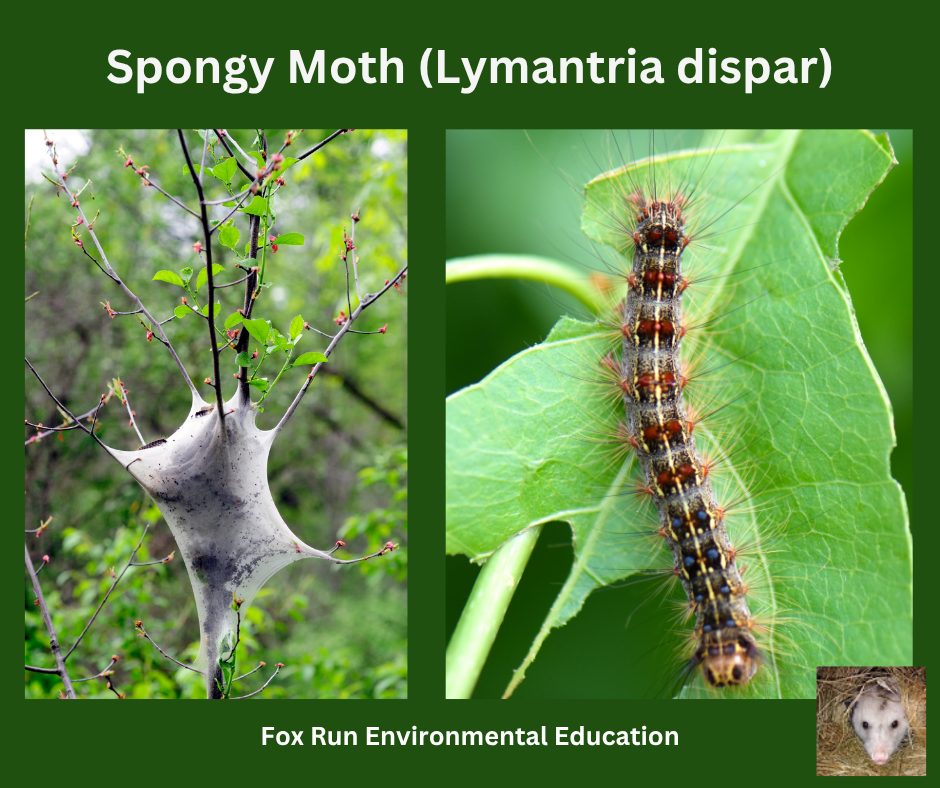
Sticky Tree Traps
Sticky traps can help catch adult spongy moth caterpillers. Caterpillars can be physically knocked off trees with a strong blast of water or destroyed by placing them in soapy water. Place duct tape around the tree trunk 4-5 feet off the ground, sticky side out, or use a product like TangleGuard™ Banding Material and cover it with a sticky material to stop caterpillars from climbing. I'll have links in the description.
Apple Diseases
Fire blight
Fire blight is my worst enemy. This is the fruit tree disease that I battled in my Kentucky 6B orchard. I can tell you I’ve tried many control practices and sometimes I still lost trees like my Honeycrisp’s. It affects my apples but also my pear trees.
Fire blight is a bacteria that attacks blossoms, fruits, leaves, and branches of growing trees. I think when you support a young tree in the first few years then they can fight it off as they become older.
The bacterium overwinters in cankers that it forms on branches and trunks. You can prune out these branches and destroy them. If you burn keep the fire away from the orchard. While pruning it’s important to disinfect your tools in between trees.
Pick resistant varieties such as Liberty and William’s Pride. Have good airflow and never use overhead watering.
Having a clean orchard is important. Clean up and remove fallen fruits and branches. Serenade and Neem Oil are two good organic fungal controls.
After battling Fire Blight disease in my home orchard for many years I have a list of tips to help you avoid and prevent it in your organic garden. Zones 5 & 6
Powdery Mildew
Powdery Mildew Coats leaves, twigs, and blossoms in a white, powdery looking fungus. Damage results in stunted growth often causing blossoms that fail to set fruit. It is most common during high humidity (above 70%) and warm temperatures of 65 to 80°F.
Powdery mildew also causes a netting pattern on apple fruit. If powdery mildew is a problem in your area get a resistant variety. I’ve had very good luck with liberty for both powdery and fire blight resistance.
Rake up leaves in fall and compost.
Good pruning is essential to preventing fungal disease. A well-pruned tree with an open canopy allows air to move through the tree and dry the leaves quickly. Remove upright suckers and water sprouts along the trunk and crossing branches.
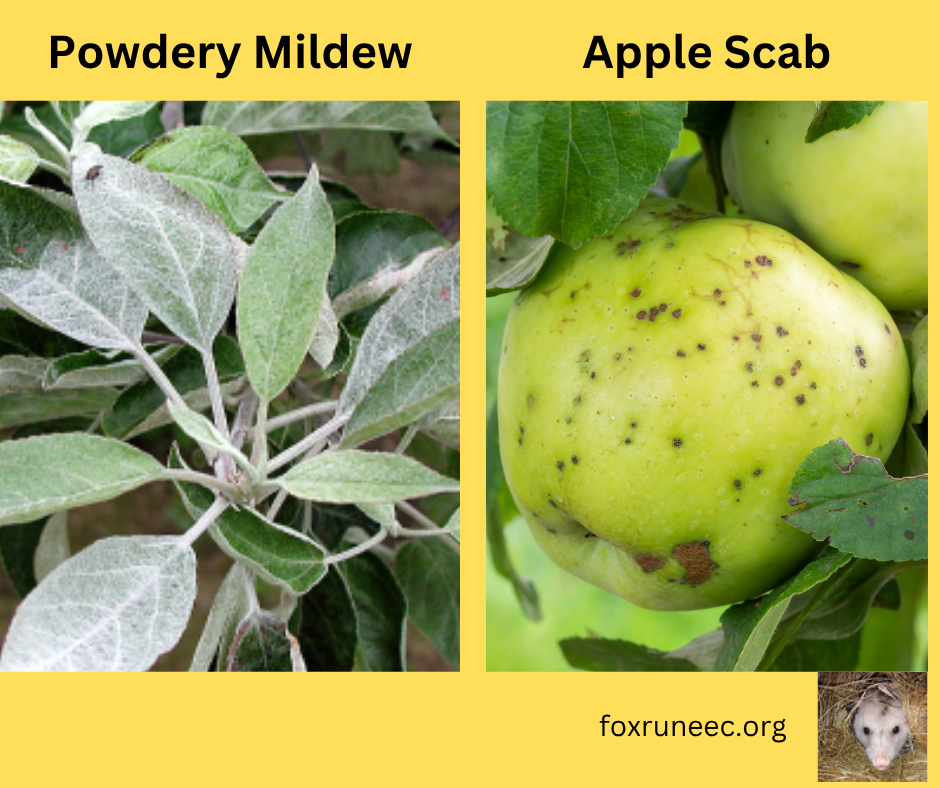
Apple Scab
Apple scab is a serious fungal disease that affects apples and pears. The fruit develops brown spots which can lead to lesions. Unlike many fungal diseases it is most severe in cool, wet years. Scabby fruits are often unfit for eating.
Apple scab lesions are often first noticed on the upper side of the leaf. The fungus overwinters on fallen diseased leaves and in spring, these fungi shoot spores into the air. Spores are carried by wind to newly developing leaves and flowers.
Apple scab is not a lethal disease, even when trees totally defoliate or the fruit looks like this. Plant resistant varieties if apple scab has been an issue in your region.
In this video I tell you about successful organic farming techniques for apples, focusing on pest management and managing fungal diseases. l'll show you how to identify common pests and diseases, what steps to take, including introducing resistant apple varieties ensuring a healthy organic apple orchard.
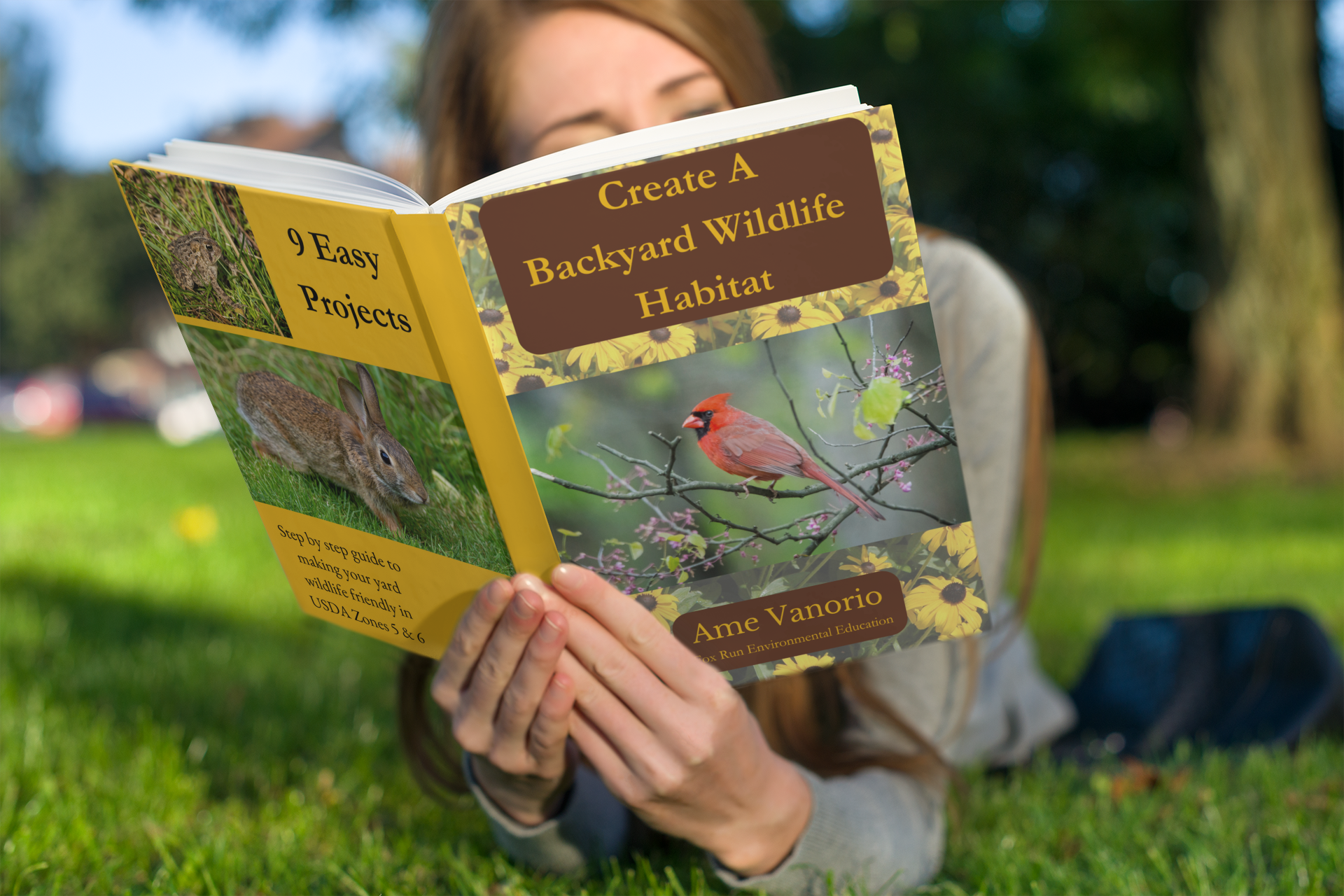
Check out my gardening books on Amazon.
Nature is your friend. Install bluebird boxes. They love caterpillars slash larvae. Or a bat house. Bats love moths not to mention pesky mosquitos.
Author, Ame Vanorio, and was a certified organic farmer and science teacher for many years. Recently I went from farming 20 acres to gardening in an urban backyard. But I give my apples the same care.


A simple maintenance schedule for your organic fruit tree orchard. Know when the best time to spray and fertilize your orchard will make your fruit trees more productive. Organic pest control and Fertilizer.