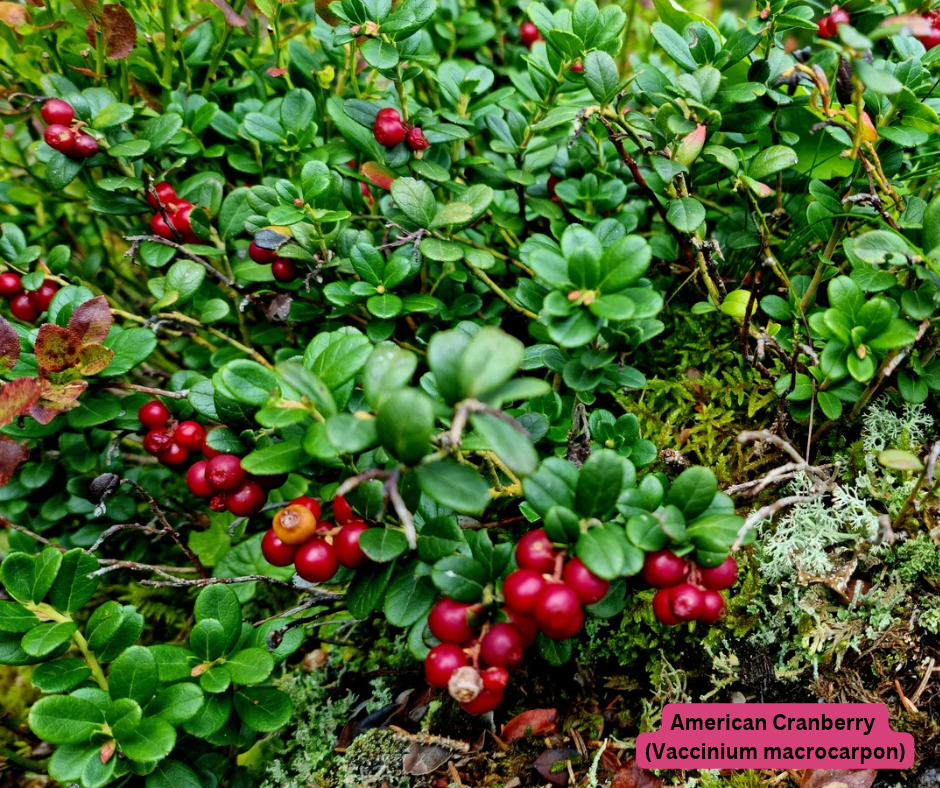
I’m writing this in November and my daughter in law and I were just talking about the Thanksgiving menu. I love making cranberry sauce from real cranberries. Not to mention they are great dried for snack mixes. Can you grow cranberries at home? Yes, lets talk about how.
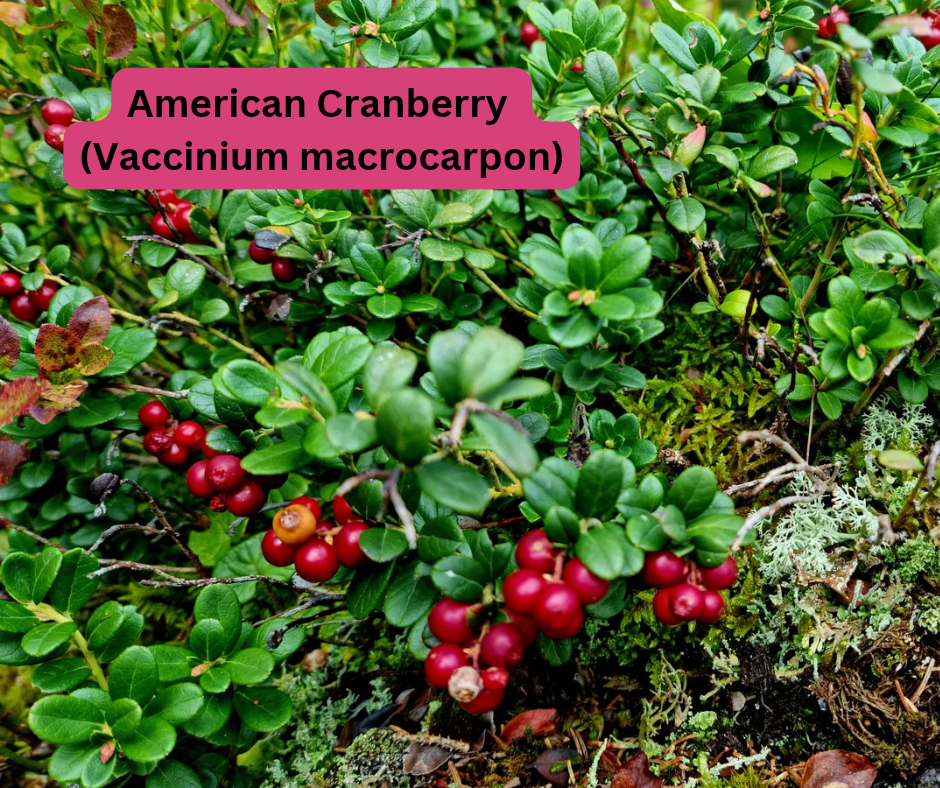
Cranberries are a low growing plant which prefer moist areas.
Do Cranberries Grow In Water?
Contrary to popular belief, cranberries do not grow in deep water. They are native to wet boggy forested areas in the north east and north Midwest up into Canada and Alaska. Growing them in water is a commercial choice because it makes harvesting easier and avoids freezing spring temperatures.
What Are Cranberries?
Cranberries are evergreen shrubs in the genus Vaccinium. They are low, spreading plants that grow in cool forests. They are perennials and long lived (20+ years). They like full sun but will tolerate afternoon shade especially in more southern zones.
Zones 5 & 6
Cranberries are very cold hardy and go up to Zone 2.
Zone 5 has the cold winter chilling hours cranberries require (roughly 3 months of 32°F – 45°F). However, Zone 5 can have fluctuating snow cover so mulch after the first few freezes.
They aren’t as tolerant of heat so Zones 6 and 7 need to make sure they have plenty of moisture and possibly some afternoon sun protection. In the south they will grow with morning sun and afternoon shade.
Growing Cranberries
They take 2 - 3 years to mature but then will produce about 1 to 1.5 pounds per plant. Being only 6-8 inches tall they do well in rock gardens.
Cranberries are related to blueberries, lingonberries, and huckleberries. They all like acid soil and cooler weather. Cranberries like blueberries have some very specific needs.
Read about growing blueberries in my article Growing Blueberries in Zone 6: A Complete Guide
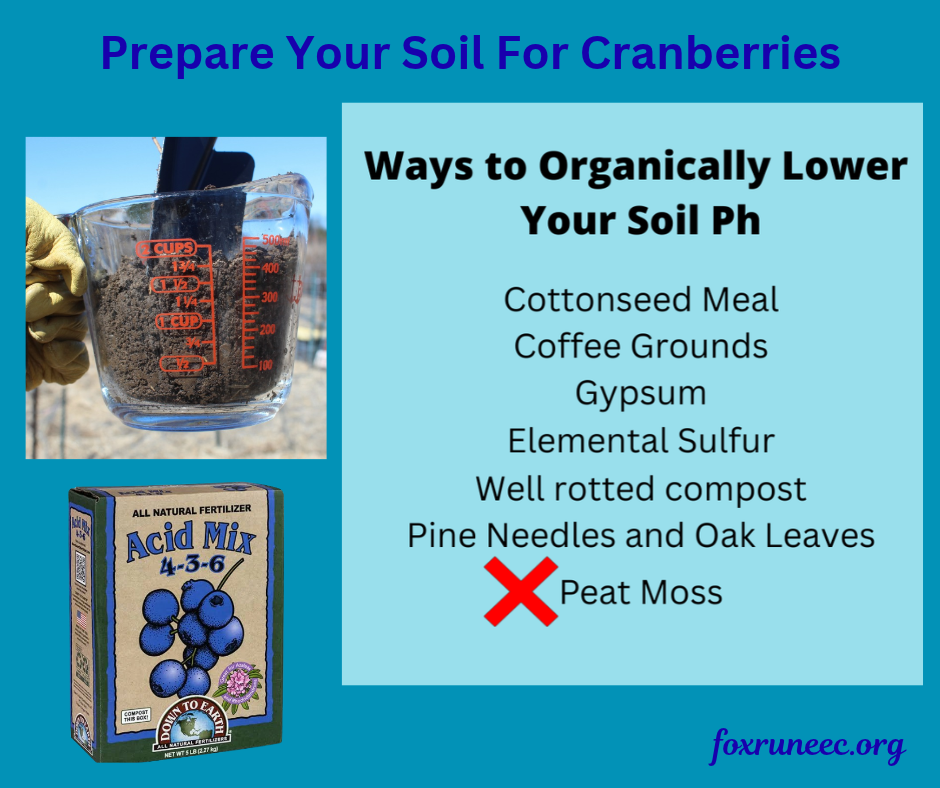
This list is great for adding acidity and nutrients to your soil over time. If you are feeling a bit rushed my favorite is the Down to Earth Organic Acid Mix. Please note I have a red X by the peat and this is a change for me. I no longer use or recommend peat moss because of the negative impact on wetlands.
Acid Soil
Foremost, cranberries need a very acidic soil with a pH between 4.0 and 5.5, ideally around 4.5.
Step 1 is to optimize your planting spot. They wont grow in regular garden soil. Zone 6 friends they do not like heavy clay soil. Do a soil test to find out your pH.
2. Add some sand, compost, and amenities to make your soil rich and more acidic. I like cottonseed meal. Try to get your spot ready several weeks before your plants arrive so the soil can settle and worms can start working it.
In Kentucky (Zone 6B) my soil was very clayey so I added gypsum to reduce pH but also improve soil texture. Gypsum causes tiny, tightly packed clay particles to clump together into larger, more porous aggregates. It helps improves water infiltration, air circulation, and root penetration.
I'm a fan of raised beds and that’s how I grew my cranberries on my farm in Kentucky. I haven't raised them where I live now in Wisconsin - yet! Raised beds are a plus because you can custom mix your soil. Also cranberries need moist but aerated soil so they don't like heavy soil.
3. I also like the Down to Earth Acid Mix if you want to move a bit faster.
*Please note on the graphic above I have a red X by the peat and this is a change for me. I no longer use or recommend peat moss because of the negative impact on wetlands.
Peat is harvested from bogs and wetlands. The plant most associated with peat is Sphagnum moss which over thousands of years decomposed to create peatmoss. Peat bogs are home to a wide variety of wildlife, including rare plants, birds, frogs, and insects. Harvesting it kills off many plants and animals and destroys habitat.
Read my article: Is Peat Moss Environmentally Evil?
Starting Cranberry Plants
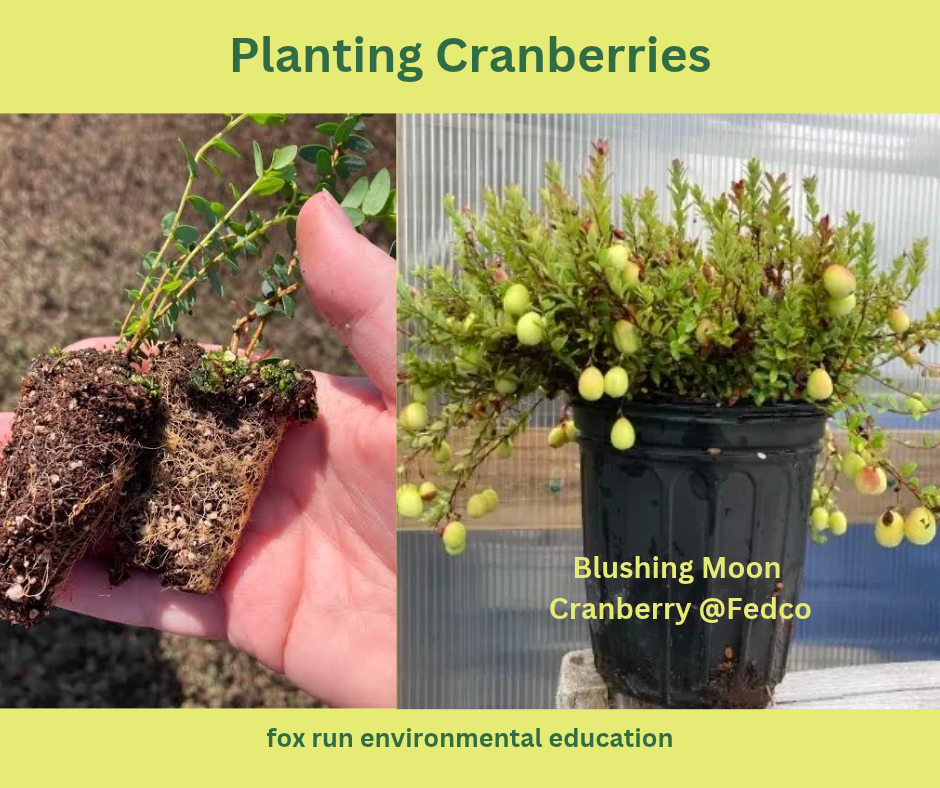
You can get some plugs or buy them in a quart container. Fedco is one of my favorite seed companies and they carry cranberries. Or check with your local nursery.
you can grow cranberries from seeds but they are slow to germinate, have low germination rates, and don’t always grow true to type. So I don’t recommend it.
Plant plugs in early spring (around April 15 - 30 for Zones 5–6) after the last hard frost. Set plants at the exact same depth they sat in their nursery pots. Never bury the crown, as cranberry crowns easily smother and die.
Space individual vines 12 to 18 inches apart (or up to 2–3 feet apart); they send out low trailing runners like strawberries to fill in the gaps.
Patience is Required
Like other fruits they take 2–3 years to productive harvest. Once established, cranberry plantings can be productive for many decades.
There are some wonderful cranberry varieties to choose from!
Varieties
Pilgrim
Pilgrim is the one I grew. Its a popular variety that has very large tasty fruits. Good for juice and fresh eating. Late ripening from mid September into October. Best in longer-season locations. Zones 4–7.
Ben Lear
Ben Lear Early is a bright red cranberry with high pigment content, ideal for juice. Moderate yield, very early ripening late August into early September. Developed in Wisconsin and good for Zones 4 - 5.
Stevens
Very adaptable, self-pollinating. Native to northeastern U.S. and Canada and a popular choice. Hardy, high-yielding, vigorous, with disease-tolerant vines. Large deep-red berries for juice and dried fruit.
Blushing Moon
An unusual cranberry with white skin. Berries are considered albino with a red blush. (see photo above) Self-pollinating. The fruit is smaller than Stevens with higher yields. Makes clear juice. Sauce is amber. Native to northeastern U.S. and Canada.
Pollination
Cranberries make cute pink flowers in spring and are pollinated by bees. Cranberry blossoms are sensitive to late spring freezes. You will need to cover the plants with frost cloth if a hard freeze threatens active spring growth. Similar to strawberries.
Read my article Strawberries: Growing and Using
Blueberries are related to cranberries and you can grow the two of them near each other. Growing blueberries can be a tad tricky. They have very specific soil needs. This video will show you how to grow blueberries in USDA Zone 6.
Groundcover and Rock Gardens
Cranberry vines spread by stolons (runners) which are long, slender horizontal stems that send down roots as they grow. Over several seasons they form a dense mat, making a great groundcover which suppresses weeds once established.
Cranberries do well on a pot on the patio and I’ve heard that people use them in hanging baskets. Make sure you keep the soil moist.
Mulch
Cranberry plants have shallow roots and benefit from mulching. About two inches deep helps protect roots and keeps soil moist. Pine needles or pine bark is a good choice because it is acidic. Spruce works well too especially if you live somewhere where you can gather the needles. Straw can also be used.
water
Cranberries like to be kept moist. Typically about 1 inch of water per week but you may need to water more during hot weather.
Harvest
Harvest is in late summer and fall depending on the variety. Most varieties are harvested from mid-September through early November once the berries turn deep red and feel firm.
Pick berries gently by hand or use a berry picker. Harvest on a dry day when vines are free of moisture.
Tip: A fresh berry will "bounce" when dropped. Small air-filled chambers inside a cranberry cause the fruit to bounce and to float.

Check out my book on backyard wildlife along with my other books on Amazon.
Growing cranberries for backyard wildlife gives birds, pollinators, and small mammals food and shelter. They make great plants for a backyard wildlife garden. Cedar wax wings and other birds like robins love cranberries. So cover them if you don’t wish to share.
There is also Viburnum trilobum, a flowering bush, named high bush cranberry that produces bright red berries birds love. It is a tall, upright native shrubs (8–12 feet) that offers thick nesting cover and spring flowers for pollinators. Good for screens and hedges, fast growing, and will sucker over time. It is also considered a medicinal plant.
If your interested in building a backyard wildlife habitat check out my book above.
Can you grow cranberries at home? Yes, lets talk about how. Growing them in ponds is a commercial choice because it makes harvesting easier. They do need moist, acidic soil but can be grown in raised beds, containers, or rock gardens. Learn how in my video.
Cooking With Cranberries
Preserving
Discard cranberries that are shriveled, soft, wrinkled or have surface blemishes. Fresh cranberries last for two weeks in the refrigerator or up to a year in the freezer. To freeze place them directly into a zip-top freezer bag or airtight container for up to 12 months.
Canning Cranberry Sauce
Ingrediants:
4 cups cranberries
1 cup water
2 cups sugar
Makes about 4 half-pint jars
Process:
1.Wash cranberries.
2. Cook berries in water until soft.
3. Press them through a fine sieve depending on the consistency you want. I like mine chunky so I use a masher.
4. Add sugar and boil 3 minutes.
5. Pour boiling hot sauce into hot jars, leaving ½-inch headspace. Remove air bubbles and adjust headspace if needed. Wipe rims of jars with a dampened clean paper towel; adjust two-piece metal canning lids.
Process in a Boiling Water Canner for 15 minutes. Add 5 minutes for elevations over 1000 feet.
Fresh Cranberry Sauce with Orange juice
My mother loved to add orange juice when she made cranberry sauce at Thanksgiving. Make fresh cranberry sauce with orange juice in about 15–20 minutes on the stovetop using just three core ingredients.
Ingredients
• 12 oz (about 4 cups) fresh cranberries
• 1 cup orange juice
• 1 cup granulated sugar (you can also use maple syrup)
• Optional: A teaspoon grated orange zest and/or 1/2 teaspoon ground cinnamon
Steps
1. Mix the orange juice and sugar in a medium saucepan over medium heat. Stir continuously until the sugar dissolves and the mixture comes to a simmer.
2. Add cranberries and cook, stirring occasionally, until most of the berries have popped, about 10 minutes.
3. Mash berries to consistency you want.
4. Transfer to serving bowl and let cool. It thickens as it cools. Cover and put in refrigerator if you are not ready to serve it yet.
Happy Thanksgiving!