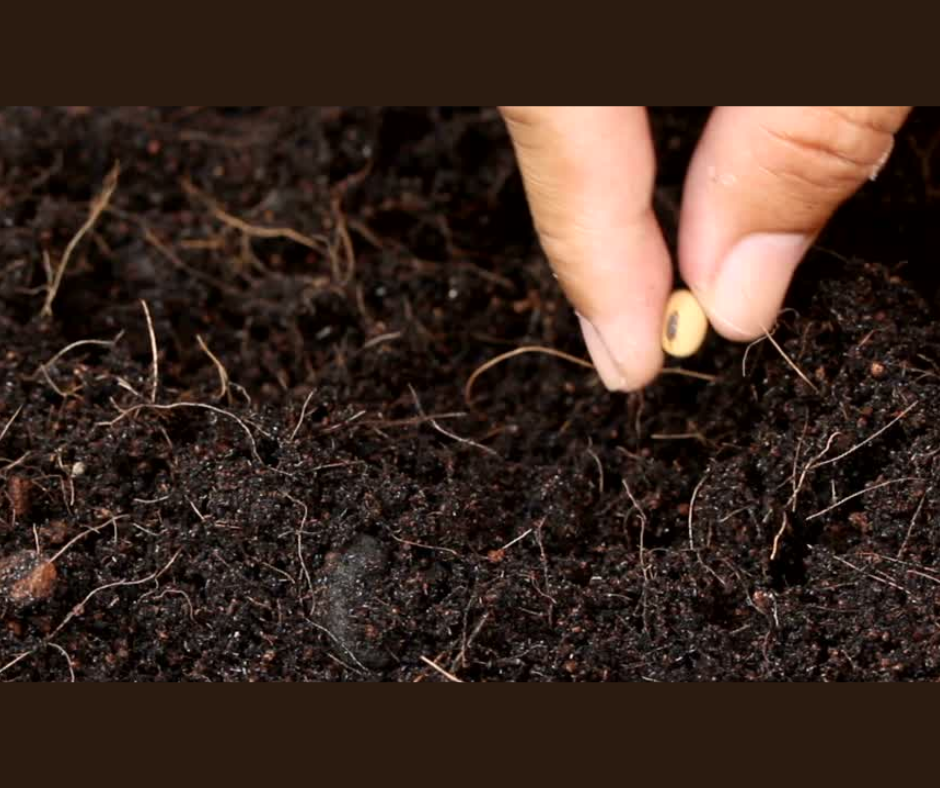
Seeds are where every garden begins. For new gardeners, seed labels and terms can be confusing. Seeds fall into two main categories. Heirloom and Hybrid. Understanding the differences between heirloom and hybrid seeds plus related terms such open-pollinated and GMO plants is essential for gardeners seeking to make informed choices.
Whether it's the uniformity of hybrids or the historical significance of heirlooms, each type offers distinct benefits and considerations for both novice and experienced gardeners. Lets dig in to what they are plus look at the pros and cons.
Gardening can help you lower food costs, get some exercise, and is emotionally fulfilling!
Let’s Identify Seed terms. In a nutshell.
Heirloom plants reproduce naturally through open pollination. They are the seeds your grandparents or great grandparents had available to them. Generally, these varieties predate 1945. Some may be hundreds of years old.
Open Pollination happens when plants are pollinated naturally by birds, bats, insects, wind, or even humans. When you save seeds from heirloom plants, those seeds will grow into plants very similar to the parent plant. This is called “true to type.”
Self Pollination is when a plant has both male and female parts and can pollinate itself often using wind as the catalyst. Tomatoes, beans and peaches do this.
Hybrids are created by farmers and scientists using cross-pollination techniques. However, the second generation of plants may be sterile or not reproduce true to type.
GMO stands for Genetically Modified Organism. To do this genetic engineers change the the characteristics of the seed. They are modified or changed by inserting or changing the genes. This is done to help the plant repel certain insects or a certain disease.
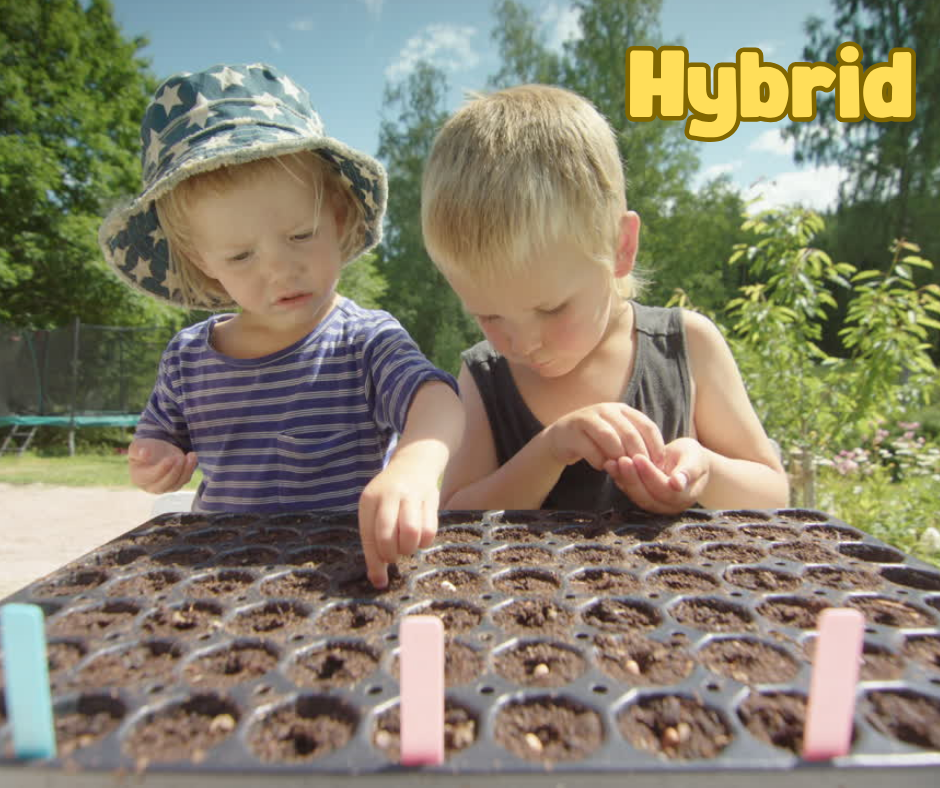
HYBRIDS - EVIL CREATURES OF THE NIGHT?
Hybrids are the new kids on the block. They are developed by intentionally crossing two different parent plants of the same species. Plant breeders do this to combine specific traits, such as disease resistance, higher yields, uniform size, or faster growth.
Hybrids are not evil creatures of the night. Many modern hybrids are often bred for shipping. Eat any store tomato and you will know this is true. The taste was sacrificed but they do serve a purpose in feeding a large population. Hybrids are often developed to combat a disease or to produce bigger fruits or be more productive.
Hybrid plants are created by cross-pollinating two different plant varieties and growing the seeds that result. The plant that grows from the harvested seed is considered an F1 or first-generation hybrid offspring.
Hybrids have a letter and number to identify them such as F1 and F2. The F is for filial, meaning offspring, and the number shows which generation hybrid they are after controlled cross-pollination.
A seed from an F1 hybrid will not produce true to type and an F2 hybrid will produce sterile seeds. If you are growing hybrids, you must buy new seeds every year.
ADVANTAGES OF HYBRIDS
Disease resistance
Bred for select traits
Vigorous growth
Higher yields
DISADVANTAGES OF HYBRIDS
Can’t save the seeds
Seeds often more expensive
Often bred for marketing and shipping - not taste
May be GMOs
Choosing seeds. Organic vs conventional seeds with information on GMO seeds.
Breeding Plants
Hybridization is not new. We have evidence that Neolithic farmers were selectively breeding plants and the Aztecs began breeding maize varieties as early as 800 BC. George Washington Carver made a career in the 1920s of developing peanut varieties and finding ways to market the crop.
Hybrid corn seeds became available in the 1920s and by the 1950s many seed catalogs were carrying hybrids.
Controversy has developed over time as corporations have bred hybrids solely as a marketing strategy or a way to dominate in the field. Hybrids result from controlled inbreeding and limiting genetic diversity.
Hybrids do have advantages. One advantage is disease resistance. Your garden may be prone to different disease organisms depending on your location. The humid south is prone to fungal diseases. If you live in such an area it may be advantageous to grow a plant that is resistant to a certain disease. Read the descriptions in your seed catalog carefully for information about disease resistance and taste trials.
HEIRLOOMS - NATURE’S GIFT?
Heirlooms are known for their fabulous taste. They have a full flavor, unique colors, and a long history tied to regions or cultures. Heirlooms have a story to tell and they are often named after people or places. The Mortgage Lifter tomato was developed by a mechanic "Radiator Charlie" in the 1930s who sold seedlings to pay off his $6,000 mortgage during the Depression.
Heirlooms have been passed down through multiple generations. These plants are treasured for their historical and cultural significance, as well as for their unique flavors, colors, and shapes.
The biggest advantage of heirloom seeds is that you can save them for the next growing season. So you save money and have better food security.
The tradeoff is that heirloom plants can be less uniform and sometimes less disease-resistant. They can be very regionally specific, meaning a variety may not do well in your geographic area because it has adapted to a very specific climate. Ask your neighbors and Extension Office which varieties work well for them.
ADVANTAGES OF HEIRLOOMS
Able to save seeds, have food security, and thus save money
Seeds are less expensive
Superior taste (usually)
Supports insect activity (like your honey bees) and natural relationships
DISADVANTAGES OF HEIRLOOMS
May be more prone to disease
Regional varieties
Lower yields
Heirlooms are open-pollinated varieties. Having an organic garden is an advantage when growing heirlooms because it will also support insect life. Insects such as bees, wasps, butterflies, beetles, and ants all act as pollinators.
Read my article: The Loss of Insects and How it Affects Your Garden
Generally, these varieties predate 1951 but this date is often contested by adamant seed savers. Some may be hundreds of years old.
Heirlooms may be self-pollinating or cross-pollinating. Heirloom plants were often developed for taste and hardiness in geographic areas of the country.
SAVING SEEDS TO PROMOTE SELF-SUFFICIENCY
One advantage of growing open-pollinated heirloom plants is that you can save the seeds. As your plants mature this summer pick some of the best ones for seed saving.
Beans, melons, squashes, and cucumbers are easy plants to start with. By choosing the best plants for seed saving the gardener is using selection to improve their production.
Saving seeds builds food security while saving money. This helps your annual garden budget to shrink so that you are spending less money overall on food. You can also save seeds from your favorite plants thus assuring you will have them next year.
Saving seeds can actually help improve your garden. By selecting the best plants to save seeds from you improve disease resistance, get a higher yield, and increase adaptability to environmental stress.
When you plant your own seeds you know they are organic and grown in the best way! I view saving seeds as a tool for reaching my self-sufficiency goals but it is also a big fun experiment.
POLLINATION AND HEIRLOOM SEEDS
When saving seeds it is important to learn something about plant pollination and reproduction. Pollination takes place in several ways; self, wind, birds, bats, and insects.
Self-pollination means the plant accepts its own pollen and does not need an outside source such as a bee to complete pollination. Such plants include beans, peas, oats, lettuce, wheat, and tomatoes.
Seeds from these plants are easiest to save because there is little danger of cross-pollination.
Cross-pollination happens when one plant exchanges pollen with a plant of another variety. Vegetables can cross-pollinate with others of the same species, which means you have to separate them.
Plants that are wind-pollinated can do just that. Wind pollination means that the plant accepts pollen from other plants of the same species. Corn, Swiss chard, beets, spinach, and rye fall into this category.
I talk about seed saving more in my individual crop articles and videos. For example check out:
Growing The Best Corn in Zone 6B
Insect pollination occurs when insects carry pollen within the same species. Bees have the best reputation as pollinating insects but ants, hoverflies, butterflies, and beetles are also important pollinators.
Insect pollinated plants are the largest group containing broccoli, cabbage, cucumbers, eggplants, kale, melons, squashes peppers, and turnips. (Another reason why it’s important to grow organically – you don’t want to kill your pollinators!)
Plants in this group need to be isolated. You can isolate your crops in a variety of ways. One is to simply plant different varieties at different times so they do not flower simultaneously. Another way is to cover plants before they blossom with a wire/garden fabric cage.
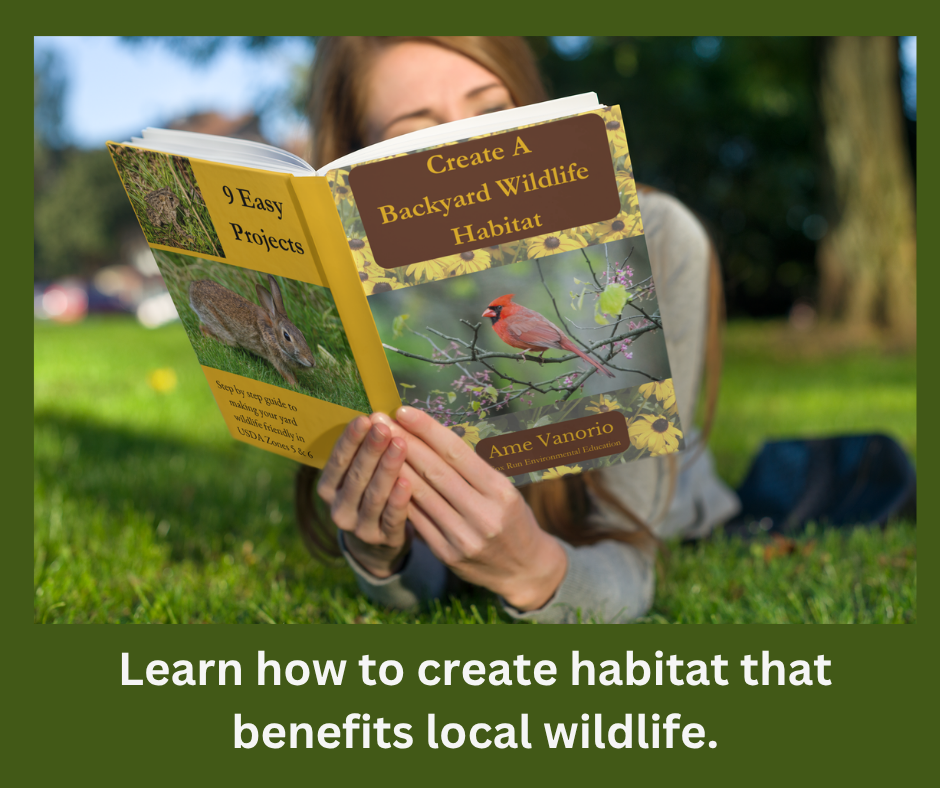
Draw in pollinators by having a garden that provides food and shelter. Check out my books on Amazon.
GMO
GMO stands for genetically modified organisms. In this case the seed. To do this genetic engineers change the the characteristics of the seed. This is different from selective breeding that farmers have been doing for thousands of years.
GMO are modified or changed by inserting or changing the genes. This is done to help the plant repel certain insects or a certain disease.
Some GMO plants or products common in the USA
Corn syrup and oil
Canola oil
Sugar
Apples
Corn
Potatoes
Squash
GMOs have sparked significant debate and controversy in the realm of food production and agriculture. Organic production, in particular, involves strict guidelines and regulations aimed at promoting sustainable and environmentally friendly practices.
As a result, the use of GMOs is strictly prohibited in organic production for several important reasons including environmental, biodiversity, and consumer transparency.
Environmental Concerns
GMOs often involve the use of genetic engineering to introduce specific traits into crops, such as resistance to pests or herbicides. While proponents argue that this can reduce the need for chemical pesticides, organic producers prioritize natural methods of pest and weed control.
They are concerned that GMOs are leading to unintended environmental consequences such as the development of superweeds and the harm to non-target organisms.
Preservation of Biodiversity
Organic farming champions the conservation of biodiversity, including the preservation of traditional and heirloom seed varieties. GMOs, on the other hand, may pose risks to the genetic diversity of crops. By allowing certain genetically modified traits to dominate, there are concerns about the potential loss of diverse and resilient crop varieties.
Seed Companies and Reading Seed Packets
So lets talk about seed companies and looking at labels. I personally lean towards family or employee owned companies. And I buy typically buy organic.
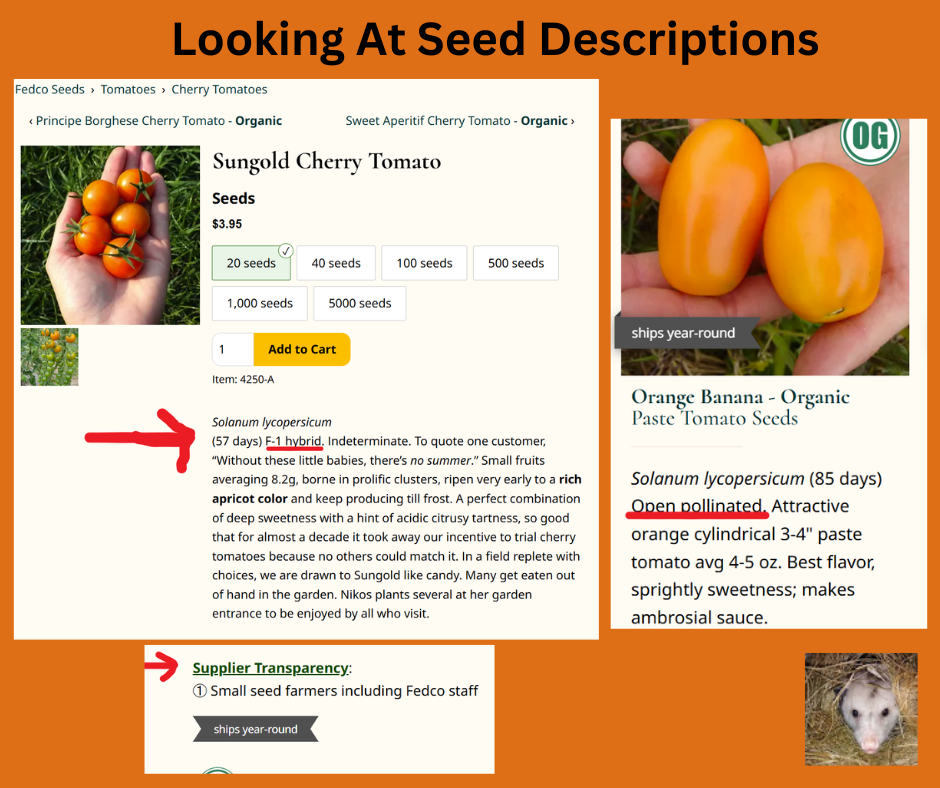
Seed catalogs and seed packets are required to clearly indicate if a seed is a hybrid. Here are some snapshots from the Fedco website. You can see where they list hybrid or open pollinated.
Also Fedco does a nice thing if you have concerns about who you are buying from. They have a supplier transparency guide. The numbers run from 1 to 5 with one being their staff or their research farm and 5 being multinational corporations who are engaged in genetic engineering.
MY TOP 3 FAVORITE SEED COMPANIES
Fedco is a cooperative and is owned 60% by its consumers and 40% by employees. They are very transparent and use a supplier code where #1 means the seed was grown on a small seed farm and/or by Fedco staff and #5 means the seed was grown by a large multinational company that engages in genetic engineering.
Johnnys Seeds is located in Maine, as is Fedco, and is one of the leading seed companies for sustainable farmers. Johnnys is the grandfather of quality organic seeds. They have a broad range of seeds and supplies and great product videos.
Amazon has come a long way in carrying sustainable products and good-quality seeds. I like the way they now have symbols to tell you it’s a small business and/or a climate-friendly one. Just do your research, look at reviews, and buy from trusted companies.
WHAT IS BEST FOR YOU - HEIRLOOMS OR HYBRIDS?
Each person needs to decide what percentage of heirlooms vs. hybrids to grow to meet their gardening needs. Have a plan for your garden and what you want to grow.
I grow about 80% of heirloom plants. I want to have the independence of saving seeds and I love the full flavors. But I do have several hybrid varieties that I love such as such as Sungold tomatoes. Many gardeners develop a palate of preferred varieties that do well for them.
It’s worth cozying up to your gardening neighbors to find out which varieties they grow and why they like them. I suggest buying a few new varieties each season. That way you can determine what grows well in your climate and soil and what tastes great on the table.
Heirloom VS. Hybrid Seeds Learn the key differences between them and why that's important to gardeners. Great for beginner organic gardeners.
BEST PLACES TO BUY SEEDS
I prefer to order from those companies that are dedicated to sustainable agriculture. One thing to watch for is the Safe Seed Pledge developed by the Council for Responsible Genetics. While this is a volunteer opportunity for seed catalogs, with no external regulation, it does give you a sense of the company’s ethics and priorities.
HOW TO LEARN MORE ABOUT YOUR FAVORITE SEED COMPANY
You can dig deeper into a company and look at ownership. Look for family and employee-owned companies.
The majority of seed companies are part of large corporations that own multiple companies. These should be avoided by organic gardeners as many participate in GMO research and chemical resistance.
Do they raise and develop their own seed, or buy from other small farmers or large corporations?
What types of seeds are they selling - heirlooms or hybrids?
What type of supplies are they selling? Do they promote chemical or organic fertilizers and pesticides?
Check out my Amazon Store for the gardening and wildlife rehabilitation supplies that I personally use.