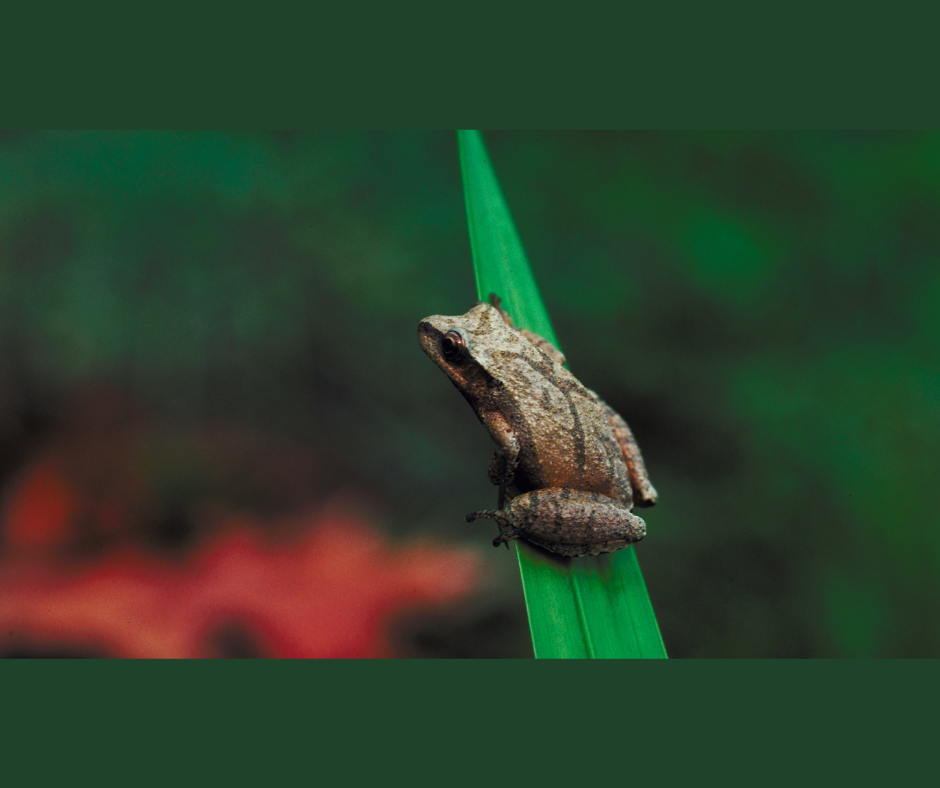
The spring peeper, Pseudacris crucifer, a tiny chorus frog, lives throughout the eastern United States and Canada. They are one of the first signs that winter is ending. On warm evenings in late winter and early spring, wetlands come alive with high-pitched peeping that can carry for long distance.
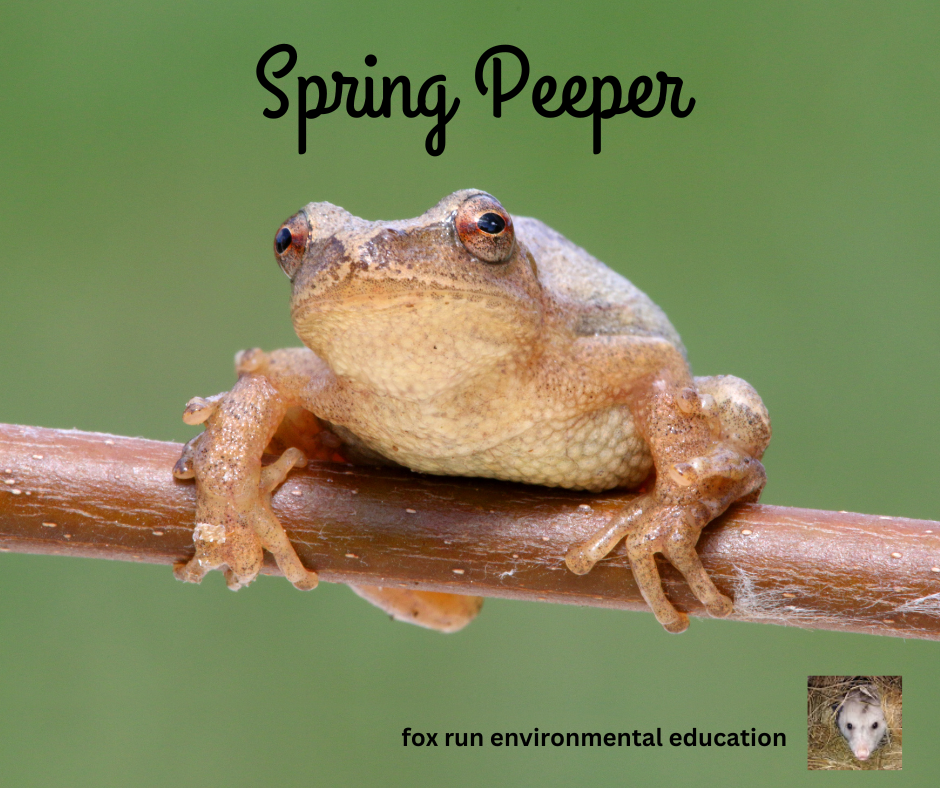
Where Do spring Peepers Live?
They are common in forests, wetlands, and even suburban areas with small ponds or vernal pools. They breed in freshwater pools, ditches, and fish-free vernal ponds with standing plants or debris. They spend most of their time on the forest floor hiding under leaf litter, logs, rocks, or moss.
Because they are sensitive to environmental change, they are also important indicators of ecosystem health.
Like other amphibians, they absorb water and oxygen which means they need to stay in moist environments. It also means they are sensitive to pollution and chemicals.
Interesting Bodies
They are quite small, usually about 1 to 1.5 inches long. Their skin plays a key role in survival.
Peepers have great toe pads. These pads allow them to climb plants, shrubs, and low trees. However, they aren't considered treefrogs. There main abode is on the ground in leaf litter.
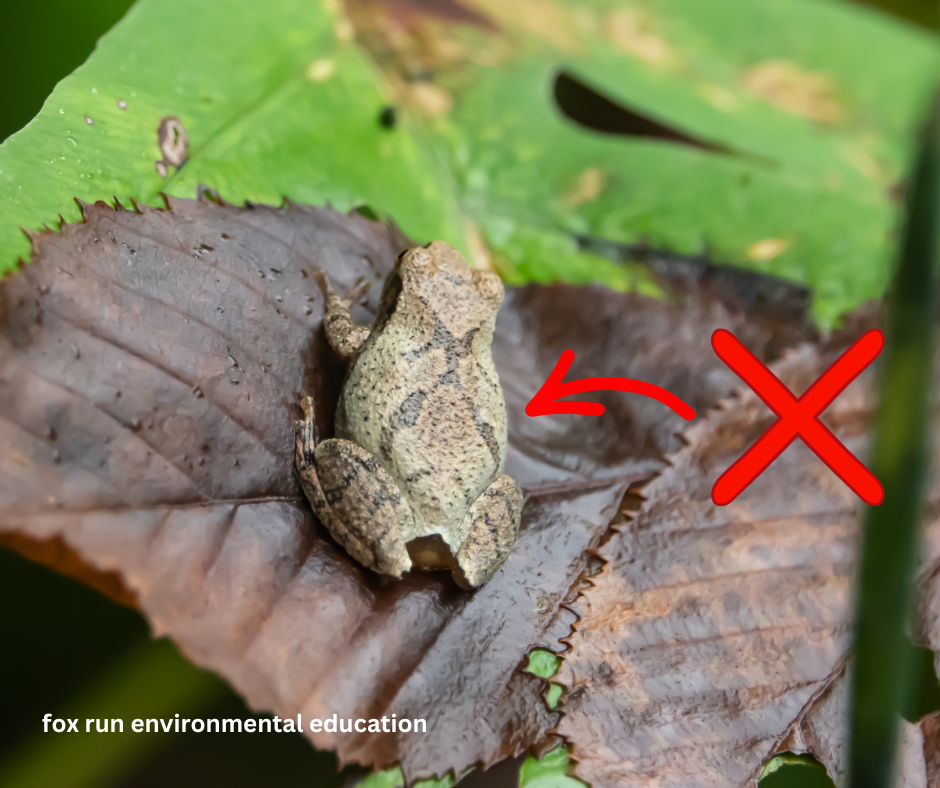
Most have a dark X-shaped marking on their back, which is where the species name “crucifer” comes from. This marking can be faint in some individuals, but it is still a useful field mark.
Sounds
On warm evenings in late winter and early spring, wetlands come alive with a high-pitched chorus that can carry for long distances. These small treefrogs are easy to hear but hard to see.
In males, a sac inflates like a balloon when they call. It amplifies the sound. He calls to the ladies to let them know he's found a desirable place. Studies have shown that females often prefer males with faster or more frequent calls, which may signal better health or fitness.
Making all that noise can come at a cost. Predators may follow the sound looking for a frog snack.
Frog populations are declining fast. You can provide food, shelter, and water to make your backyard a frog-friendly habitat. I give you several ideas for creating frog habitats in you yard.
Life cycle
The life cycle of the spring peeper follows a typical amphibian pattern, but timing is closely tied to temperature and moisture. In many areas, activity begins when nighttime temperatures rise above freezing.
Males gather in shallow wetlands such as vernal pools, marsh edges, and temporary ponds. These habitats are important because they often lack fish, which would eat eggs and tadpoles.
Females lay eggs in small clusters attached to submerged vegetation. The female lays 750 to 1,200 eggs individually or in small clusters. They attach to underwater vegetation and debris. The eggs hatch in a few days to a few weeks, depending on water temperature.
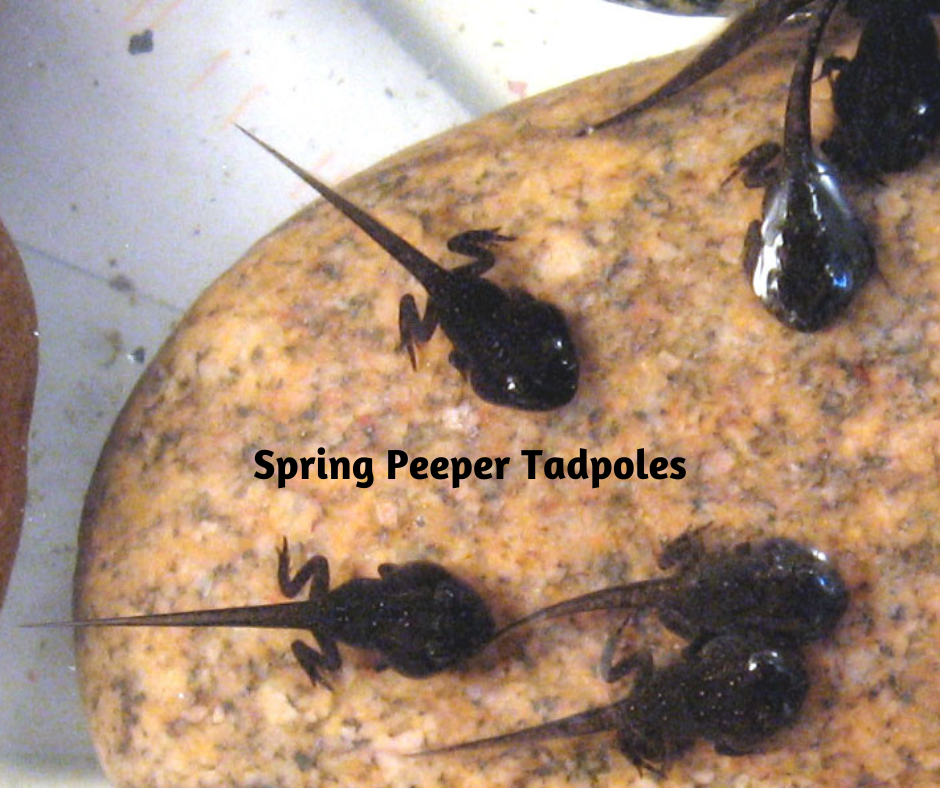
Because many of these wetlands dry up in summer, development must happen fast. Once hatched, the tadpoles feed on algae and organic matter. Tadpoles usually transform into froglets within 6 to 10 weeks.
During metamorphosis, the tadpole develops legs, lungs, and a more defined head and body. The tail is absorbed as the frog transitions to life on land. Young frogs leave the water and move into nearby forests, fields, or gardens.
Diet
Outside of breeding season, spring peepers are quiet and hard to find. They are nocturnal and spend much of their time hidden. Their diet includes small insects, spiders, and other invertebrates. This makes them beneficial in gardens and natural areas because they help control insect populations.
Winter
In fall, spring peepers prepare for winter. They move into protected areas such as under logs or buried in leaf litter. Their ability to survive freezing temperatures is a key adaptation. Ice can form in parts of their body, but vital organs are protected.
This adaptation is supported by glucose and other compounds that act as cryoprotectants. These substances reduce damage to cells during freezing. The National Park Service explains that this process allows certain frogs to survive conditions that would be fatal to most animals.
The spring peeper a tiny chorus frog that lives throughout the eastern United States and Canada is one of the first signs that winter is ending. On warm evenings in late winter and early spring, wetlands come alive with their high-pitched peeping that can carry for long distances.
Sensitive Skin
If you must pick one up handle with care as they are easily squishable. If you have insect repellent, sunscreen, or lotion on your hands, do not handle frogs or other amphibians. They can be harmed or killed by chemicals we consider safe due to their sensitive skin. It’s best to look at them and admire their beauty from afar.
Observing spring peepers in the wild
Spring peepers are best observed by listening. Visit a wetland or pond on a warm evening in early spring. Stay still and let your eyes adjust. You may hear the chorus long before you see a frog.
If you want to look for them, move slowly and use a flashlight with a soft beam. Look for movement near the water’s edge or on low plants. Avoid handling them. Their skin is sensitive, and oils from human hands can cause harm.
Their skin plays a key role in survival. Like other amphibians, they can absorb water and oxygen through their skin. This means they must stay in moist environments. It also means they are sensitive to pollution and chemicals. According to the United States Environmental Protection Agency, amphibians are often used as indicators of environmental health because their skin readily absorbs contaminants.
Drive carefully on rainy nights. Amphibians often cross roadways on rainy evenings to reach wetlands for breeding. You can even join a volunteer group to help move them safely across roads—called amphibian crossing brigades.
Author, Ame Vanorio is the founder of Fox Run EEC, a Master Gardener, and science teacher. You can find her books on her Amazon Storefront.

There are many things you can do to create a friendly frog and toad yard. In this article, I will give you step-by-step directions to create amphibian-friendly places, explain the “why”, and provide images of frog garden designs.