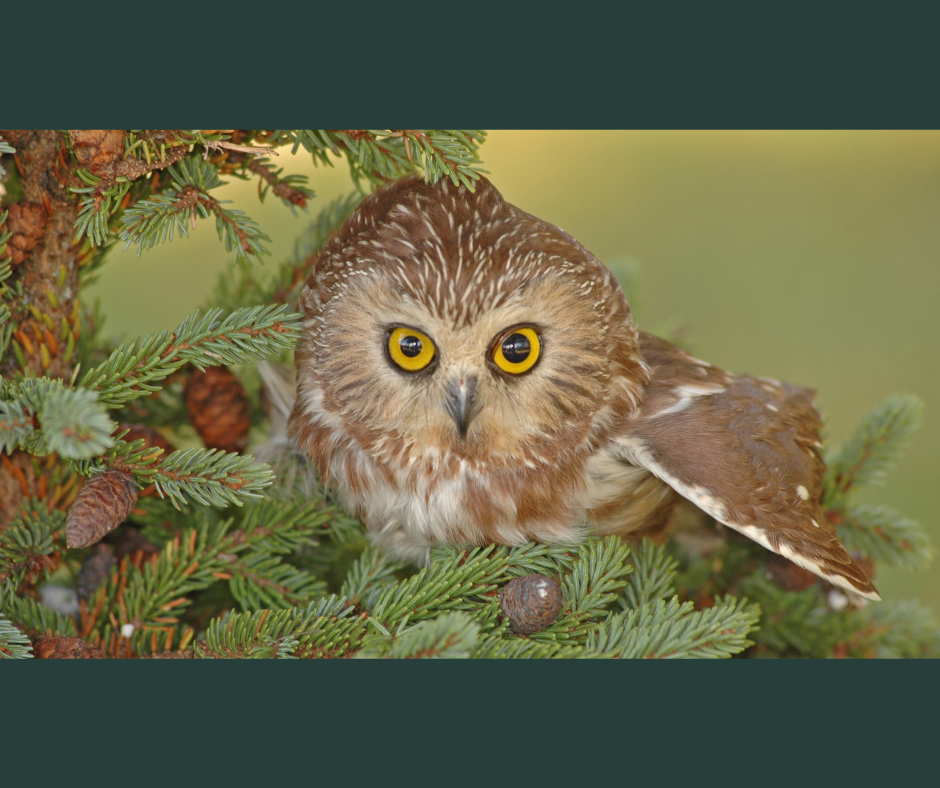
The northern saw whet owl (Aegolius acadicus) is a tiny bird that ranges over much of North America, so your chances are good that one might live near you. Their breeding range includes southern Alaska, most of Canada, and areas of the northern and western United States.
Saw-whet owls are curious birds, allowing humans to come quite close before flying away. Today we are talking all about the saw whet owl, tips for finding them in nature and ways you can help them.
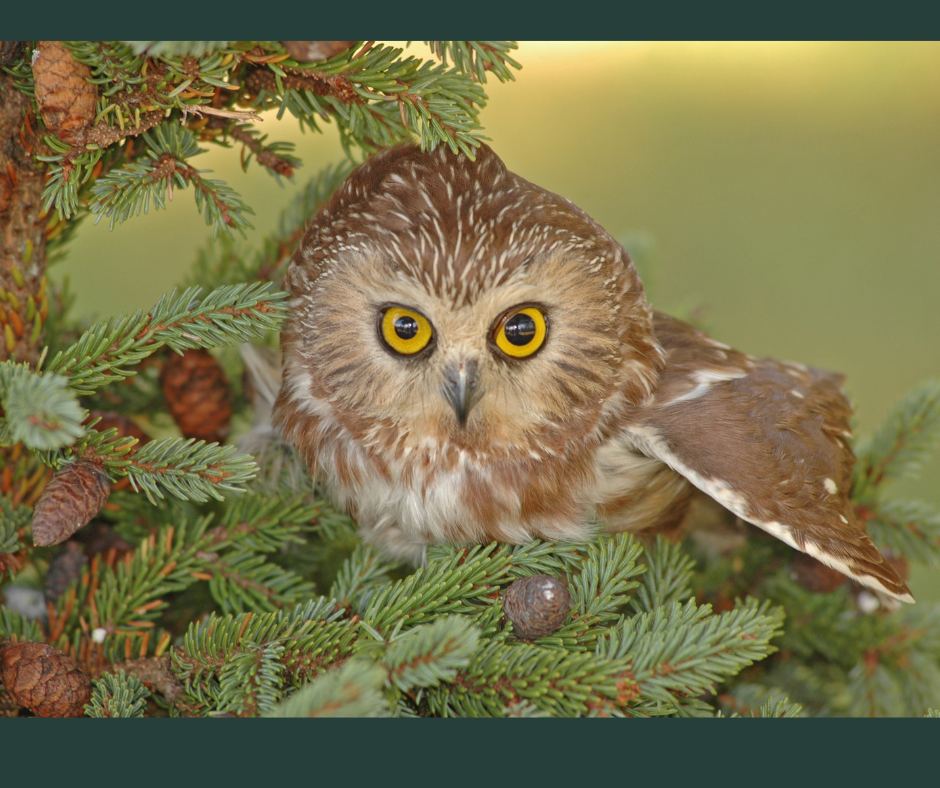
The saw whet is nocturnal, hiding in evergreen trees during the day. You can see how well they blend in.
How To Identify Them
Northern saw whet Owls also have unique feet relative to most other birds. Most owls stand with three toes pointing forward and one pointing backward. Saw whets stand two toes forward and two backward.
They have a round head with no ear tufts. Their face is pale with dark streaks, and their large yellow eyes give them a wide-eyed appearance. The body is brown or reddish brown with white spots on the back and streaks on the chest.
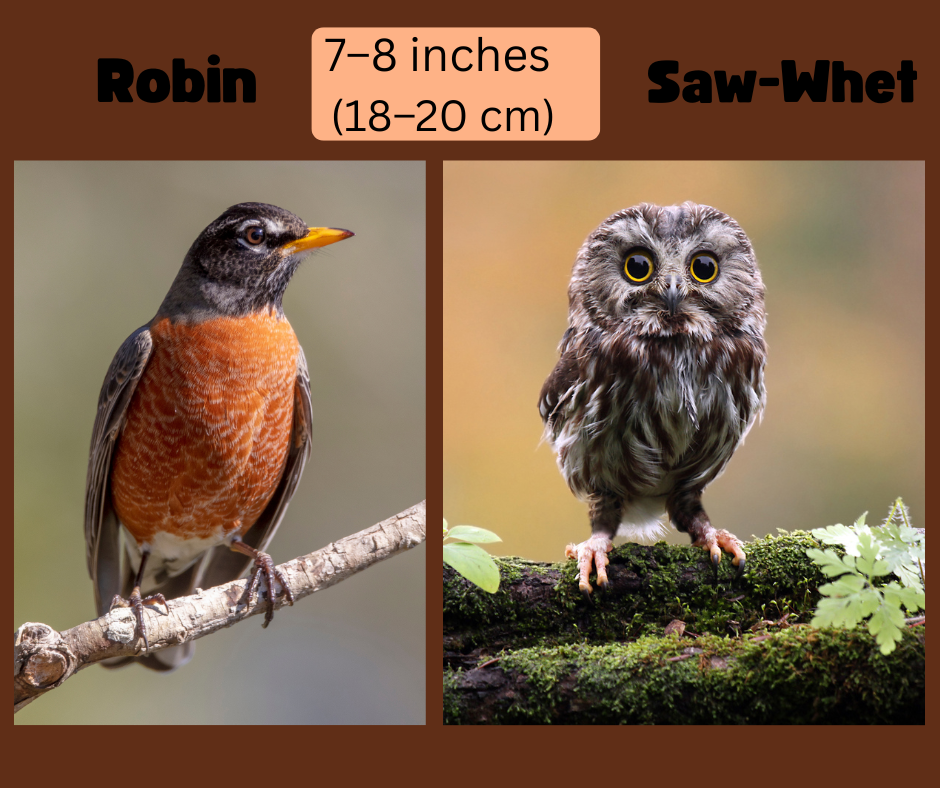
They are the second smallest owl in North America. Adults are usually about 7–8 inches (18–20 cm) long, with a wingspan of about 16–19 inches. Most individuals weigh only 3–4 ounces, about the same as a small apple or an American robin.
Despite its small size, the saw-whet owl is an efficient predator and an important part of forest ecosystems across the continent.
Where Do They Live?
Many northern saw whet owl populations migrate south in fall, especially those that breed in the far north. However, migration patterns vary from year to year depending on food supply.
These owls prefer forested habitats. Dense vegetation is important because it provides safe daytime roosting sites. The birds hide quietly in thick conifers or shrubs during the day, remaining almost invisible to predators.
During winter migration, saw-whet owls may also appear in suburban woodlots, orchards, or hedgerows as long as there are trees and dense cover available.
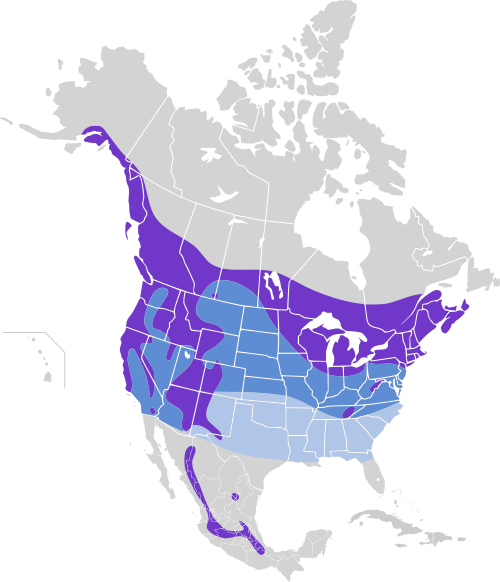
Norther Saw-whet Range
Northern Saw-whet Owls live across a large portion of North America. Their breeding range includes southern Alaska, most of Canada, and areas of the northern and western United States. Purple - year round; Dark blue - breeding & Light blue - scarce.
Diet & Senses
The Northern Saw-whet Owl is primarily nocturnal. They hunt from a perch sitting quietly on a branch and listening for movement below. When they hear prey, they glide silently down and capture it with their sharp talons.
Their excellent hearing allows them to locate animals even when they cannot see them. This ability is especially useful in dense forests or during dark nights.
The species gets its unusual name from its call. Early naturalists thought the repeated “toot-toot-toot” sound reminded them of the noise made when sharpening a saw on a whetstone.
Small mammals make up the majority of the saw-whet owl’s diet. In many studies, rodents make up 85–99% of their prey. Common prey includes: Deer mice, Voles, and Chipmunks. They may also eat, bats, frogs & large insects.
Saw whets can be easy to spot IF you know where to look. They are often on a branch close to the tree trunk. About 10 - 15 feet off the ground. Be persistent. All of your detective work will pay off with the thrill of seeing the tiny Saw-whet Owl up close!
How To find Northern Saw-Whet Owls
Look for the poop! Especially at the base of coniferous trees. Saw-whet owls leave lots of evidence beneath their favorite perching trees.
Owls regurgitate pellets of non digestible material. Northern Saw-whet owl pellets are small, compact, gray-to-brown capsules (about 1–2 inches). Find them just like poop under coniferous trees. They often contain vole or deer mice skeletons and are dropped daily at favorite roosts.
Migration
During winter migration, saw-whet owls may also appear in suburban woodlots, orchards, or hedgerows as long as there are trees and dense cover available.
Many populations migrate south in fall, especially those that breed in the far north. However, migration patterns vary from year to year depending on food supply.
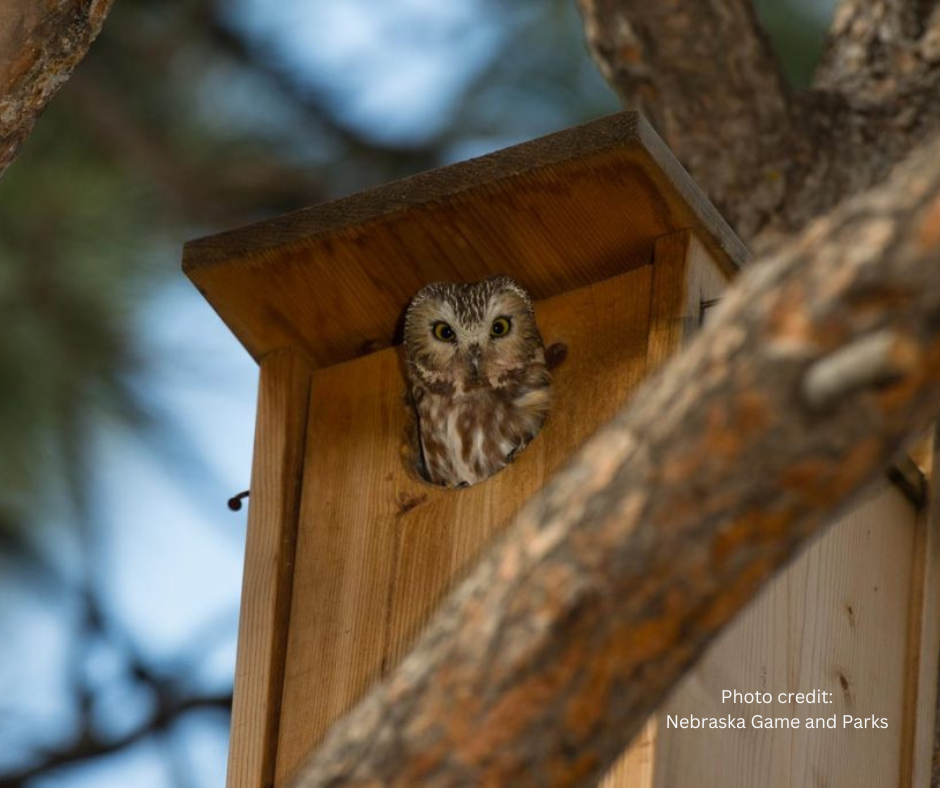
Put Up A Nest Box
Northern Saw-whet Owls are cavity nesters, meaning they rely on holes in trees rather than building their own nests. Most nests are located in abandoned woodpecker holes, natural cavities in trees, or sometimes nest boxes placed by people. So don't cut down a tree that has a natural cavity!
This wooden owl nesting box is perfect for Screech and Saw-whet Owls and adds beauty to your backyard. Attach your nest box to a live tree about 12 - 15 feet off the ground. Ideally in a conifer tree. Add 2–3" of wood chips to the bottom of the box.
Breeding season usually begins in late winter or early spring. Males attract females by calling repeatedly and by bringing food to potential nesting sites. The male may store prey near the nest cavity to show he can provide food for the female and young.
Once a pair forms, the female lays about four to six white eggs inside the cavity. The female stays at the nest to incubate the eggs while the male hunts and brings food. After about a month, the eggs hatch. The chicks are covered in soft down feathers and depend entirely on their parents for food.
Are you handy? Nest boxes are easy to build. Plans to Build from Cornell Nest Watch.
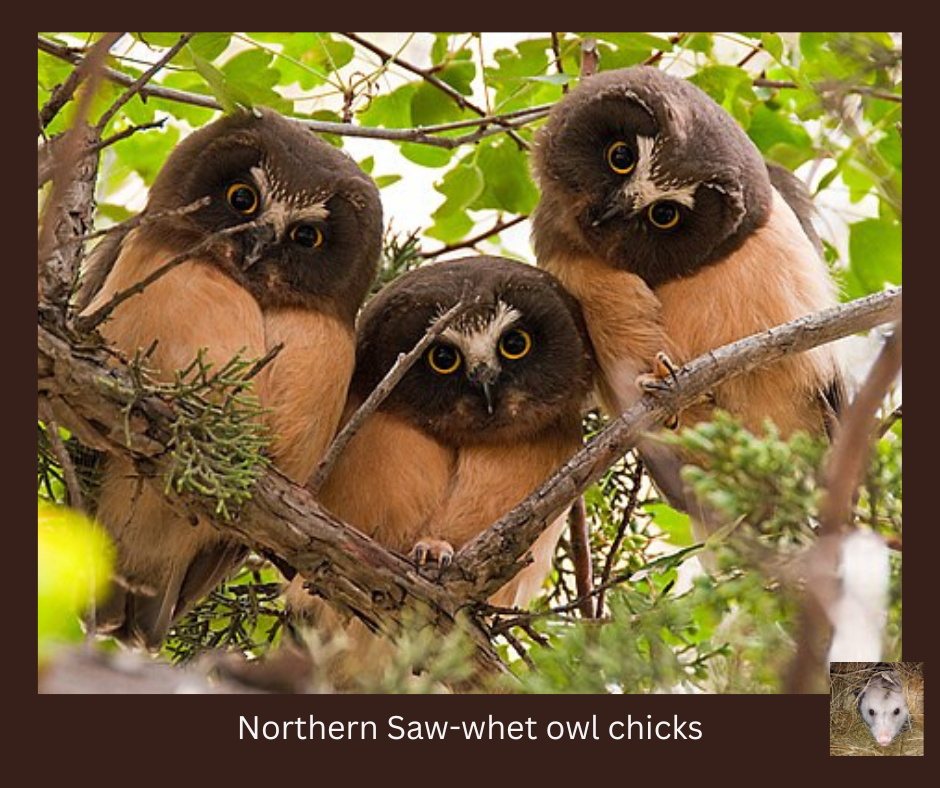
This juvenile coloration provides excellent camouflage
Both parents feed the young owls. As the chicks grow, they develop feathers and begin exercising their wings inside the nest cavity.
One unusual behavior of this species is sequential polyandry. In some cases, after the first chicks grow older, the female may leave the male to care for them while she mates with another male and raises a second brood.
Young owls often perch quietly in dense conifer branches during the day, and their dark brown feathers blend in with tree bark and shadows. As the owl matures through its first molt, the plumage gradually changes to the familiar reddish-brown and white-spotted pattern of adult.
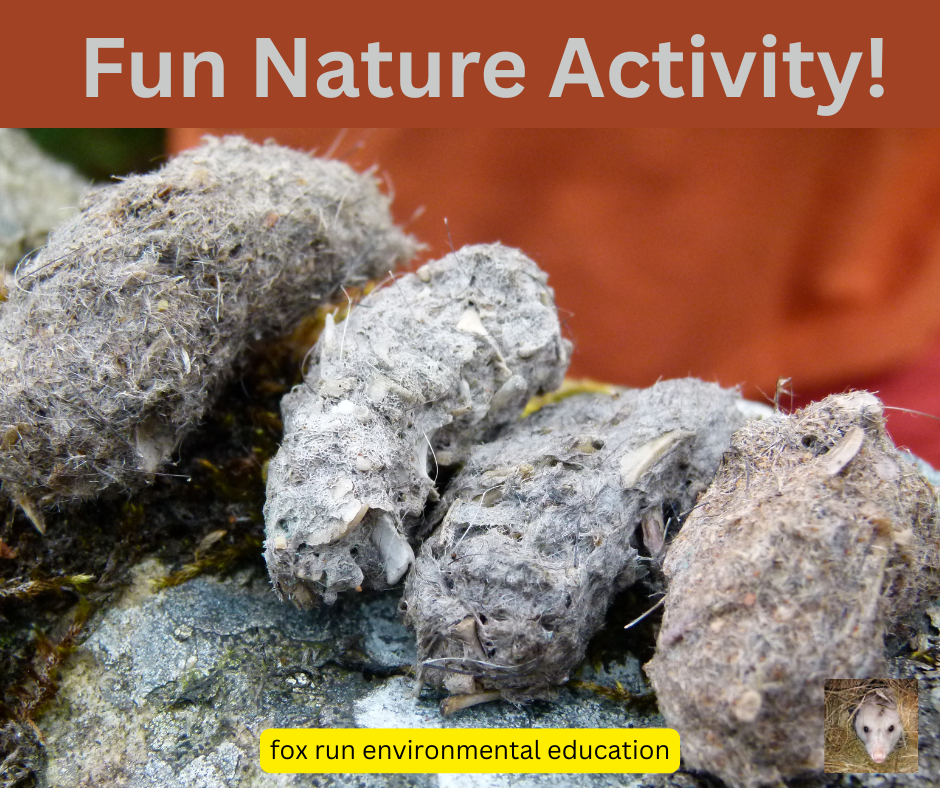
Owl pellets make a great family science experiment
Nature Activity
I mentioned that owls create a waste product called owl pellets. Dissecting owl pellets provides kids or homeschooling families with a highly interactive, tactile way to study ecosystems, food webs, and skeletal anatomy. Kids discover exactly what an owl ate. Uncovering real fur and bones brings predator-prey relationships to life. It’s a fun "nature detective" mystery.
You can purchase owl pellets online. I have purchased from this brand several times for my classes and been very happy with the quality.
Owl Rehabilitation
One of the most common reasons saw-whet owls are admitted to a wildlife rehabilitation center is window collisions. These owls hunt at night and often fly through wooded suburban areas where reflective glass can appear like open habitat.
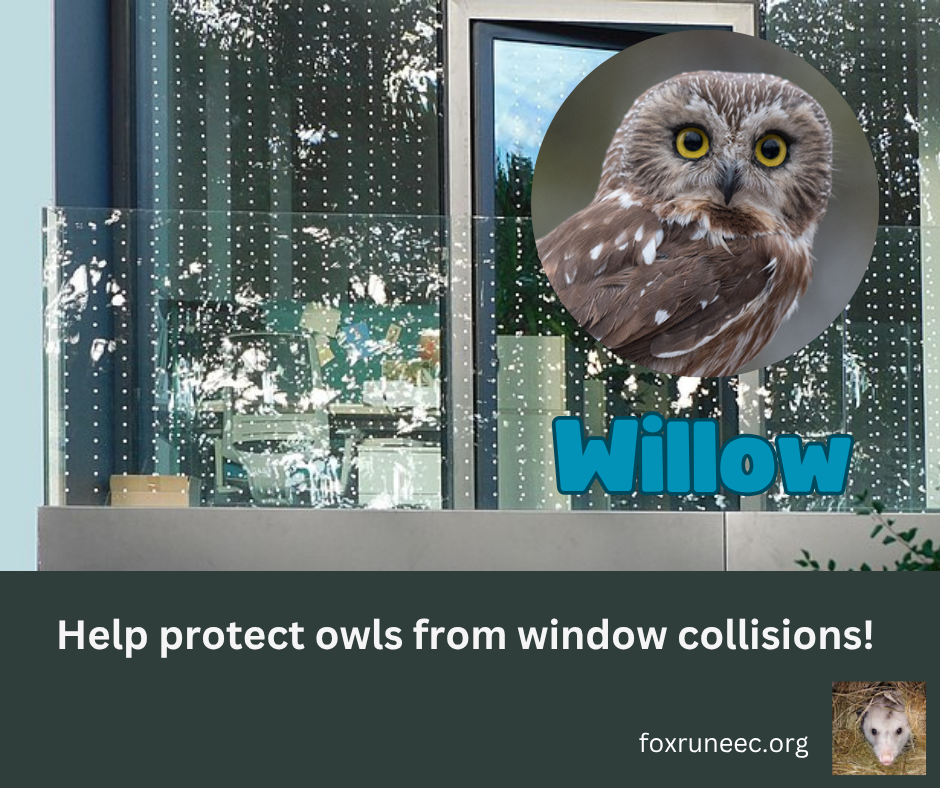
This is Willow. She lives at the Schlitz Audubon Nature Center in Milwaukee, Wisconsin, after being found on a sidewalk following a building collision. She had multiple fractures in her wing and was not releasable.
Found a baby bird out of its nest? You need to know if its a nestling or a fledgling.
Nestlings may be naked or have fluffy down feathers. Their eyes are closed, and can not move. It is quite obvious that this little bird belongs in his nest, where the parents can take care of them. Think of nestlings as infants.
Fledglings have feathers and are about the size of an adult. However, they still may have soft downy feathers. Fledglings are still cared for by their parents. Apart from that they will hop around and try to fly. They are gaining independence skills. Think of fledglings as Kindergarteners.
If you find an injured or orphaned bird please call a wildlife rehabilitator. You can go to the app at Animal Help Now and put in your zip code.
Check out my article: Found A Baby Bird? Here's What To Do
Because this species is very small and sensitive to stress, rehabilitation requires careful handling, proper nutrition, and minimizing human interaction so the bird can be released successfully.
The northern saw whet owl is a tiny bird that ranges over much of North America, so your chances are good that one might live near you. Saw-whet owls are curious birds, allowing humans to come quite close before flying away. Today we are talking all about the saw whet owl, tips for finding them in nature and ways you can help them.
Lifespan
Many saw-whet owls live only a few years in the wild because of predators and environmental challenges. Average wild lifespan is about four years, though some individuals live longer.
Predators and Threats
Even though they are predators, saw-whet owls are small and vulnerable to many larger animals.
Predators include:
Larger owls such as Great Horned Owls
Hawks such as Cooper’s Hawks
Martens and other forest mammals
Crows and jays that raid nests
Because they rely on tree cavities, they also compete with animals like squirrels, starlings, and other birds for nesting sites.
Ecological Importance
Northern Saw-whet Owls play an important role in forest ecosystems. As predators, they help regulate populations of small mammals such as mice and voles.
This natural rodent control benefits forests and agricultural areas. When rodent populations grow too large, they can damage plants, seeds, and tree seedlings. Owls help maintain balance in these ecosystems.
These birds are also part of the food web. Larger raptors and mammals depend on them as prey, linking many species together in the forest environment.
Because they are sensitive to habitat changes, saw-whet owls can also serve as indicator species. If populations decline, it may signal problems with forest health.
Ways People Can Help Northern Saw-whet Owls
In addition to putting up nest boxes which I discussed above there are several ways you can help support saw-whet owl populations in several practical ways.
Protect Forest Habitat
The most important step is protecting forests. Saw-whet owls depend on mature forests with dense vegetation and tree cavities. Protecting woodlands and minimizing unnecessary logging helps maintain suitable habitat.
Leave Standing Dead Trees
Dead trees, often called snags, are essential wildlife habitat. Woodpeckers create holes in these trees, which later become nesting sites for saw-whet owls and many other species.
When safe to do so, leaving dead trees standing in forests or large yards can benefit wildlife.
Reduce Rodent Poison Use
Rodenticides can harm owls indirectly. When owls eat poisoned rodents, they may become sick or die from secondary poisoning. Using non-toxic pest control methods helps protect raptors.
Support Bird Conservation Programs
Many organizations monitor owl populations through banding programs and research. Supporting conservation groups or participating in citizen science projects such as owl surveys helps scientists track population trends.
Protect Nighttime Habitat
Artificial lights can disrupt nocturnal animals. Reducing unnecessary outdoor lighting near forests can help maintain natural nighttime environments for owls and other wildlife.
Author, Ame Vanorio, writes about organic gardening, wildlife conservation, and nature education. Find her books on Amazon. She is the founder of Fox Run Environmental Education, Master Gardener, and a certified science teacher.


I love feeding the birds in my backyard and I have high standards. I frequently teach others to attract backyard birds both locally and through our YouTube channel.
I have 6 feeders and use different mixes to appeal to different species. I also have a pretty high tolerance for chipmunks and squirrels but have recently acquired a squirrel proof feeder.
So here are the feeders currently in my yard and a couple that didn’t make the cut. Reviews are my honest opinions and I will let you know if I purchased the feeder or if it was a donation.