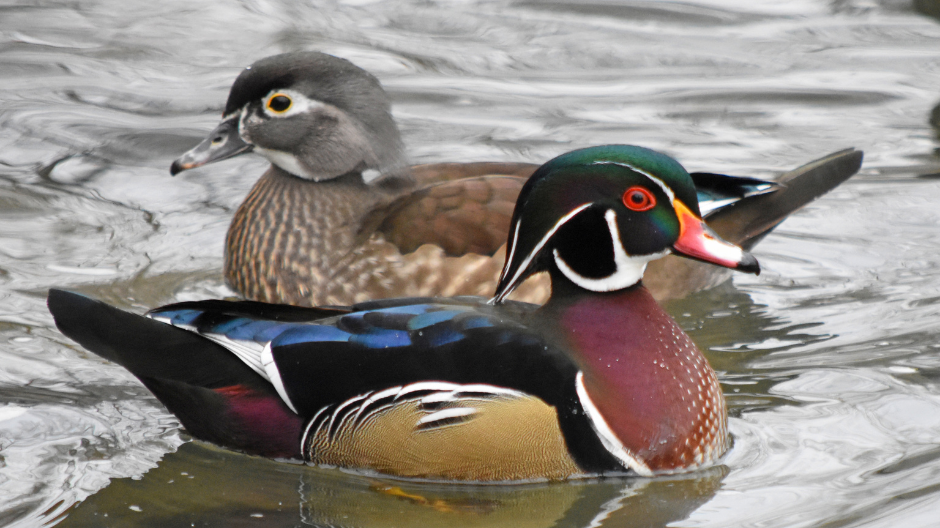
Wood Ducks are unique because they nest in trees. They are one of the few North American ducks that regularly use tree cavities for nesting. Their scientific name, Aix sponsa, means “water bird in wedding dress,” a good description of the drake in spring.
The Wood Duck is one of the most beautiful native ducks in North America. They can be easy to spot in spring because they prefer smaller shallow ponds. In this article we will talk about their behavior, how to spot them , and what you can do to encourage their nesting.
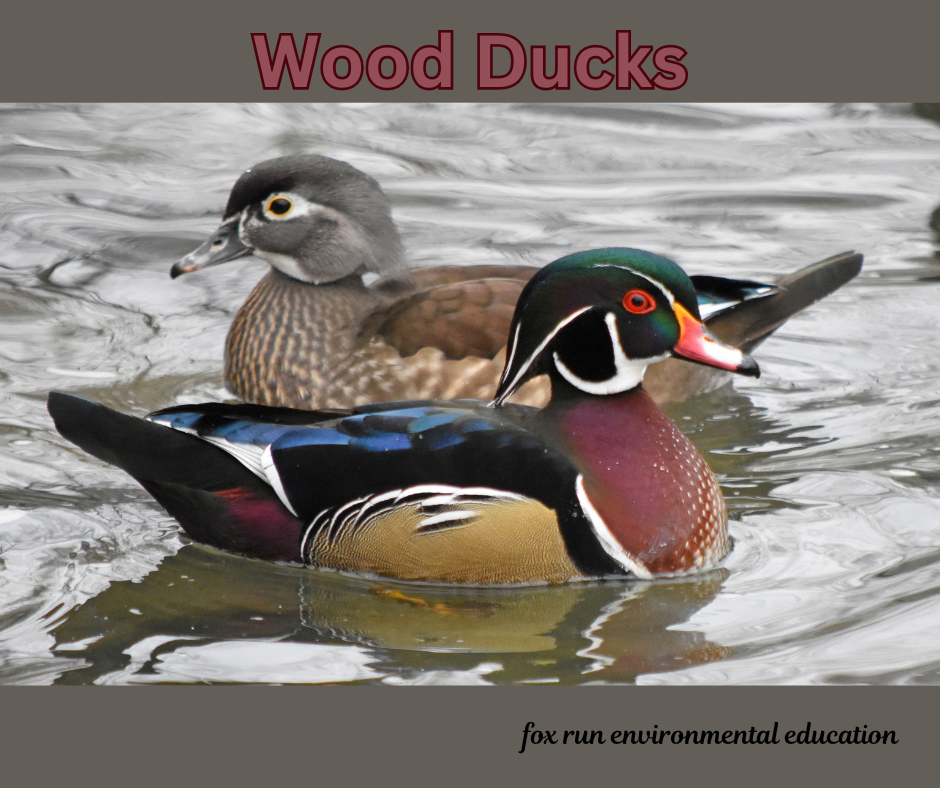
Male wood duck (front) female (behind)
Male and Female Difference
The male has bold colors; green and purple on the head, red around the eyes, and white markings. Their scientific name, Aix sponsa, means “water bird in wedding dress,” a good description of the drake in spring.
The female wood duck is a small, grayish-brown bird with a crest on her boxy shaped head. She is easily identified by a prominent white, teardrop-shaped patch around her eye, a white throat, and a speckled breast.
Both have a boxy crest on the back of the head. But the Wood Duck is more than just good looks. It plays an important role in forested wetlands across the continent.
Where Wood Ducks Live
In the eastern United States, they are common in forested swamps and river floodplains. In the West, they live along wooded streams and wetlands, especially in California and the Pacific Northwest.
Wood Ducks breed across much of the eastern U.S., parts of the Midwest, and along the West Coast. Northern populations migrate south in fall. In the Southeast and parts of the Pacific Coast, some stay year-round if water stays open.
You will find them in:
Swamps
Marshes with trees
Beaver ponds
Slow streams
Bottomland hardwood forests
They need water and trees together. The trees provide nesting cavities. The water provides food and cover. Unlike diving ducks that prefer large lakes, Wood Ducks like smaller, sheltered water. They avoid big open areas where they are exposed to predators.
Behavior
Wood Ducks are strong fliers. They can move quickly through trees. Their broad, rounded wings allow them to lift straight up from the water. If you have ever flushed one from a creek, you know how fast they can disappear into the woods.
They often perch in trees. This surprises people who think of ducks as strictly water birds. Wood Ducks will sit on branches overhanging water, sometimes 20 feet up.
They are generally shy and cautious. Early morning and evening are the best times to see them feeding. Sit quietly near the edge of the pond. They like to hide in tall water grasses or under overhanging branches.
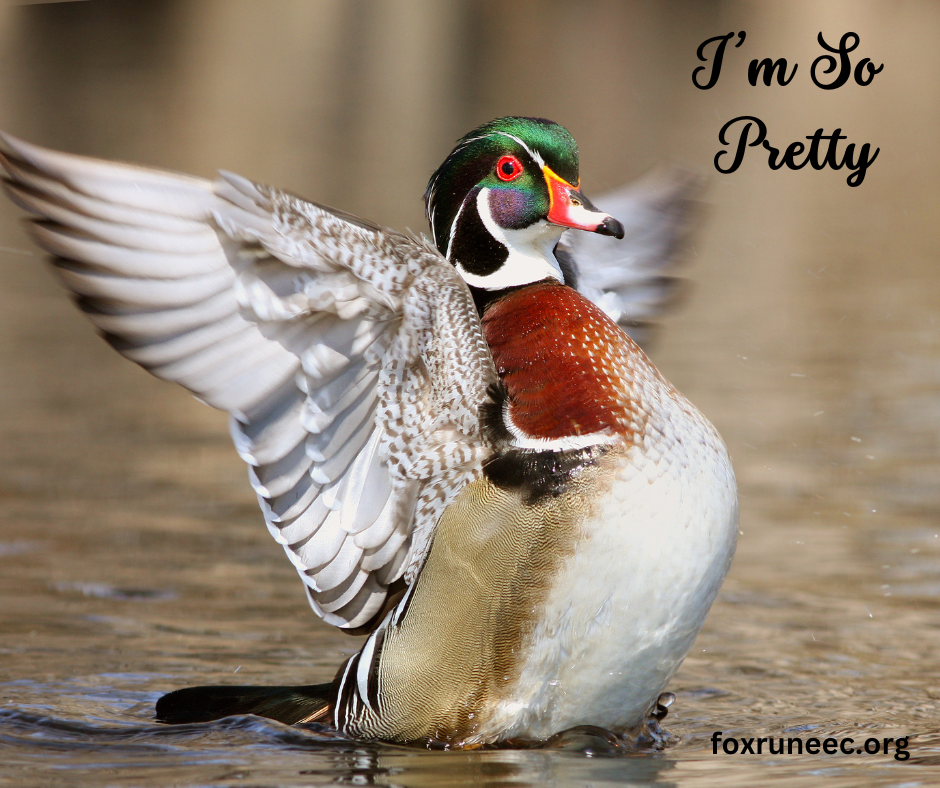
Male Wood Duck courtship display
Nesting and Life Cycle
During courtship in late winter and early spring, males perform displays. They raise their crests, bob their heads, and whistle softly. Their call is a clear, rising whistle. Females make a sharp “oo-eek” call.
Wood Ducks are social outside of breeding season. In fall and winter, they may gather in small flocks. During nesting, pairs separate and defend their area around the nest cavity.
Wood Ducks begin breeding in early spring. The female chooses a nest site, usually in a natural tree cavity near water. They also use old woodpecker holes and nest boxes placed by people.
The nest cavity can be 2 to 60 feet above ground. Inside, the female lines the nest with down feathers she pulls from her chest.
She lays about 6 to 15 eggs. The eggs are creamy white. Incubation lasts about 28 to 30 days. The female does all the incubating. The male may stay nearby at first but often leaves before the eggs hatch.
Here is where Wood Ducks do something amazing.
Within 24 hours of hatching, the ducklings leave the nest. The mother calls from below. The ducklings climb to the opening and jump. They can leap from high tree cavities and land safely because they are light and covered in soft down. This behavior is instinctive and critical to their survival.
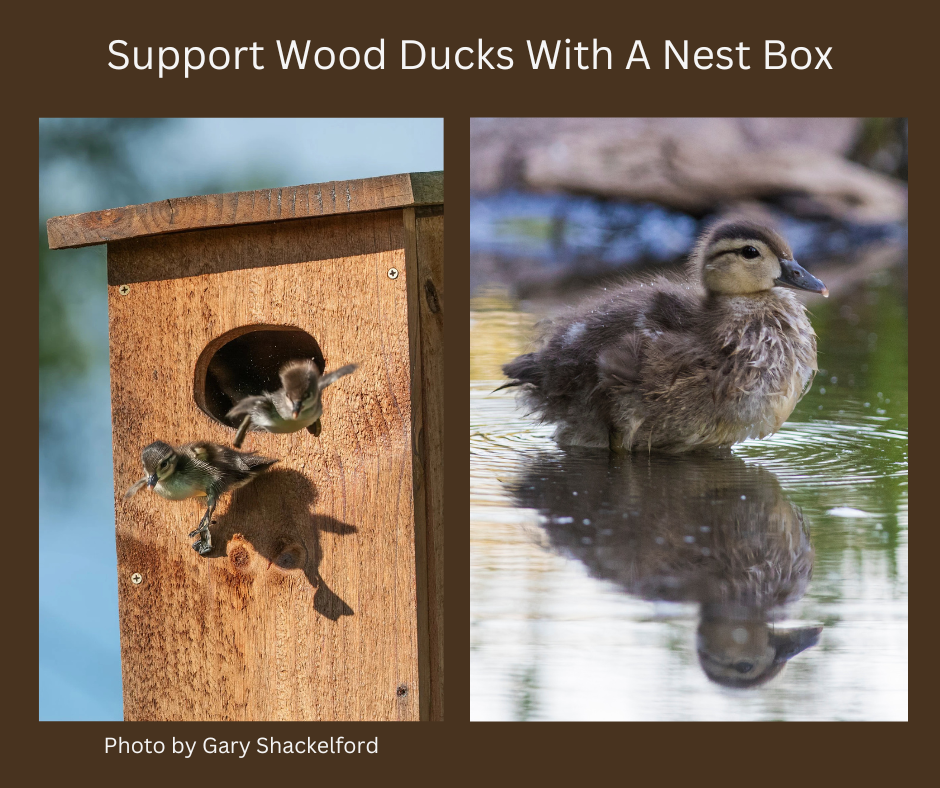
Put up a nest box!
Once on the ground, the hen leads them to water. The ducklings feed themselves right away. Like other ducks, they are precocial—born with open eyes, down feathers, and the ability to walk and swim.
The mother protects them but does not feed them directly.
Ducklings grow quickly. They fledge, or gain the ability to fly, at about 8 to 10 weeks old. By late summer, young birds are mostly independent.
Wood Ducks usually raise one brood per year, though in southern areas some may attempt a second brood if the first fails.
Conservation History
Wood Ducks were once in serious trouble. In the late 1800s and early 1900s, they were heavily hunted for meat and feathers. At the same time, widespread logging removed old trees with cavities. Wetlands were drained for agriculture.
By the early 1900s, Wood Duck numbers had dropped sharply. In some areas, they nearly disappeared. Protection under the Migratory Bird Treaty Act of 1918 was a turning point. Regulated hunting seasons and habitat protection helped populations recover.
One of the most successful conservation tools has been the nest box program. Because Wood Ducks use cavities, people can provide artificial nest boxes. When placed correctly near water, these boxes are readily used.
Are you handy and like woodworking? Build a wood duck nest box with these free plans from Cornell University.
Today, Wood Ducks are considered a conservation success story. According to long-term surveys, populations are stable or increasing in many areas.
However, they still depend on healthy wetlands and forests. So preserving habitat is important to.
Wood Ducks are unique because they nest in trees. They are one of the most beautiful native ducks in North America. Learn more about them and how humans can support Wood Duck populations with nest boxes.
Current Threats
Even though Wood Ducks have recovered, they face ongoing challenges. Wetland loss continues in many parts of North America. Development, drainage, and pollution reduce habitat quality.
Loss of mature trees limits natural nesting cavities.
Water pollution affects insect populations and plant growth. If wetlands are contaminated, food supply drops.
Climate change may alter wetland hydrology. Drought reduces available breeding sites. Strong storms can flood nests.
Predation from overabundant raccoon populations in suburban areas can also impact nest success.
How to Help Wood Ducks
If you care about wildlife in your backyard and local wetlands, there are practical steps you can take.
1. Protect Wetlands
Support wetland conservation in your community. Avoid draining wet areas on your property. Even small wooded ponds matter.
2. Plant Native Trees
Oak trees are especially important. They provide acorns and potential nesting cavities in the future. Bottomland hardwood species such as swamp white oak and pin oak support both food and habitat.
3. Install a Wood Duck Nest Box
Nest boxes work when done correctly. They should:
Be placed near water
Be mounted 6–30 feet high
Include predator guards
Be cleaned each year
Proper design matters. Entrance holes should be about 3 inches wide and 4 inches tall (oval shape) to reduce raccoon access.
4. Limit Pesticide Use
Organic land management protects insects that ducklings depend on. Healthy aquatic insect populations mean stronger broods.
5. Support Responsible Hunting Regulations
Regulated hunting based on science supports sustainable populations and funds conservation through license fees and excise taxes.
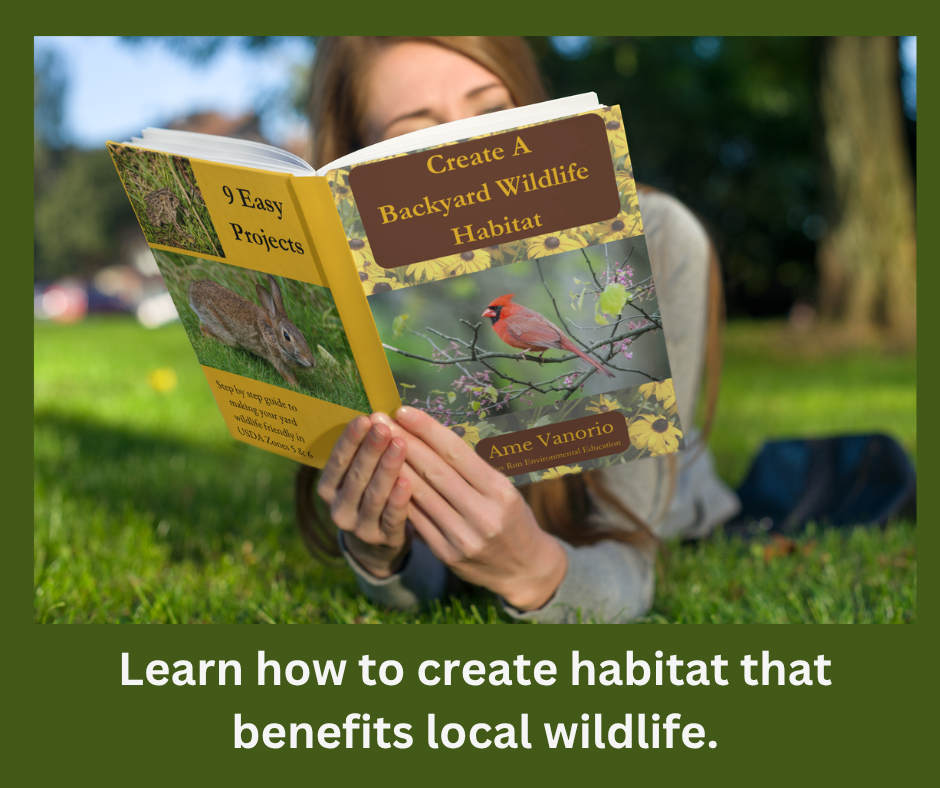
Check out my backyard wildlife book and learn how to attract and provide food and shelter for birds, butterflies, amphibians, and small mammals. Practical, easy-to-follow guide for turning your yard into a safe and welcoming space.
What Wood Ducks Eat
Wood Ducks are omnivores. Their diet changes with the seasons.
In fall and winter, they eat mostly plant material. This includes:
Acorns (especially from oak trees)
Seeds of wetland plants
Grains
Fruits and berries
Acorns are especially important. Bottomland oak forests support strong Wood Duck populations because acorns provide high energy during colder months.
In spring and summer, they eat more animal protein. Ducklings need insects to grow. Their diet may include:
Aquatic insects
Beetles
Dragonfly larvae
Snails
Small crustaceans
They feed by dabbling. They tip forward in shallow water to reach food. They also pick seeds and insects from the surface or along muddy edges.
Healthy wetlands support this diverse food supply. When wetlands are drained or polluted, Wood Ducks lose both nesting sites and feeding areas.
Predators: Who Eats Wood Ducks?
Wood Ducks face predators at every stage of life.
Eggs and ducklings are vulnerable to:
Snakes
Crows
Opossums
Adults may be taken by:
Hawks
Owls
Bobcats
In water, snapping turtles and large fish may eat young ducklings.
Read my article: Snapping Turtles: King Of The Pond
Nest cavities protect eggs from some predators, but not all. Raccoons are skilled climbers and can raid nests if the entrance hole is large enough.
Because of these risks, Wood Ducks produce multiple eggs. High reproduction helps balance natural losses.


Vampire bats are the only mammals that survive exclusively on a diet of blood. The scientific word is obligate sanguivores. And yes, sometimes they bite humans. There are three species of vampire bats but we are focused on the one closest to us in the United states, the common vampire bat.