Vaccinating wildlife is a very controversial issue and has been hotly debated among wildlife rehabilitators, biologists, and veterinarians. Should we vaccinate wild animals in our care and what is the governments role in immunizing native species?
Your state Department of Fish and Wildlife may tell you to do one thing and your veterinarian or board members another. To complicate matters, we give wildlife vaccines off-label, meaning they are not legally cleared for use on wild animals.
This is an important conversation to have. In this blog, we will discuss the pros and cons of vaccinating wildlife in the rehabilitation setting, and look at ways governments in the USA and Europe have approached disease control in nature.
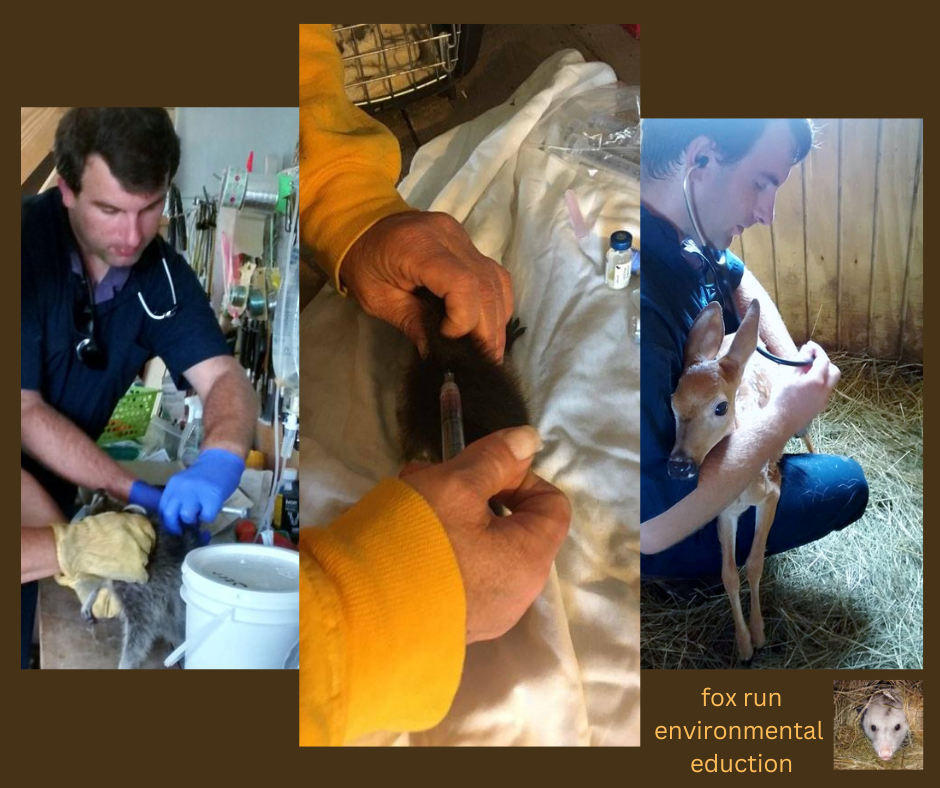
Vaccines and vet checks at Fox Run EEC
Why Vaccinate the Wildlife in Your Center?
1. Outbreak protection for all animals in your center
2. Provides our patients better chances for survival in the wild
3. Protects domestic animals, humans, and supports public health.
Outbreak Protection
The sad truth is anywhere we place animals or humans in close proximity to one another there is a chance for disease spread. We saw this happen during 2020 and the COVID pandemic.
Similarly, some species such as raccoons and deer may have large populations in your area. Wildlife biologists often use this reasoning to dissuade rehabilitation practice for “common” animals. However, the root problem is often a lack of or extinction of large predators. By killing off predators humans have adversely affected natural balance.
Centers have had highly contagious diseases such as distemper and parvo spread rapidly among young animals. Knowing what diseases are in your local wildlife populations is critical to developing a plan to support health.
Check out my books on Amazon or your favorite bookstore. Available in paperback and eBook.
Provides Your Patients with Immunity
Wildlife rehabilitation is all about saving an animal’s life so that they may be released back into the wild.
The goal of immunization is to increase the animal’s ability to fight the disease and to slow disease transmission among a population. They keep the animal from suffering and increase their quality of life.
As wildlife rehabilitators, we have a lot invested in these animals. Time, energy, and money – often money from our own pockets. Not to mention sweat and tears. Many people state that Animals Shelters vaccinate. We should be no different.
Read my article Feeding Expenses in Wildlife Rehabilitation
Community and Public Health
There is a lot to be said about the importance of public health. The act of wildlife rehab brings populations of animals and humans together. My veterinarian feels very strongly that vaccinating wildlife keeps domestic animals and humans safer.
Wildlife in today’s world lives in close proximity to humans. Urban wildlife is on the rise. Vaccines have proven to be a way to manage and control many zoonotic diseases. (I will talk about Europe’s progressive policies further in the article)
There is no magic cure for many of these virus’s including rabies. Protection and stopping the spread are important ways of reducing incidents.
Vaccinating wildlife in nature and in wildlife rehabilitation can be controversial. What is our responsibility to the animal and to the human community?
Disadvantages Of Vaccines
Cost
To be fair, some rehabbers do not vaccinate the wildlife in their programs.
Probably the most cited disadvantage is the cost. Vaccines are expensive. In some states, including Kentucky, only a licensed veterinarian can administer the rabies vaccine. These costs can add up quickly.
In addition, juveniles can be hard to catch and handle to administer a vaccine. We do raise them to not want human contact!
Also, it should be noted, not all wildlife receive immunizations. Commonly rabies vector species, deer, and groundhogs, are most likely to receive them. Many people who rehab squirrels, opossums, and/or bunnies do not vaccinate those species because they are not a high risk. However, that would geographically vary.
Off Label
Most vaccines are developed for domestic animals, not wildlife. This means safety and effectiveness data are limited. Use in wildlife is considered off label.
The sad thing about vaccine development is that it is driven by money. Funds are simply not deemed important for wild animal disease research.
What Are Zoonotic Diseases?
Zoonotic diseases are those diseases that can be passed from animals to humans. Diseases passed from humans to animals are called reverse zoonoses or anthroponosis. Humans have transmitted COVID-19, H1N1 human influenza, swine flu, methicillin-resistant Staphylococcus aureus (MRSA), and tuberculosis (TB) to animals. In 2020 coronavirus was passed from zookeepers to animals in their charge most notable tigers at the Bronx Zoo.
Rabies is probably the most famous zoonotic disease. The Bubonic Plague was given stardom during the Middle Ages and is still with us today. Others include Salmonella, Leptospirosis, and Roundworms. These conditions come in the form of bacteria, parasites, and viruses.
Are you interested in becoming a Licensed Wildlife Rehabilitator? This video will tell you how.
Europe and Rabies
Zoonotic diseases are a public health concern that affects everyone in the community. European countries have been much more proactive in this area than we have been here in the USA. In part possibly because their communities are much older and established with a high incidence of urban wildlife.
Vaccination of wildlife in rehabilitation centers, as well as vaccination programs aimed towards wildlife in public parks and urban areas, has helped to reduce the occurrence of many zoonotic diseases.
In fact, rabies among foxes has been nearly eliminated in thirteen European countries In Europe, it is not unusual to have foxes living in urban areas.
In fact, fox rabies in 13 European countries has been virtually eliminated. An aggressive program using trap/vaccinate/release and oral rabies vaccination (ORV) over the past twenty years has been very successful. In Europe, it is very common to have foxes living in urban areas where the disease was considered a public health threat.
Rabies used to be considered a public health threat in countries such as Germany and England. An aggressive program using trap/vaccinate/release and oral rabies vaccination (ORV) over the past twenty years has been very successful in lowering cases.
Check out my article The Fantastic Fox
Rabies in US Wildlife
According to the CDC, 92% of rabies cases came from wild animals. Specifically, bats, raccoons, skunks, and foxes, in descending order. The USDA is increasing their distribution of rabies vaccines and confirms that the Oral Rabies Vaccine (ORV) is the central strategy they are using to stop the spread of rabies and move toward elimination.
The USDA works with the US Department of Fish and Wildlife to distribute rabies vaccines among wildlife populations in high-risk areas. In 2025, bait distribution occurred across large regions of the Northeast and Southeast using airplanes, helicopters, and ground placement.
One key issue is bait uptake. Not all animals consume the vaccine. Studies show that habitat type and bait placement affect how often raccoons find and eat vaccine baits. Vaccination is also species specific. Raccoons respond well to finding and eating vaccines. However, skunks are harder to vaccinate effectively due to feeding behavior and bait design challenges. They are less willing to eat unusual foods.
Another focus is animal movement. Research shows that wildlife movement patterns affect how well vaccination zones work. Adjusting bait placement based on movement improves disease control
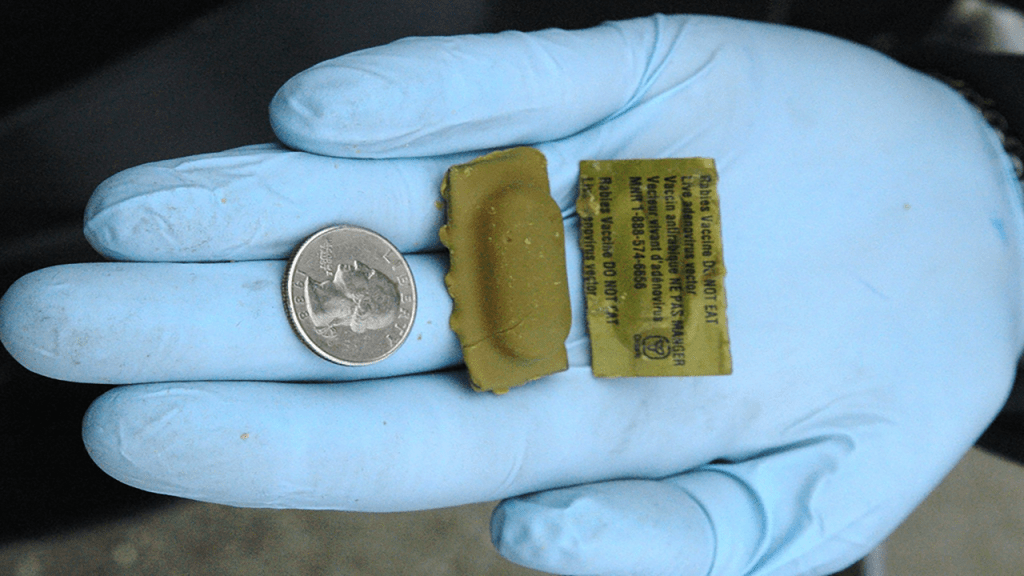
Biologist holding Oral Rabies Vaccine for Raccoons. Photo credit: USDA APHIS
Some US states or countries use hunting or trapping to purposefully decrease population and therefore reduce transmission. There is no scientific evidence that this strategy is effective. These methods used indiscriminately are often ecologically unsound and can promote public outcry.
There are actually several virus variants so you may hear the terms raccoon rabies or skunk rabies. Within bats there are several bat rabies virus variants. This is because viruses (like the flu) often mutate and change to become stronger.
While Kentucky has not been considered a high-risk area, Oral Rabies Vaccination (OTR) has been dropped along the Virginia border to stop the spread of the raccoon variant more prevalent in the Appalachian Mountain region. Dr. Joanne Maki stated the goal is to “establish herd immunity within a rabies reservoir species. Doing so reduces virus transmission in wild animals, while also reducing the risk of rabies virus exposure in domestic species and humans”.
Check out my PDF books and Free Downloads on my Store Page
Your Local Fish an Wildlife Agency
Many Government wildlife agencies are anti vaccine. This was the official viewpoint of the Kentucky Department of Fish and Wildlife in 2019.
“Vaccines are often unnecessary and expensive. Follow-up vaccinations are often required a year after the initial dose. Wildlife must be released immediately after recovery. It is illegal to keep a rehabilitated animal simply to administer follow-up vaccinations” (Letter to Wildlife rehabilitators, 2019. )
What Can Wildlife Rehabilitators Do to Prevent Disease in Their Centers?
Vaccines are used as one way to prevent diseases and their spread among populations. Young humans and domesticated animals get vaccinations on a regular basis. They are one tool we can use to prevent the spread of many diseases.
Invariably, we bring in animals that carry diseases. Wildlife rehabilitation is about caring for sick, injured, and orphaned animals. Not the healthy one who is doing well.
If we look at the big picture, however, there are many things we can do to keep our animals healthy. Here is a list of non-vaccine things you should be doing to prevent disease.
Work with your vet to develop an intake and treatment protocol.
Keep wildlife separate from domestic animals.
Have a quarantine area for incoming animals.
Keep areas clean and sanitized.
Always wear gloves and other PPE.
Keep good records.
Try to lower stress to improve health. (Yours and the animals!)
Vaccination Schedules
Controversy also exists on how often and with what variant to vaccinate with. Raccoons and foxes can be tricky because both the canine and feline variants may be necessary.
What diseases you vaccinate for may also reflect your geographic location and what is present in your environment. For example. distemper in wildlife is a big problem in my area. So we feel distemper and rabies are the most important vaccines to give. To be clear we use the 5 way shot so Canine Distemper, Adenovirus Type 2 (CAV-2 cross protection CAV-1), Parainfluenza, and Parvovirus Vaccine (MLV) are all covered.
Vaccination schedules are somewhat arbitrary and often reflect older laws meant to contain diseases. There is no evidence that animals including our beloved cats and dogs need annual boosters throughout their lives. Studies have suggested that two shots lead to adequate antibodies. We give them boosters to make sure they are protected and to adhere to state regulations. The rabies vaccine is legally required in the state of Kentucky for dogs, cats, and ferrets.
According to Merck’s Veterinary Manual “Individual animal and vaccine variability make it difficult to estimate the duration of protective immunity”
Vaccines are not licensed for wildlife and there are few established administration schedules. Sadly wildlife does not meet the need for funding for these studies. So when we administer inoculations it is with the understanding that it is “off label”. More research is certainly needed in this area, not only for wildlife but as an assurance for quality public health.
Talk with your vet about what vaccine schedule to use. There are several good resources.
When vaccination is commonly used
Vaccination is most often used in specific, higher risk situations.
Rehabilitators may vaccinate rabies vector species such as raccoons and skunks to protect staff. This is usually done under veterinary guidance.
Animals housed in groups, such as litters of raccoons, may be vaccinated against diseases like distemper to prevent outbreaks.
Animals kept long term for education programs are also more likely to be vaccinated because they will remain in human care.
The Rabies Virus and Humans
Rabies is perhaps the most well known zoonotic disease. It affects the central nervous system and is almost always fatal. Rabies is a virus which is spread by saliva which is transmitted when the animal bites or scratches you.
Rabies deaths are extremely rare now in the United States and the Center for Disease Control (CDC) states that only 3 or 4 deaths occur per year. However, about 40,000 people are treated each year for exposure to rabies. This post-exposure prophylaxis (PEP) is necessary to keep them from developing the virus and dying. Any person who has been bitten by a wild animal should seek medical attention immediately.
The rabies vaccination was developed by the famous French biologist and chemist, Louis Pasteur, (1822-1895) who is considered the Father of Microbiology. Pasteur is famous for developing the concept of germ theory, which led to pasteurization and developing rabies and anthrax vaccines.
While several protocols have been developed to treat rabies victims they are still considered experimental and are not always successful. Read our opossum blog to see how these fascinating animals have played a role in rabies research.
Vaccines Have Been Critical in Saving Endangered Species
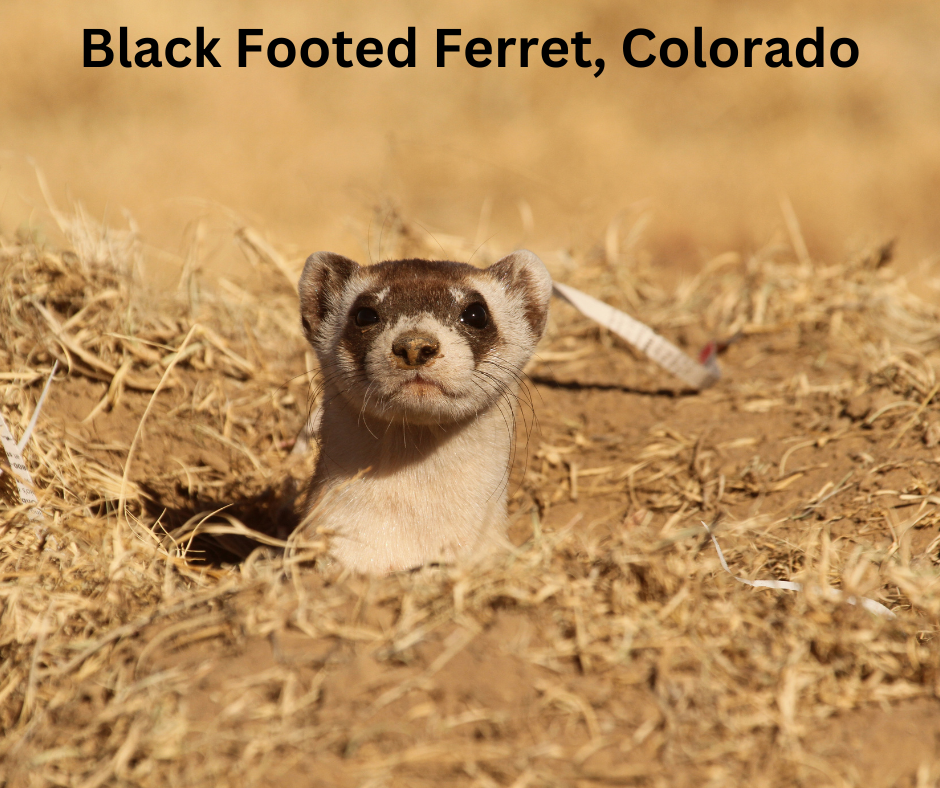
Another advantage to vaccinations is it helps species who are at risk due to low populations. Endangered animals have been saved by populations receiving immunizations. The Black-Footed Ferret is an example of an endangered species that recovered successfully in part due to a vaccination program.
The Black-Footed Ferret is susceptible to a variety of the plague they got from eating prairie dogs. In addition, distemper had lowered the population which was close to extinction. A controlled breeding program and vaccination schedule allowed the successful reintroduction of thousands of healthy ferrets in native prairie ecosystems.
In addition, due to the risk of mustelids to their population, the Black-Footed ferret has also been given the COVID vaccine.
Take Away
As wildlife rehabilitators, we make life and death assessments every day as we work to rescue and rehabilitate. Take the time to make a plan for disease control to protect the animals in your care.
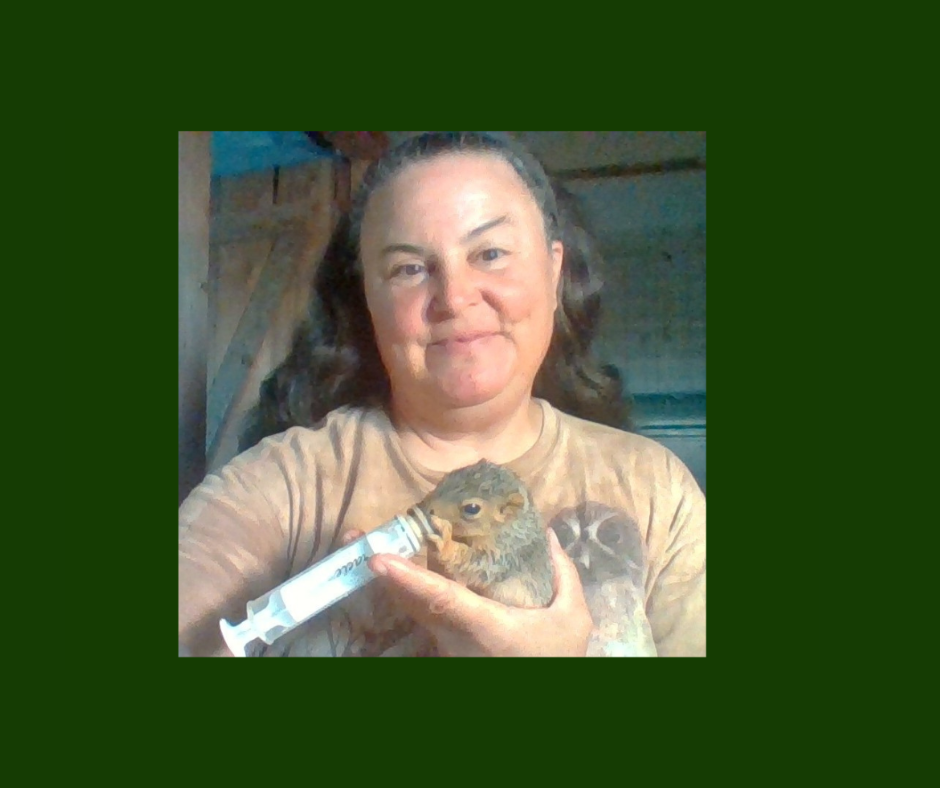
Author Ame Vanorio is the founder and director of Fox Run Environmental Education Center and was a licensed wildlife rehabilitator in Kentucky for twelve years. She is now living in Wisconsin where she continues to work with wildlife and teach environmental education.


This is my Top 20 Must-Haves for your rescue medicine cabinet! Your needs may vary based on what animals you take in but this checklist will certainly get you started. Free Digital Download.