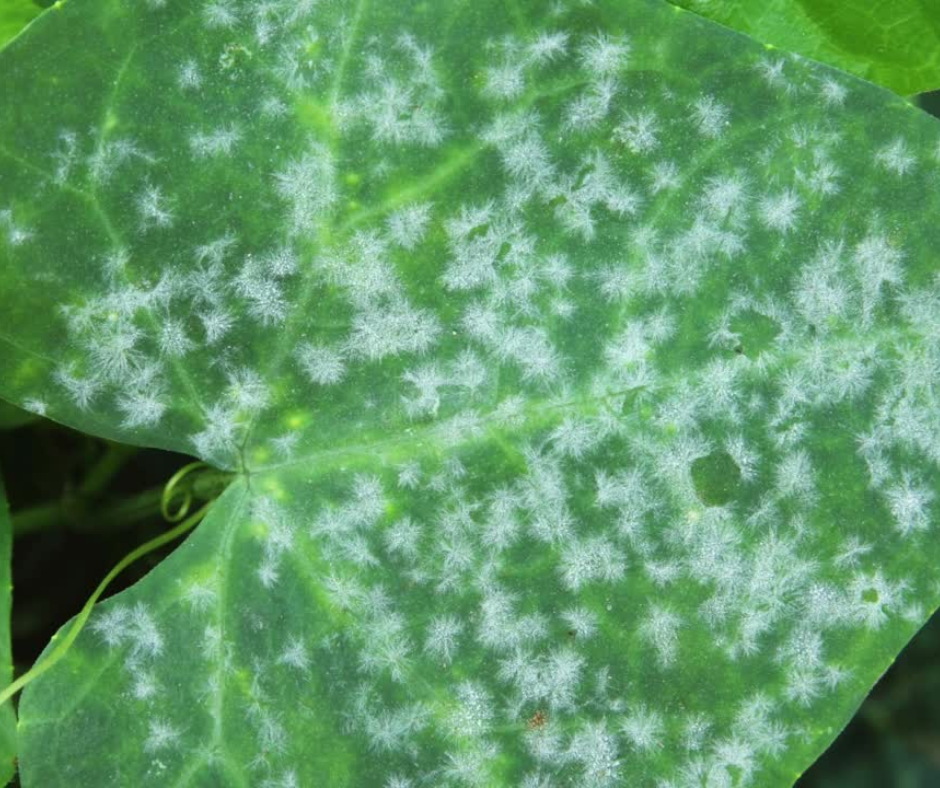
Both Downy mildew and powdery mildew can cause excessive damage in the garden. Both damage the life source of the plant - its leaves.
The good news is that both are preventable and treatable. In this article, we are going to talk about how to identify, prevent and treat these diseases organically in our home gardens.
Downy Mildew
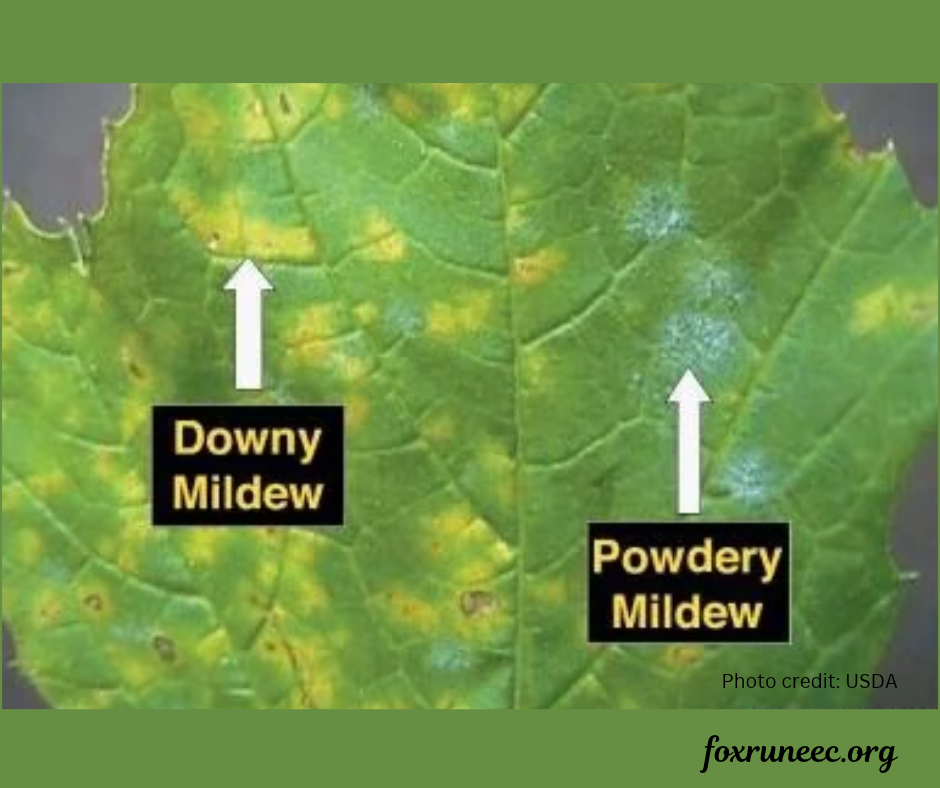
It's important to know which organism you are dealing with. Downy mildew is a water mold disease that causes brown spots on the leaves. Powdery mildew is a fungal disease that looks like flour sprinkled on the leaves.
We will start with Downy Mildew. It's easy to spot because of the brown and yellow splotches on the leaves. But here's the problem. By this time it's well established on the plant.
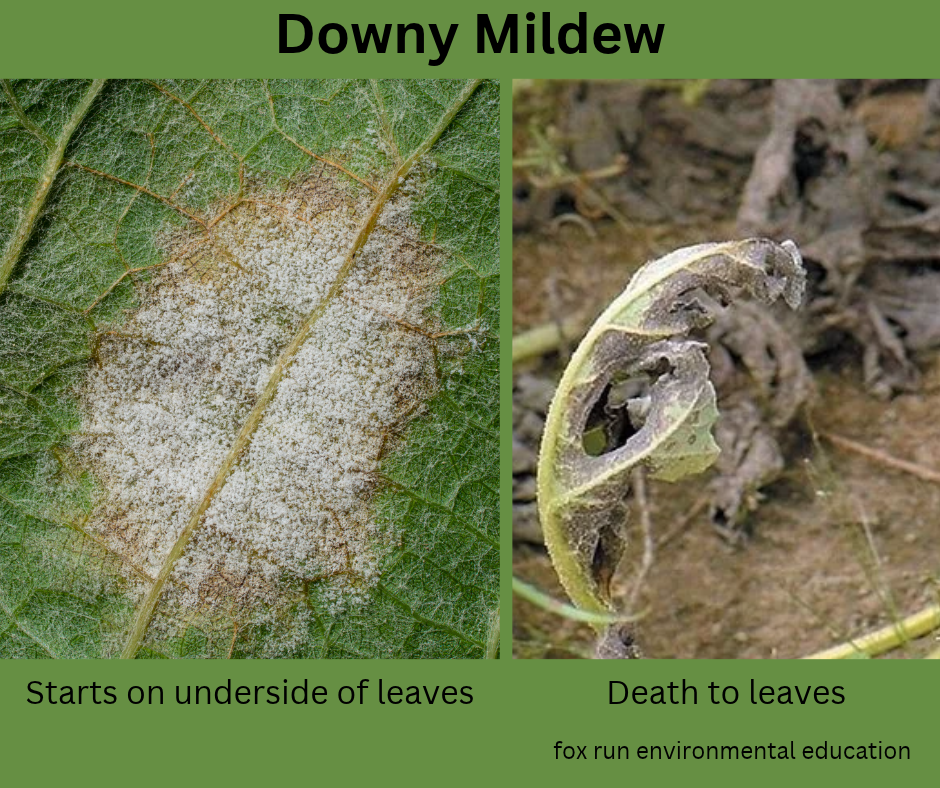
You don't want your plant to end up looking like this watermelon!
Downy mildew starts on the underside of your plant's leaves. It starts as a few white specs and starts to grow. As it increases in size it starts causing death to plant cells and brown spots on the top of the leaf appear. Our goal is to prevent the spores from forming and monitor our plants closely.
Downy mildew likes cool moist weather. Cool temperatures between 58-78°F and relative humidity greater than 85% favor infection. We typically think of it as a spring problem although it can appear throughout your growing season.
Powdery Mildew
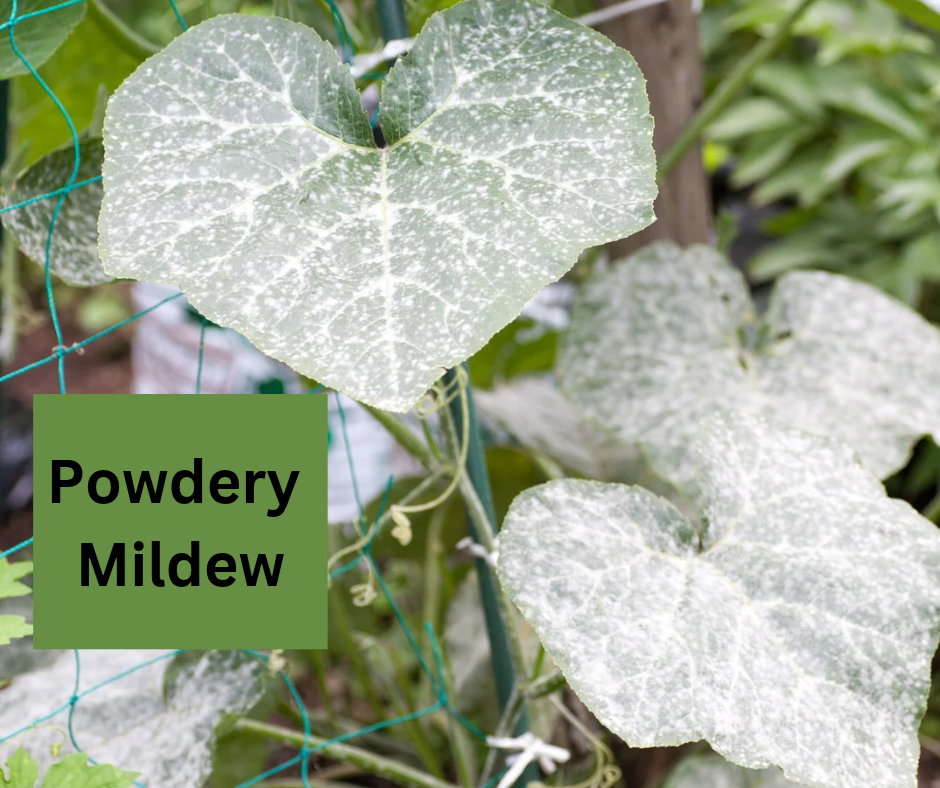
Powdery mildew is not considered as big a threat as downy mildew. That's not to say it can't damage and kill your plants.
Powdery mildew spores are carried by air currents. They die off in cold winter weather. You are more likely to see powdery mildew in late summer. They over winter in the south and come north on air currents typically in July. The mildew can occur on any part of the plant including the fruits.
Powdery mildew likes high relative humidity with temps between 60-80°F in a dry climate.
Check out my store for a free download on Mildews
Prevention
So now we are going to talk about prevention! A lot of these things may seem like old news to you but it's important to keep them in mind when we are thinking about mildews.
Keeping a clean garden is important. Powdery mildew spores can survive the winter and downy mildew survives winters in southern regions. Both by living on plants in the soil debris.
Use drip irrigation. Or a method that waters the soil, not the plant. Don't use watering cans or sprinklers as they can encourage mildews and fungus.
When you are purchasing seeds read the description. If your area is prone to certain diseases look for cultivars that are resistant.
Plant at the right distance in areas with good air circulation. You can use landscaping fabric or mulch to prevent fruit from coming in contact with the soil.
Encourage beneficial insects. Ladybug larva will eat mildew spores.
You can prune out diseased leaves and stems and just prune in general for better air flow.
Downy and powdery mildew are plant diseases that can seriously damage their productivity. Learn how to identify, prevent and treat these garden "mildews".
And I can't emphasize this enough, be observant, check your plants on a regular basis. Remember to get down on there level and look at the stem along the soil line and the undersides of the leaves.
treatment
Give your plants some nutrients to boost their fighting power. I love fish emulsion and compost tea is another great all-around fertilizer. Squash and melons are heavy feeders and are also prone to mildews.
Neem oil is my go-to for mild infections of both downy and powdery. Or when I just start to see it developing. It also works well in winter on houseplants for fungus gnats.
The next step up would be a copper fungicide. Proceed with caution as too much can burn plants. And even though it's approved for organic gardens it is toxic to fish and amphibians.
Milk is another great natural solution. Studies have shown it inhibits the growth of powdery mildew. Use raw milk. One part milk to 9 parts water. Then spray it on the leaves. The downside of this is that the milk may attract wildlife and the neighborhood cats!
Baking soda is also touted as a home remedy. I love it for cleaning but I am not a fan of using it on plants. Baking soda is sodium bicarbonate. It is basically a salt. The salt inhibits regular water flow and dehydrates plants as well as building up on a toxic level and burning your plants.
Author, Ame Vanorio, is an environmental educator, wildlife rehabilitator and author. Check out her gardening and wildlife books on Amazon.