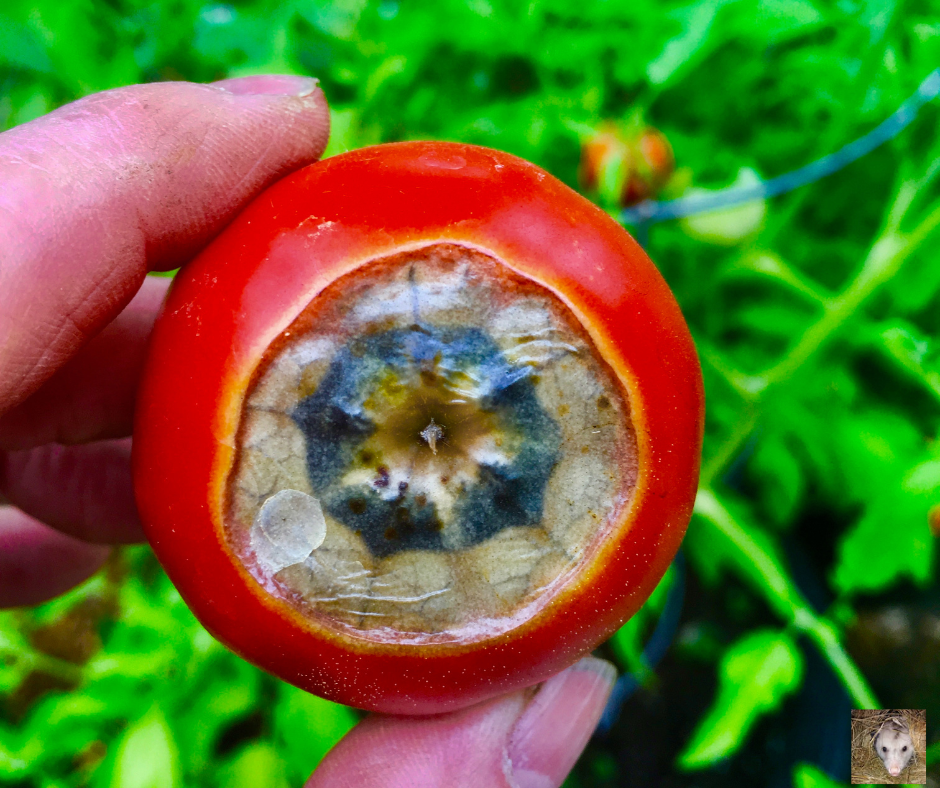
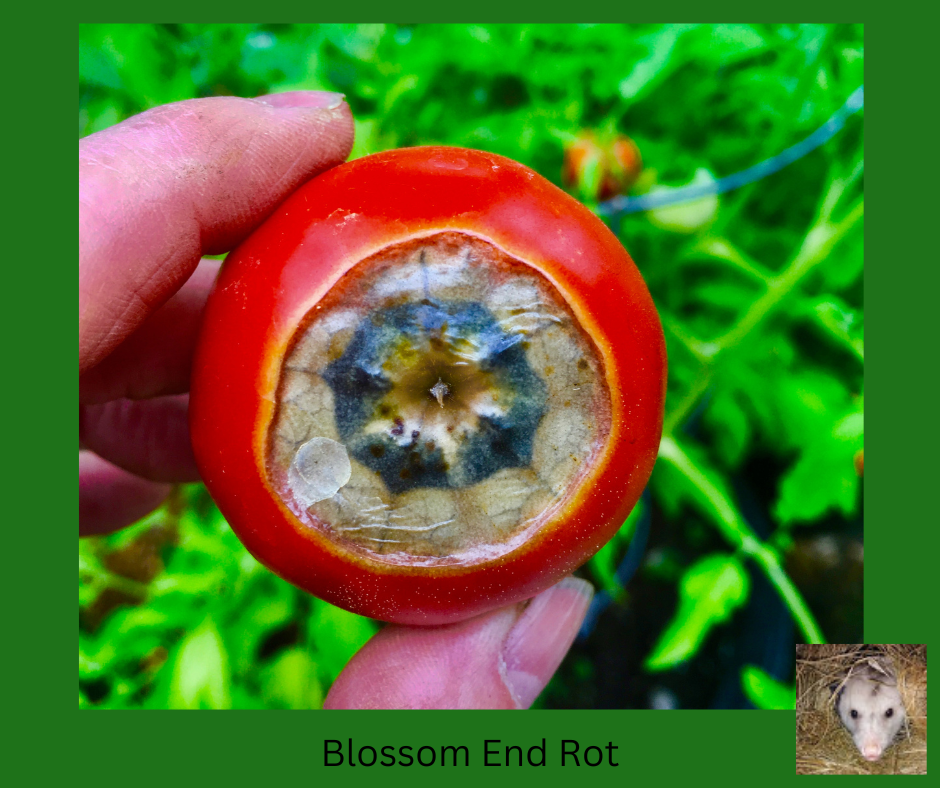
Blossom-end rot is one of the most frustrating problems gardeners face when growing tomatoes. You check on a plant that looks healthy, only to find dark, sunken spots forming on the bottom of developing fruit. Many people assume it’s a disease or a pest, but blossom-end rot is neither. It’s a nutritional issue tied to how the plant takes up and uses calcium as the fruit grows.
Blossom-end rot affects tomatoes, peppers, squash, and other fruiting plants. It’s very common. It’s characterized by dark, leathery lesions appearing at the blossom end of developing fruits.
What Do Tomatoes Need?
Growing healthy tomatoes and peppers organically begins with understanding the soil and the specific nutrients they need. They have a high need for calcium. The fruits grow fast and calcium is vital for strengthening and stabilizing cell walls. So its important to have a continuous supply of calcium to prevent the dreaded blossom end rot.
Calcium helps tomato plants stay strong and healthy. Inside the plant, calcium acts like a building material for cell walls. It helps bind the cell wall components together, making plant tissues firm and stable. Strong cell walls allow tomato plants to better handle stress, resist damage, and protect themselves from disease.
When developing tomato fruits do not receive enough calcium, early in fruit growth, problems begin. This happens because cells are dividing and expanding quickly. Without enough calcium to hold cell walls together, they break down. As a result, the blossom end of the fruit develops dark, sunken, leathery spots. Once this damage appears, it cannot be reversed, which is why consistent calcium movement into the fruit is so important early on.
I'm going to help you grow fabulous tomatoes this year and avoid the 5 top mistakes most people make when growing tomatoes. Plus I have a few bonus tips.
Prevent Blossom End Rot
While gardeners often hastily apply calcium-based amendments upon seeing affected fruits, the issue typically starts long before you see the damage. Those quick fix products don’t work.
Bone meal is a great source of calcium. You can add bone meal to your garden in late fall or early spring. Bone meal provides calcium and phosphorus through a slow, steady release and lasts about 6–12 months in the soil so it is something you need to apply annually. The soil microbes must first mineralize it, breaking it down so its available for plants. I like the Down To Earth brand.
If you are vegan or prefer not to use bone meal (it can attract opossums and skunks) then Down To Earth Rock Phosphate is a good alternative. It provides phosphorus and calcium to plants, similar to bone meal, but is derived from rock deposits rather than animal bones. It does take a bit longer to break down so plan a head.
Gypsum can be added in the fall and will make the soil lighter as well as add calcium. Its a great additive for heavy clay soils.
Water Is Important
Tomato plants take up calcium from the soil through their roots as calcium ions dissolved in water. Calcium does not move on its own inside the plant. Instead, it travels wherever water goes.
As water evaporates from the leaves during normal plant processes, it creates a pull that draws water upward from the roots through the stem. Calcium moves along with this water stream and is carried into the leaves and developing fruit.
If calcium does not reach the fruit at the right time, blossom-end rot can develop. The dark, sunken, leathery spots on the bottom of the tomato happens because cell walls fail to form properly in fast-growing fruit tissue.
Dry spells followed by heavy watering disrupt the steady flow of water—and calcium—through the plant.
pH is important
Calcium is most available when soil pH is between 6.0 and 6.8. Outside this range, calcium becomes harder for roots to take up. Even when plenty of calcium is present in the soil, uneven watering can prevent it from reaching the fruit.
Consistent soil moisture, supported by mulch and regular watering, is one of the most effective ways to ensure calcium reaches developing tomatoes.
Additionally, practices such as cover cropping, applying compost, and encouraging a robust soil microbiome can enhance calcium availability by promoting nutrient cycling and root health. You want (and need) a balanced nutrient soil for your vegetables.
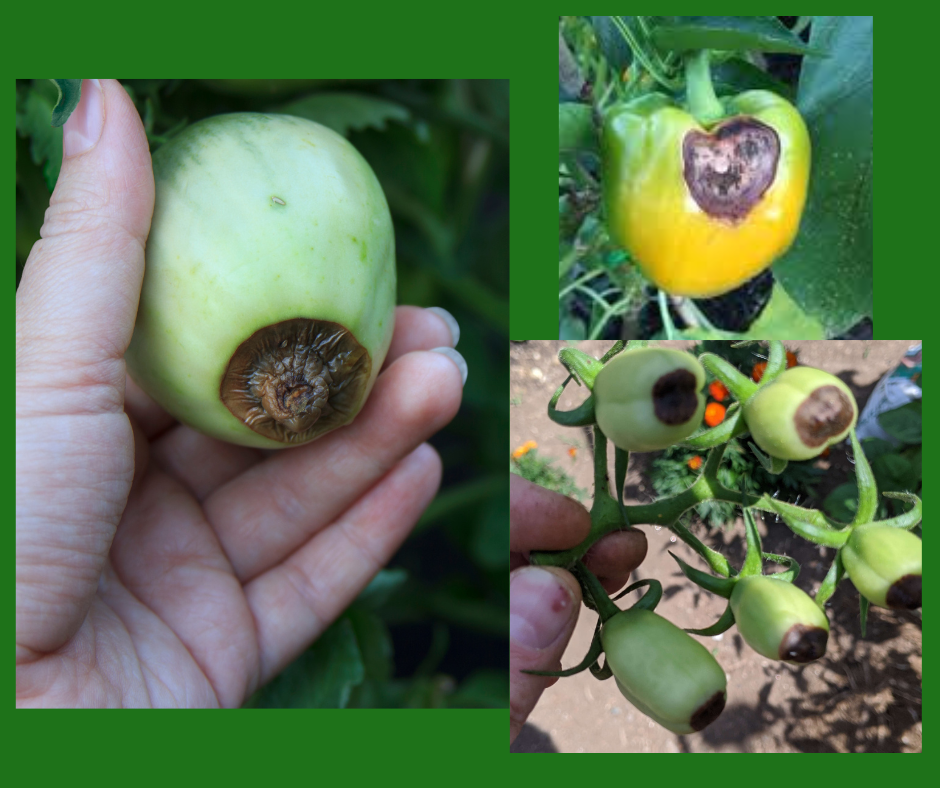
More examples of blossom end rot
Can Blossom End rot Spread To Other Plants?
Blossom rot does not spread from plant to plant but you should remove infected fruits. Leave the plant because future tomatoes can be just fine. Fungicides and insecticides are not effective since the problem is happening inside the plant.
Despite its disease-like symptoms, blossom-end rot is not caused by pathogens but rather stems from disruptions in calcium uptake and distribution within the plant's tissues.
Because blossom-end rot can appear on multiple plants in the same garden if they are experiencing the same stresses you might think its spreading. However, one affected plant does not infect another.
can you eat a tomato that has blossom end rot?
Yes, you can eat a tomato that has blossom-end rot, as long as the rest of the fruit is firm and healthy. It is not harmful to people.
That said, the affected portion will be dark, tough, and unpleasant to eat. Simply cut off the rotten section and use the remaining healthy part of the tomato.
If the rot has spread through most of the fruit or the tomato has started to smell, become soft, or grow mold, it’s best to discard it.
Final Thoughts
Fixing the underlying issues is the key to preventing blossom-end rot across the garden. Do these things to improve your garden soil.
Test your soil - read my article on how and why
Add compost - follow my composting plan
Use mulch
Consider putting in drip irrigation


Gardeners use the power of composting to improve their soil and plant health. A healthy plant is a productive plant. This article will help you set up a proper compost pile and get started on the road to free nutrient-rich soil.