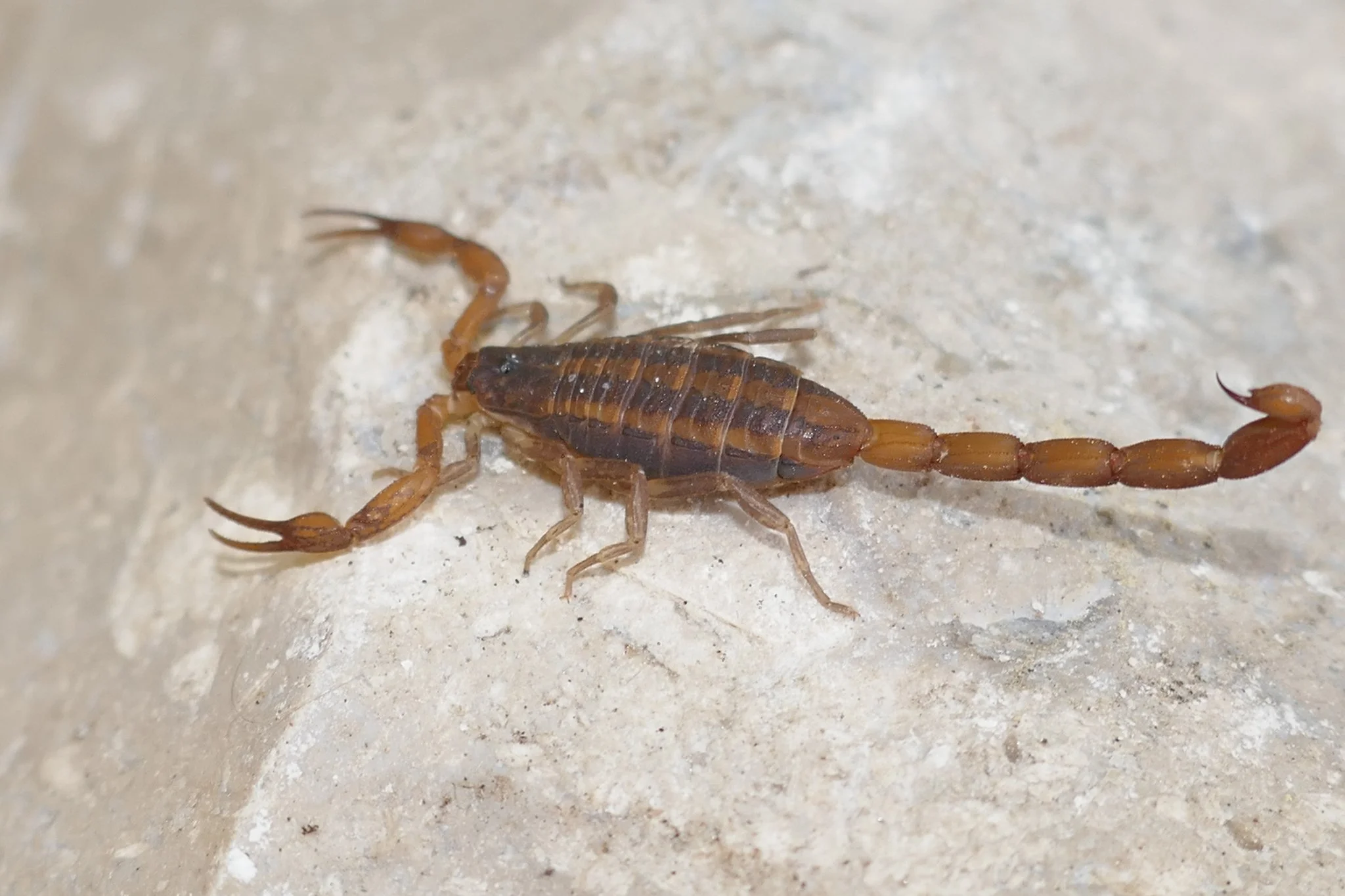
Scorpions are known for their venomous sting, which they use to paralyze or kill their prey. While most scorpions are not deadly to humans, a few species have venom potent enough to cause serious harm. The fear of their sting adds to their frightening reputation.
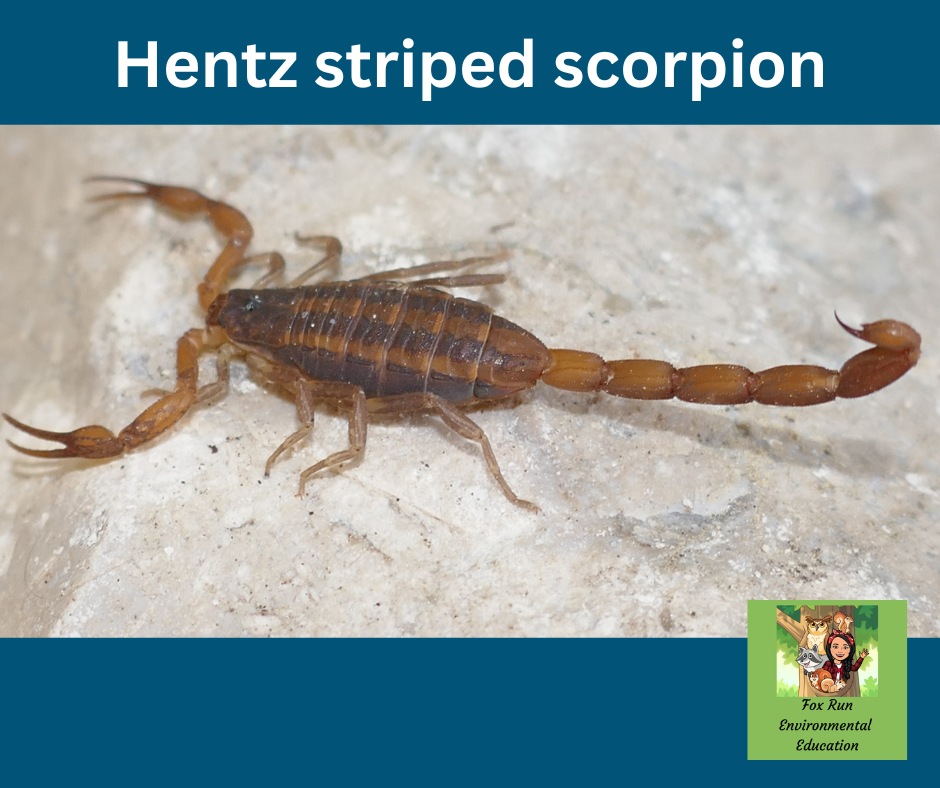
Hentz striped scorpion (Centruroides hentzi) is common in the southeast in Florida, Georgia, and Alabama.
Predators
Scorpions are stealthy predators, waiting in the shadows or under rocks for their prey to pass by. With their pincers raised and stinger ready, they can strike in the blink of an eye.
They feed primarily on insects, spiders, and other small invertebrates. The majority of species are opportunistic feeders.
Interested in animals that strike? Check out my article Copperheads: Facts and Myths
Arizona Bark Scorpion
The Arizona bark scorpion is the most venomous scorpion in the United States and its venom can cause severe pain but rarely death. There is an anti venom since there sting does carry risks.
A scorpion sting is caused by the stinger in a scorpion's tail. When a scorpion stings, its stinger can release venom. The venom contains a complex mix of toxins that affect the nervous system.
Adults usually experience numbness, tingling, and vomiting typically lasting between 24 and 72 hours. More sever symptoms that necessitate a doctor include trouble breathing or slurred speech. An Antivenom is available that reduces symptoms. See below for first aid tips.
Arizona bark scorpions are quite small and are commonly found in homes, requiring a gap of only 1/16 of an inch wide for entry.
They live in the Sonoran Desert in the southwestern US which is home to over 30 scorpion species. If you have young children I have an activity book on deserts which talks about the Sonoran desert and the critters that live there.
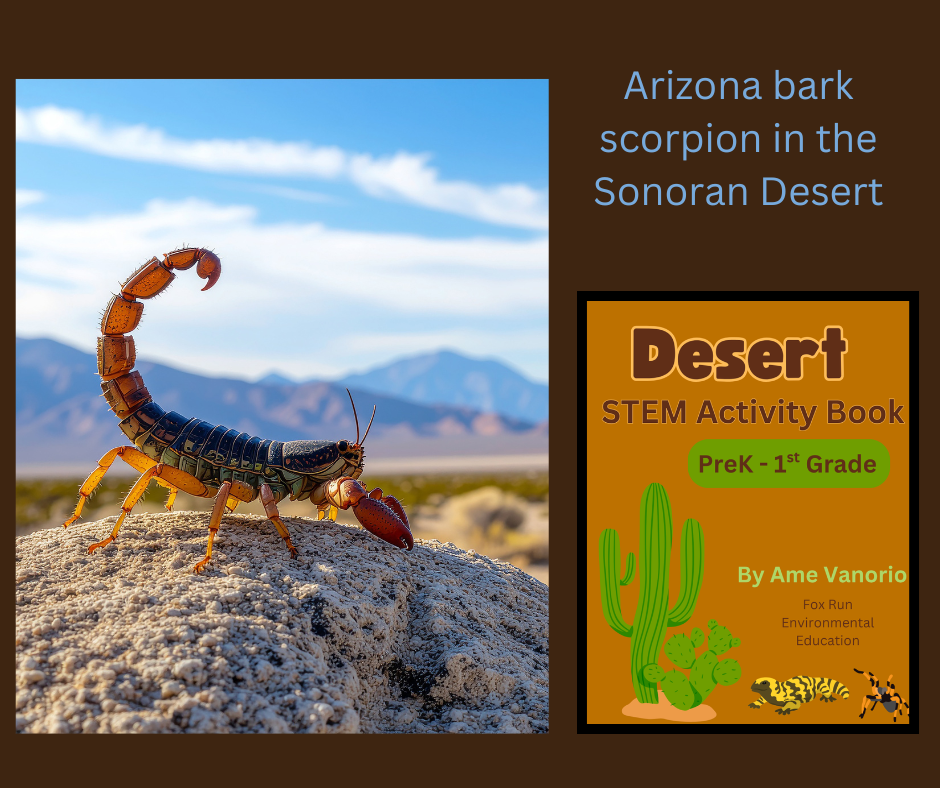
The Scorpion’s Armored body
Their tough, armored exoskeleton makes scorpions look like tiny, invincible warriors. This natural armor helps them survive harsh environments, including deserts, which adds to their “survivor” image—like something that could crawl out of a horror movie scene.
Scorpions have eight legs and a pair of lobster-like pinchers and a tail that curves up. The largest scorpion in North America is the Giant Desert Hairy Scorpion which reaches up to 5.5 inches or 14 centimeters in length. They have fine hairs that detect movement and vibrations. They can give you a painful sting similar to a bee sting, which is generally not considered medically dangerous to healthy adults.
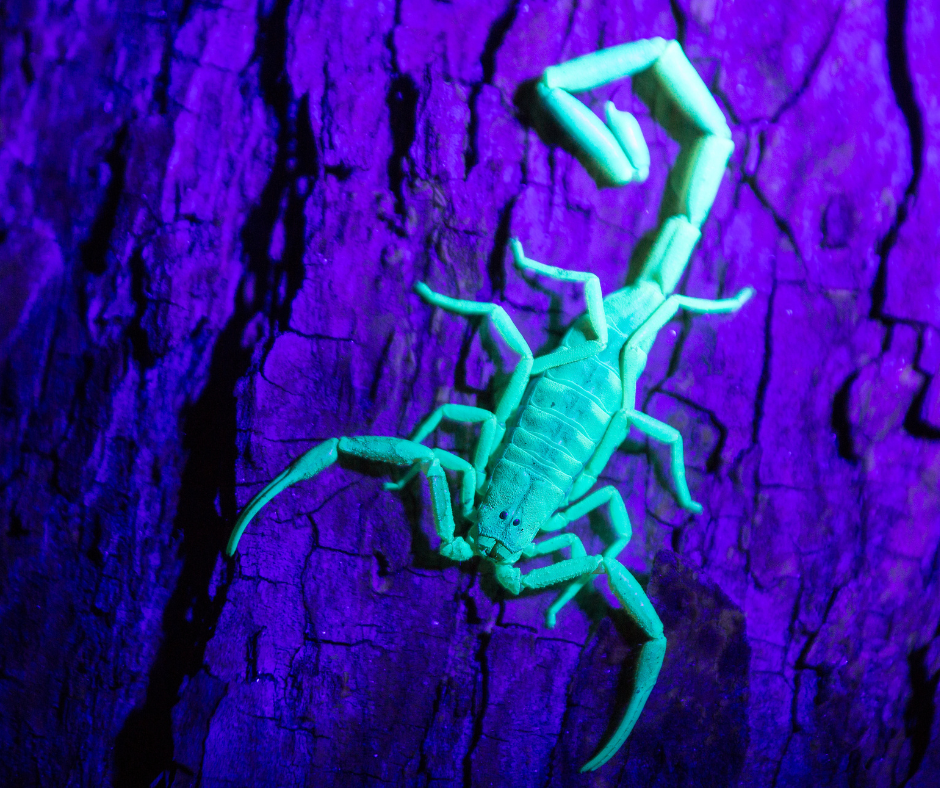
One of the spookiest things about scorpions is that they glow under ultraviolet light!
Glow in the dark
One of the spookiest things about scorpions is that they glow under ultraviolet light! This eerie blue-green glow comes from a substance in their exoskeleton, and it's still not fully understood why they have this ability. Imagine stumbling across one of these glowing creatures at night!
They don't glow in the dark per se but will fluoresce when exposed to a blacklight. This is particularly useful in scorpion detection, since many scorpions are active during the night, and can be easily spotted using this method.
If you go camping in the desert carry a blacklight. Scorpions tend to avoid contact. If you are camping in an area where scorpions are common, wear shoes during the day and shake out articles of clothing before dressing. Scorpions like to hide.
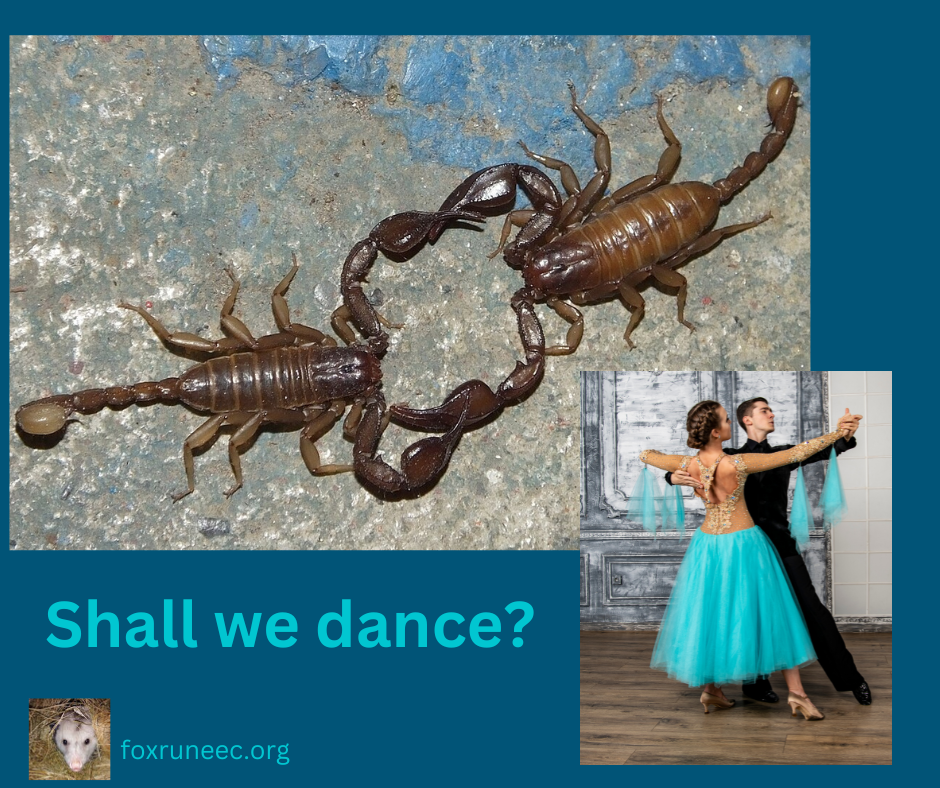
Reproduction Dance
Mating is unique among scorpions. The male is quite romantic and will woo his intended mate. Facing the female, the smaller male will do a dance called a promenade à deux! He grasps her large pincers and leads her in a back-and-forth dance that can last several hours.
The male searches the ground for a solid surface and deposits a sperm packet called a spermatophore. Then he maneuvers the female over the sperm so she can take it up into her reproductive opening located on the underside of her body.
Once fertilization is complete, the pair quickly part ways to lower the risk of cannibalism, because the female might attack and eat the male.
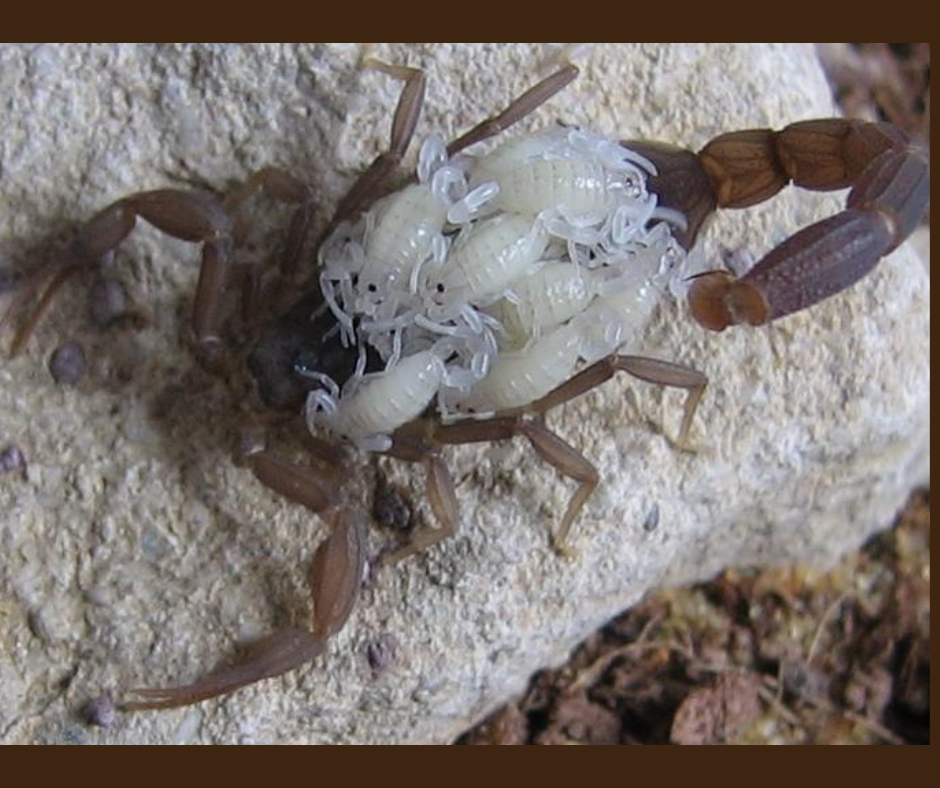
Young scorpions ride on their mothers back
Raising Children
After mating, the female carries the developing embryos inside her body for a period that can range from a couple of months up to a year depending on environmental cues. The young are born live to the female.
Baby scorpions ride on their mother's back after they are born. This protects them as they are born with soft exoskeletons. They will ride 10-20 days. Occasionally they piss off their mother and she eats one.
Ways To Prevent Conflict
Remove piles of rocks or lumber from around your house, and don't store firewood against the house or inside.
Keep grass closely mowed, and prune bushes and overhanging tree branches that can provide scorpions with a path to your roof.
Caulk cracks, install weatherstripping around doors and windows, and repair torn screens.
Inspect and shake out gardening gloves, clothing and boots that haven't been used for a while.
Befriend grasshopper mice, shrews, elf owls, and pallid bats, all of them eat scorpions.
If you find one inside, gently sweep them into a cup or container with a piece of paper, cover the cup, and release them outside.
Scorpions are known for their venomous sting, which they use to paralyze or kill their prey. While most scorpions are not deadly to humans, a few species have venom potent enough to cause serious harm. The fear of their sting adds to their frightening reputation.
First Aid for Scorpion Stings
Follow these steps from the Mayo Clinic
Basic first aid measures can be used to help mediate Arizona bark scorpion stings and other scorpion stings in the US.
Clean sting site with soap and water
Apply a cool compress
Take acetaminophen (paracetamol) or ibuprofen for local pain and swelling
Arizona poison control centers suggest immediate medical attention if severe symptoms occur, particularly in young children.
If you enjoy looking at the stars Scorpius is the zodiac constellation in the southern celestial hemisphere that straddles the Milky Way between Libra and Sagittarius. Its brightest star is Antares which is a cool reddish color. For me in Wisconsin the best time to view it is in July around 9:00 PM to 10:00 PM.
Looking for another scary and fascinating animal to learn about? Check out my video on vampire bats.
Author, Ame Vanorio, loves scary animals! She is the founder of Fox Run EEC, science teacher, and author.

Vampire bats are the only mammals that survive exclusively on a diet of blood. The scientific word is obligate sanguivores. And yes, sometimes they bite humans. There are three species of vampire bats but we are focused on the one closest to us in the United states, the common vampire bat.