
Potatoes are a great, versatile food crop and are worth growing for many home gardeners. Potatoes at the grocery store are still relatively inexpensive, so many home gardeners don’t see a point in growing their own. But, nothing beats an organic, homegrown potato as far as flavor.
Conventionally grown potatoes retain pesticides in their skin which can be a pain to try to remove. So, I like to grow my own and enjoy eating nutritious potato skin without worrying about eating pesticides.
Potatoes are fairly low-maintenance plants that are easy to grow if you can avoid disease, so they are a good choice for busy gardeners or gardeners without a lot of experience.
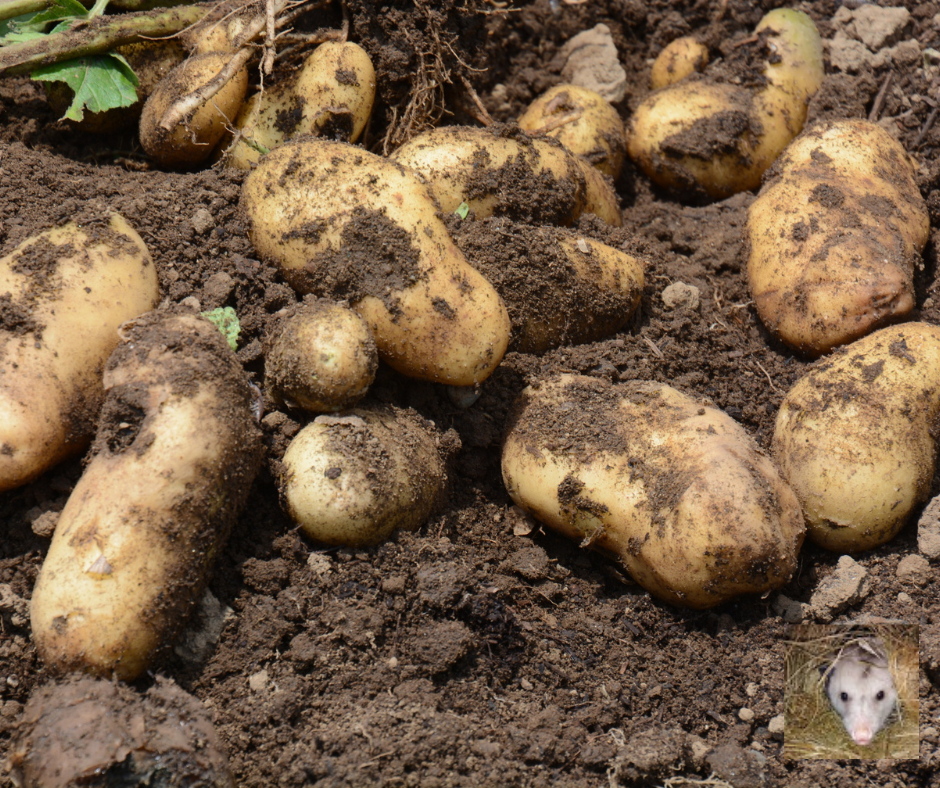
Fresh potatoes from the garden.
Varieties
One of the biggest benefits of growing your own potatoes is that you have the option to grow a wider variety of potatoes than you can find in the grocery store. In addition to traditional white and red potatoes, potatoes come in a variety of shapes and colors. I’m including a couple of my favorite blue potatoes.
Yellow Potatoes
Yukon Gold
Yukon Gold is a variety that was developed in Idaho, and it grows well in a variety of zones, including 5 & 6. This is a yellow-fleshed potato with light brown skin, and it is one of my favorites for making mashed potatoes on a cold fall day.
They take about 95 days to reach maturity which is a little longer than some of the other varieties on this list, but worth the wait.

My method of growing potatoes in straw or old hay. Photo by Ame Vanorio
Carola
Carola potatoes are one of my favorites in terms of flavor. This potato has yellow flesh and comes in a wide variety of shapes and sizes. It has a firm texture that makes it great for making potato salad. This variety takes about 90 days to reach maturity and can reach up to two pounds. Check out Fedco for seed.
Red Potatoes
Red Pontiac
Red Pontiac potatoes are my favorite for pan roasting. They are white-fleshed potatoes with a thin red skin that becomes delightfully crispy when roasted.
This variety takes about 80 days to reach maturity, and fully-sized potatoes can weigh up to two pounds each, although most will be between one-half to one pound.
Blue Potatoes
Magic Molly
Magic Molly from Johnnys Seeds are a fingerling potato, which means they are smaller and more narrow than many other types of potatoes. It has a stunning deep blue color and maintains that color during cooking.
I like cutting each one into a few pieces and roasting them. This variety takes about 100 days to reach maturity.
Purple Majesty
Purple Majesty has beautiful purple-blue flesh and deep purple skin. It is a versatile potato and can be used in mashed potatoes, potato salads, and even sliced thinly and fried to make potato chips. It takes about 90 days for this variety to reach maturity.
Are you growing vegetables? Keep good records for a productive garden. Check out my book.
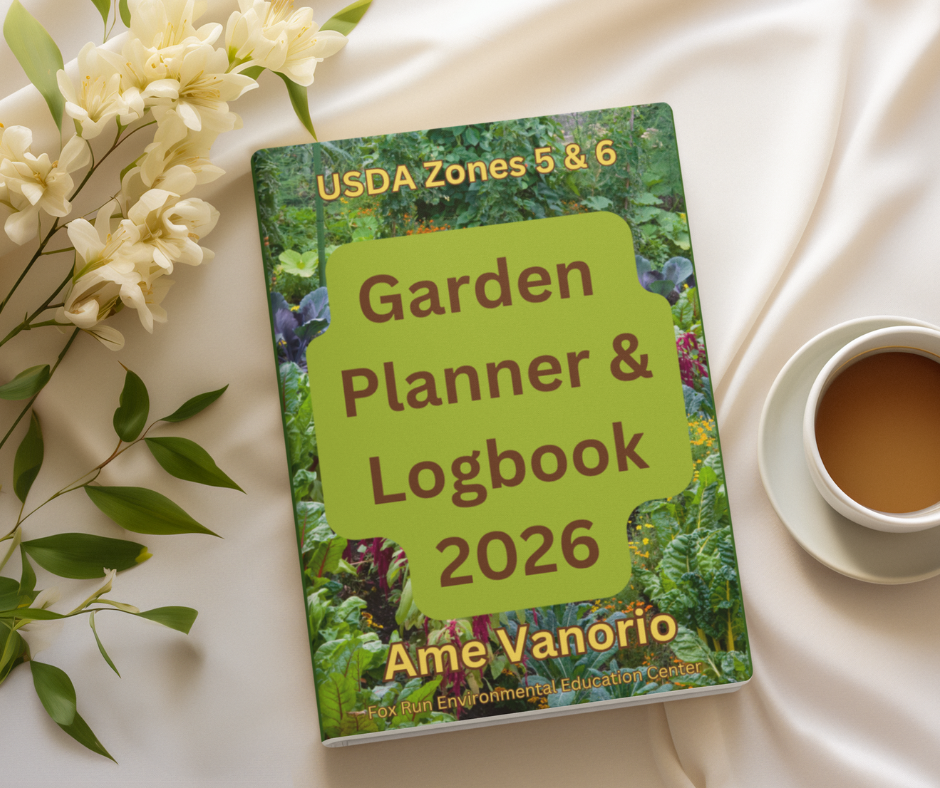
Check out my garden planner and log book.
Planting
Potatoes do not transplant well so I recommend planting seed potatoes directly in the ground, spaced about 7 to 12 inches apart. Rows should be 2.5 - 3 feet apart.
Make sure to use good quality seed potatoes from a plant nursery or save them from your garden. Those sprouted potatoes from the supermarket might be tempting, but they carry a higher risk of disease.
Potatoes like loose, well-drained soil with a good mix of nutrients.
Read my article Prepare your garden space in the fall so that you are ready for early planting.
Preparing Seed Potatoes
There are pros and cons of cutting potatoes before planting. When cutting you should always make sure you have two “eyes” in each section. The eye is where the potato is sprouting.
I plant spuds that are the size of my fist and smaller whole. (I have a woman's small hand!)
Pros of using whole potatoes when planting
Less susceptible to diseases and rotting
More likely to get a greater amount of stems and fuller plant
Higher yield PER plant
Pros to cutting seed potatoes before planting
Quicker emergence
Gives you more to plant and some studies indicate a bigger harvest
Cost effective
Works well for large varieties like German Butterball
How To Plant Seed Potatoes
In Zone 6 I usually plant them in mid to late March and mulch them with straw to help protect against frost. For Zone 5 wait for mid-April. If you have heavy clay soil it helps to not plant your potatoes too deeply. There are many methods for planting potatoes.
Ame’s Potato Planting Method
I have prepared my soil with compost and tilling
I dig a shallow trench about 3 inches deep. This helps the roots connect with the soil but not too hard to dig during harvest
Potatoes ping pong ball or smaller I plant whole. Larger spuds I cut in half and plant with eyes facing up
I use a hoe to put soil back over them
I place a layer of straw about 3 inches deep over the bed
As the green plants grow through the straw I keep adding more around them
Potatoes are naturally slow to emerge and take 2-3 weeks before they are visible.
Growing Potatoes in a Small Space
If you don’t have a lot of space, potatoes also do well in containers or grow bags. This also will make harvesting the tubers easy when the time comes! Check out my article on Gardening with Grow Bags.
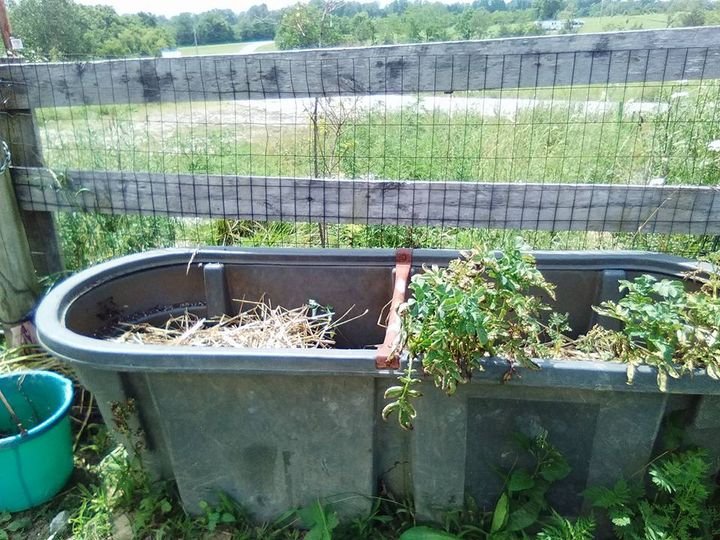
Another great small space idea. Grow potatoes in an old stock tank. In this one, the bottom was filled using a Hügelkultur technique. Photo by Ame Vanorio
Caring
Water
Potatoes need regular watering to prevent issues like cracking. Put your hand through the straw and into the soil to check their moisture level.
Mulching is also a good way to help the soil retain moisture and keep the soil warm during cool nights. I like to use straw, but wood chips also can work well. Mulching will also help suppress weeds.
Fertilizing
Potatoes benefit from soil rich in nutrients and a fertilizer program. I use fish emulsion as a foliar spray about once every three weeks. Apply this in the morning after the dew has burned away.
Wondering how to control the Colorado Potato Beetle? I share some tips from my organic gardening experience to help you manage this pest during all life stages.
Problems
Potatoes belong to the nightshade family along with tomatoes, peppers, and eggplants. Many diseases afflict all members of the nightshade family. These bacteria may live in your soil. That means you should avoid planting potatoes in a spot where any nightshade plants have grown in the last three years to best prevent disease.
Use a three-year crop rotation for nightshade crops. One of my favorite authors, Elliot Coleman has a great rotation plan in his book The New Organic Grower.
Select disease-resistant varieties, avoid overwatering, and immediately remove potato plants that look sickly from your gardens. For example, Carola potatoes are susceptible to blight but they are highly resistant to scab. So if scab is a common disease in your area, this variety would be a good choice.
Potato Scab
Scab is a common problem in potatoes no matter what USDA zone you live in. It looks like brown scabs on the skin of the potato and is caused by the bacterium Streptomyces scabies.
Potatoes may not look pretty or be saleable. However, you can still eat them. Wash them well and peel them before cooking.
Prevention
Purchase certified, scab-free, resistant varieties
Don’t plant grocery store potatoes
Crop rotation
Slightly acidic soil with less than 6.5 pH

Potato beetles
Another common affliction of potatoes is the dreaded potato beetle, easily recognized by its black and yellow-orange striped shell. This pest insect can ruin your entire crop if it goes unchecked.
Ways to prevent and deal with potato beetle infections
Crop rotation
Till garden in fall and let chickens scratch for overwintering larvae
Mulching with straw, and row crop covers
Hand-picking beetles - I have found chickens and ducks love the young larvae but not the adults as much
I recommend using organic spinosad to control them
Companion Planting
Potatoes do not have many commonly recommended companion plants, and many gardeners will plant them in a bed by themselves. However, a study published this year suggests that planting safflower along with potatoes could help your potato harvest.
This is because safflower attracts predator bugs that like to eat Colorado potato beetles, so these predator bugs reduce pest damage to the potatoes. Safflower is easy to grow and also produces cheerful orange flowers which attract pollinators.
It does well in zone 6 and prefers warm, dry conditions, so is ideal for hot, sunny locations. Direct-sow seeds 1/4 inch deep and 6–12 inches apart after the last frost.
You should avoid planting potatoes near other nightshade plants like tomatoes, to reduce the risk of disease spreading from one to the other.
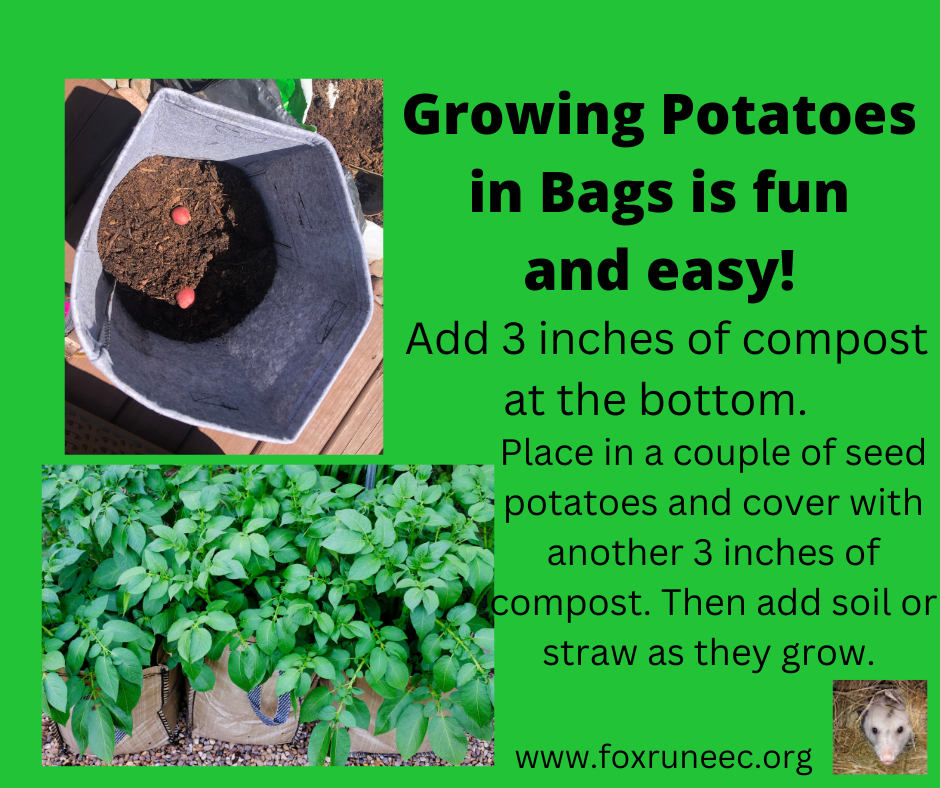
Another great small space idea. Grow potatoes in bags. Makes harvesting easy - just dump them out!
Harvesting and Storing
You can harvest new potatoes - small, thin-skinned potatoes that are considered a delicacy - when the potato plants begin to flower. If you also want to get a harvest of full-sized potatoes, be careful to only remove a few potatoes per plant, trying not to disturb the soil more than necessary.
Harvest full-size potatoes after the vine turn brown and die. You can harvest them by digging gently in the soil to break them up the soil. If you have used my method many of the potatoes will be growing right in the straw.
The University of Maryland recommends that you cure the potatoes for two weeks in a humid environment between 50 and 60 degrees F. After that, they will last several months stored in a cool, dark place in a bag or container that allows airflow, like a paper bag.
Seed Saving
Although potatoes have a blossom, gardeners generally do not save the seeds for growing new potato plants. However, you can save seed potatoes to keep over winter and plant in the spring.
One benefit of saving the tubers instead of the seeds is that there is no risk of cross-pollination impacting the next generation of plants. So, you can grow multiple types of potatoes in a small space and save seed potatoes from them.
The Seed Savers Exchange recommends selecting the best potatoes from your crop to save for next year. Diseases can also build up if you save the same potatoes over several years. So it is best to buy new seed potatoes every few years to introduce new genetics, and keep your plants healthy.
Subscribe to my channel @foxruneec
Potatoes are one of the most useful foods you can keep in your kitchen. They store well, grow easily in many climates, and work in simple or filling meals. Here are ten practical ways to use them.
Mashed potatoes
Boil peeled potatoes until soft, then mash with butter, milk, and salt. You can add garlic, herbs, or even cooked carrots for more flavor.Roasted potatoes
Cut potatoes into chunks, toss with oil and salt, and roast in the oven until crispy. This works well with rosemary, thyme, or garlic.Baked potatoes
Bake whole potatoes until the inside is soft. Top with sour cream, cheese, beans, or steamed vegetables for a full meal.French fries
Slice potatoes into strips and bake or fry them. Baking uses less oil and still gives a crisp texture if you spread them out well.Potato soup
Cook potatoes with onions, broth, and herbs, then blend or mash. Add milk or cream for a thicker soup. This is a good way to use older potatoes.Potato salad
Boil and cool potatoes, then mix with mayonnaise or vinegar, mustard, and herbs. This is common for summer meals and picnics.Hash browns
Grate potatoes, squeeze out water, and cook in a pan until browned. This works well for breakfast with eggs.Shepherd’s pie topping
Use mashed potatoes as a topping over cooked meat and vegetables, then bake until the top is slightly crisp.Potato pancakes
Mix grated potatoes with egg and a little flour, then fry into flat cakes. These are filling and use simple ingredients.
10. Stews
Add chopped potatoes to soups, stews, or curries. They absorb flavor and help thicken the dish naturally.
Author, Ame Vanorio, has been gardening since she had to stand on a kitchen stool and help her father make strawberry rhubarb jam! Looking for a good book? Check out Ame’s Author Page on Amazon.


What is the best thing about June? Fresh strawberries, of course! Strawberries are easy to grow and provide an excellent yield for the amount of space.
In addition to the fantastic taste, strawberries have many great qualities. They are the first fruit of the season and the quickest fruit to produce from planting to eating. Strawberries are also very nutritious and are loaded with vitamin C and antioxidants.